Anhui East Martyrs' Cemetery
Address
半塔镇陵园西路88号
Description
🌲 Anhui East Martyrs' Cemetery
"Green mountains bury loyal bones, crimson blood stains the red flag"
—— A pivotal spiritual landmark of the New Fourth Army’s anti-Japanese resistance behind enemy lines in Anhui East
📍 Basic Information
- Name: Anhui East Martyrs' Cemetery
- Address: No. 88 Lingyuan West Road, Bantai Town, Lai'an County, Chuzhou City, Anhui Province
- Establishment Date: Construction began in 1957, expanded in 1990, and fully renovated and upgraded by 2009
- Protection Status:
- National Key Unit for Protection of Revolutionary Martyrs’ Monuments (approved by the State Council in 1989)
- National Base for Patriotic Education (named by the Publicity Department of the CPC Central Committee in 2001)
- List of National-Level Memorial Facilities and Sites of the War of Resistance Against Japanese Aggression (announced by the Ministry of Civil Affairs in 2014)
- Area: Approximately 150 mu (about 10 hectares), built into the natural terrain with solemn and dignified grandeur
📜 Historical Development: A Red Monument Forged in Fire
Anhui East Martyrs' Cemetery was established to honor the soldiers of the New Fourth Army who died in the Bantai Defense Battle of 1940 and other revolutionary martyrs from the Anhui East region. Its history is rooted in the critical practice of the Chinese Communist Party’s leadership in the anti-Japanese struggle behind enemy lines in central China:
- March–April 1940: Under the command of Commander Luo Binghui, the 5th Division of the New Fourth Army, with fewer than a thousand troops, held out for ten days at Bantai Village (now Bantai Town), repelling an attack by ten battalions of reactionary Kuomintang forces. This victory in the Battle of Bantai laid the foundation for the anti-Japanese base area in Anhui East, which Mao Zedong hailed as a “strategically significant triumph.”
- 1942: The Huainan District Committee of the CPC established the first public cemetery in Anhui East at Bantai, marking the initial formation of the cemetery.
- 1957: Officially founded as the "Anhui East Martyrs' Cemetery" following approval by the Anhui Provincial People's Committee, interring over 300 martyrs, including those commemorated by inscriptions from veteran revolutionaries such as Zhou Junming, Guo Shushen, and Zhang Jingfu.
- Since the 2000s: Ongoing efforts have been made to recover historical records, relocate remains, and upgrade exhibitions. Today, the cemetery houses 1,267 named martyrs and more than 2,000 unnamed martyrs, spanning the periods of land revolution, the War of Resistance Against Japan, the War of Liberation, and socialist construction.
🏛️ Core Architecture and Memorial Facilities
The cemetery follows a symmetrical axial layout, integrating traditional commemorative architectural language with the local topography. Its main components include:
🪦 Main Commemorative Zone
- Revolutionary Martyrs’ Monument: Standing 19.40 meters tall (symbolizing the year 1940 of the Bantai Defense Battle), constructed of white marble. The front bears the inscription “Eternal Glory to the Revolutionary Martyrs,” personally written by General Zhang Aiping. The pedestal features relief carvings depicting the intense scenes of the Bantai Defense Battle.
- Anhui East Revolutionary History Museum (reconstructed in 2009):
- Exhibition area: 2,800 square meters, featuring three thematic halls: “Spark Igniting the Prairie,” “Iron and Blood of Jianghuai,” and “Monument Forever Standing”;
- Collection includes 327 artifacts or sets, among which three are designated as national first-class cultural relics:
✦ Telescope used by Luo Binghui during the 1940 frontline campaign at Bantai
✦ Handwritten manuscript of the “List of Fallen Soldiers of the 5th Division of the New Fourth Army in the Bantai Campaign” (original 1940 document)
✦ Japanese Type 38 rifle captured during the Bantai Defense Battle (complete with magazine and bayonet)
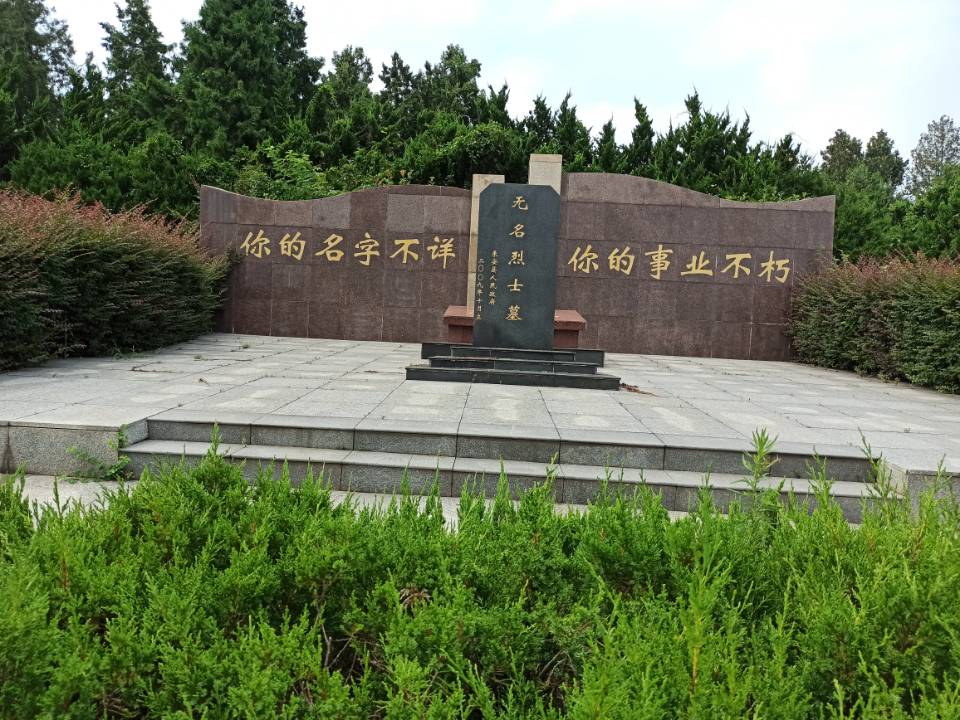
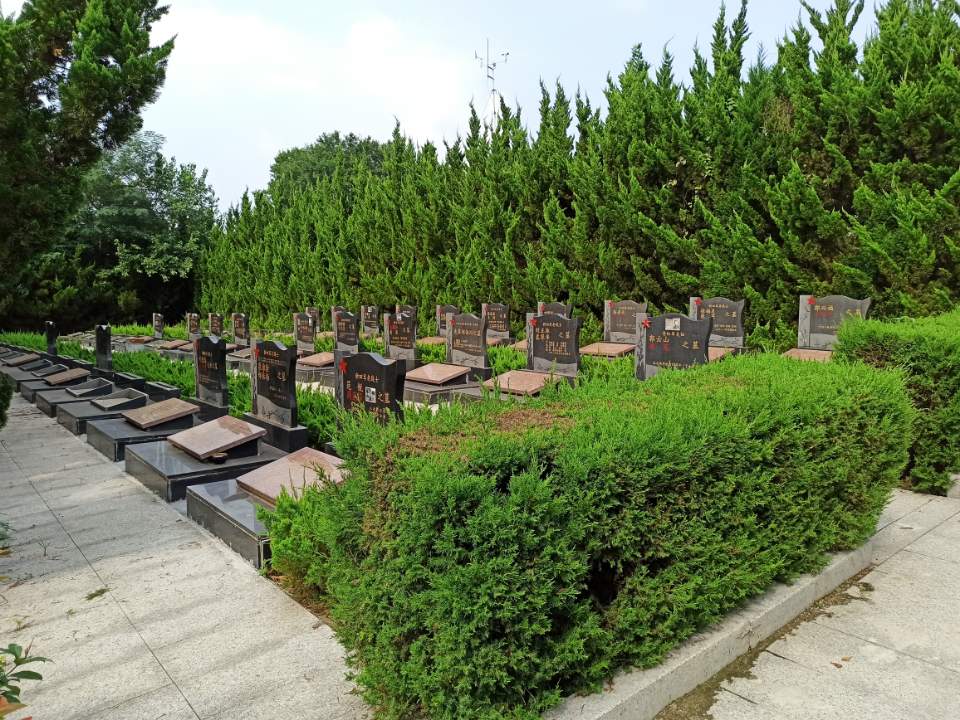
- Martyrs’ Cemetery Cluster: Nine groups of stone tombs arranged along the hillside, each marked with the martyr’s name, hometown, and date of sacrifice. On the western side lies the collective tomb of unnamed martyrs, inscribed with the phrase: “Blood nourishes the earth, fertilizing strong grass; cold freezes the land, yet spring blooms anew.”
🌿 Surrounding Environment and Ancillary Memorial Spaces
- Site Preservation Zone of the Bantai Defense Battle: Located 1.2 kilometers from the cemetery, including the former headquarters (Wu Clan Temple), trench ruins, and outpost sites. Features a provincial-level cultural heritage marker.
- Heroes’ Grove: Planted with over ten thousand ginkgo and cypress trees donated by veterans and descendants of the New Fourth Army. Each tree bears a plaque inscribed with the martyr’s name and a brief biography.
- Red Study Hall: Established under the management office of the cemetery, offering ongoing oral history collection, youth educational programs, and immersive party classes.
🌟 Cultural Value and Spiritual Essence
- Historical Witness Value: One of the few nationally preserved complete memorial systems from the early period of the New Fourth Army’s base area establishment, providing tangible evidence of the Chinese Communist Party’s independent leadership in the anti-Japanese struggle behind enemy lines in central China.
- Educational Demonstration Value: As the spiritual core of the Huainan Anti-Japanese Base Area (later developed into the Huainan Liberated Region), it embodies the “Bantai Spirit”—a revolutionary character defined by firm belief, reliance on the people, courage to fight tough battles, and willingness to sacrifice.
- Academic Research Value: The museum’s archives contain 23 volumes of previously unpublished manuscripts, including Compilation of Materials on the Anti-Japanese Struggle in Anhui East and Collected Documents on the Bantai Defense Battle, serving as essential primary sources for research in CCP history and military history.
- Regional Cultural Linkage: Integrated with nearby attractions such as the White Egret Island Ecotourism Zone and Shunshan Ancient Town, forming a “red, green, and ancient” cultural tourism corridor that highlights Chuzhou’s identity as a highland of red culture along the Huai River watershed.
🚶♂️ Practical Tourism Information
🕒 Opening Hours
- Open year-round (closed on Lunar New Year’s Eve)
- Peak Season (March–November): 8:00–17:30 (last entry at 17:00)
- Off-Season (December–February): 8:30–17:00 (last entry at 16:30)
- Free admission | Valid ID required for registration upon entry
🚌 Transportation Guide
| Mode | Details |
|------|--------|
| By Car | Navigate to “Anhui East Martyrs’ Cemetery.” Take exit “Lai’an South” off G40 Huyi Expressway → S210 Provincial Road → Bantai Town → Lingyuan West Road directly to the site. On-site parking available with barrier-free access. |
| Public Transit | Take the intercity bus “Lai’an–Bantai” from Lai’an County Bus Station (approx. 40 minutes). Get off at “Bantai Government Station” and walk 500 meters to reach the cemetery. |
| High-Speed Rail Transfer | Nearest high-speed rail station: Chuzhou Railway Station (approx. 65 km from the cemetery). After exiting, board a dedicated tourist shuttle (4 daily departures, journey time ~1.5 hours). |
📝 Visitor Tips
- Please dress appropriately and maintain solemnity; no loud noise or playful behavior allowed.
- Flash photography is prohibited inside the museum when viewing artifacts.
- Free guided tours available (must be booked one day in advance via phone: 0550-5850123).
- Facilities include barrier-free access, nursing rooms, and a Red Reading Room (offering free borrowing of local publications such as Storms Over Bantai).
To remember is to move forward more clearly; to look back is to stride ahead with greater resolve.
Among the evergreen pines and cypresses of Anhui East Martyrs' Cemetery, history has never faded—it stands silent and steadfast, like a torch, like a pillar, illuminating the path we came from, and guiding the journey ahead.