Chihe Taiping Bridge
Address
池河老街
Description
🌉 Chihe Taiping Bridge
“One bridge spans past and present, a thousand years reflecting the Chihe River”
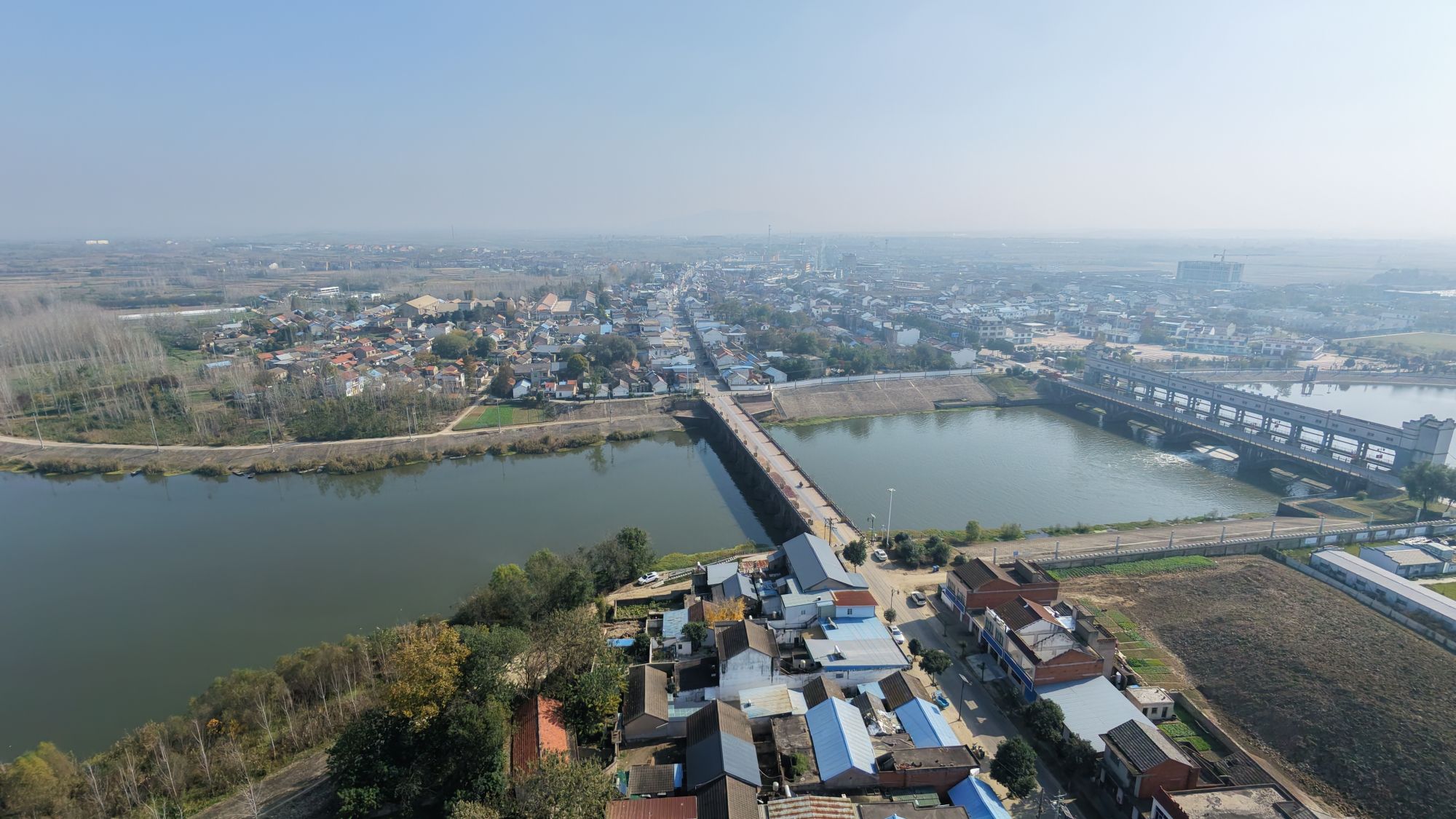
Located in the heart of the old town of Chihé Town, Dingyuan County, Chuzhou City, Anhui Province, the Chihe Taiping Bridge is the largest and best-preserved Ming Dynasty stone arch bridge remaining in eastern Anhui. Designated a National Key Cultural Relics Protection Unit by the State Council in 2013, it is renowned as the “First Ancient Stone Bridge of Eastern Anhui.”
📜 Historical Evolution
- Original Construction: Built in the second year of the Zhengtong era (1437 CE) under the supervision of Dingyuan’s magistrate Hu Rulì, originally named Yongan Bridge, meaning “eternal stability and tranquil waters”;
- Renaming and Major Renovation: After extensive repairs in the 34th year of Kangxi’s reign (1695), the bridge was renamed Taiping Bridge due to its role connecting north and south, facilitating bustling trade and bringing peace to the people; minor restorations occurred during the Qianlong, Daoguang, and Guangxu periods;
- Modern Conservation: Listed as an Anhui Provincial Key Cultural Relics Protection Unit in 1986; on March 5, 2013, upgraded to the 7th batch of National Key Cultural Relics Protection Units as part of the “Chihe Taiping Bridge and Associated Cultural Relics”;
- 2020–2022: The National Cultural Heritage Administration allocated special funding for a comprehensive conservation and restoration project, strictly adhering to the China Principles for the Conservation of Historic Sites, restoring the original Ming Dynasty structural form and craftsmanship.
🏯 Architectural Features
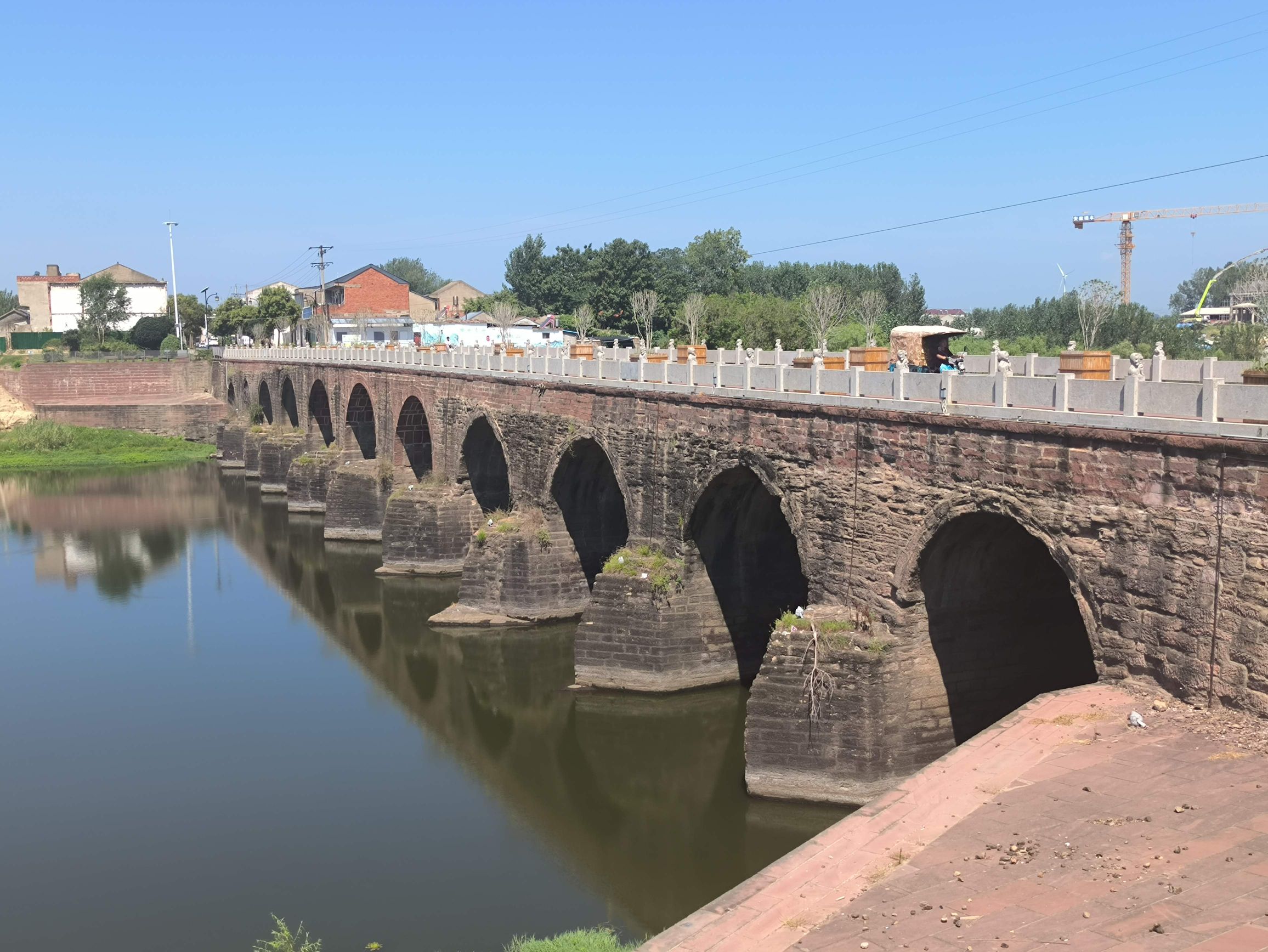
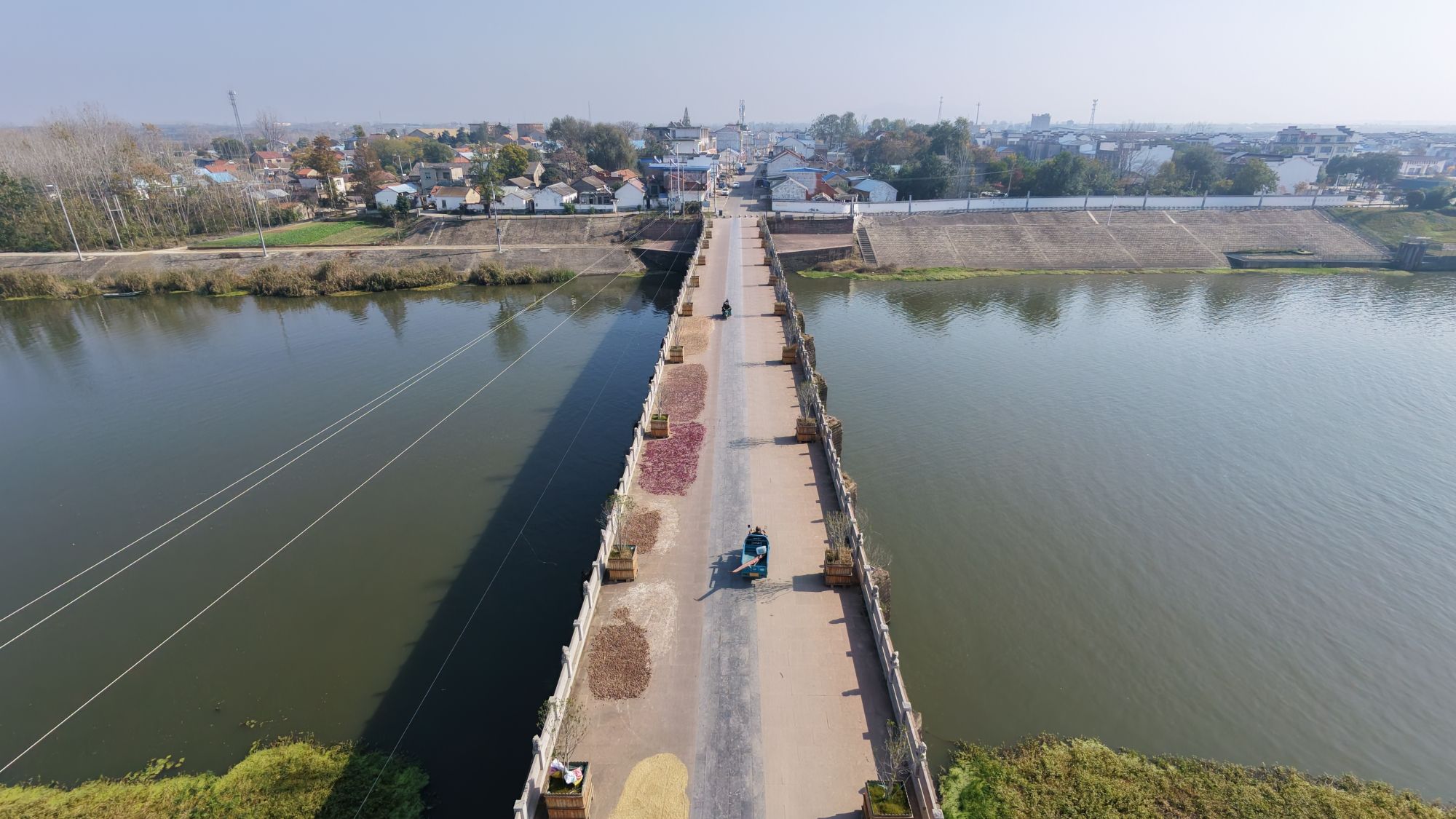
The Taiping Bridge is an eleven-span linked-arch stone bridge, stretching 136.5 meters in length, 7.4 meters in width, and rising 9.2 meters high, spanning the main channel of the Chihe River with majestic grandeur and intricate engineering:
-
Structural Design:
- Constructed entirely from dark gray sandstone using the longitudinal joint segmented construction method, each span has a clear opening of approximately 10.2 meters. The piers are boat-shaped with pointed water-dividing tips, and triangular jin gang yan chi (stone wings) are set on the upstream side to effectively divert floodwaters;
- The bridge deck is paved with long rectangular flagstones, flanked by stone railings styled after Song Dynasty models. Twenty-two balustrade columns remain (including two at the ends with drum-shaped pillars), featuring carved motifs typical of the Ming Dynasty—lotus, inverted lotus, and lion playing with a ball;
- On the outer side of the central arch’s keystone is a Ming-era inscribed plaque reading “Taiping Bridge” in regular script, each character measuring 0.6 meters—though weathered, the spirit remains intact. Two inscribed steles, one from the Kangxi and another from the Guangxu period, are embedded in the bridge abutments, their inscriptions clearly legible.
-
Associated Remains:
- At the western end, the foundation of a Ming-era reception pavilion has been confirmed through archaeological excavation (2021);
- Two Qing Dynasty “dismounting stones” remain at the eastern approach, engraved with the words “Civil officials dismount, military officials dismount” in deep relief;
- A fragment of a Qing-era “Bridge Market Stele” (erected in the 15th year of Jiaqing’s reign) stands on the southern bank, testifying to the once-thriving commercial scene where “markets formed at the bridgehead, with boats and carriages constantly passing.”
🏛️ Cultural and Historical Significance
| Dimension | Core Value | |--------|-----------| | Historical Value | Provides tangible evidence of Ming Dynasty hydraulic and transportation infrastructure in eastern Anhui, serving as a crucial physical record for studying the canal transport, salt routes, and post road systems of the Yangtze-Huai region during the Ming and Qing dynasties. | | Scientific Value | Demonstrates advanced Ming-era stone arch bridge engineering and flood-resistant design, with its boat-shaped piers and water-dividing tips representing a classic model for low-water rivers in the middle and lower reaches of the Yangtze River. | | Artistic Value | Features exquisite stonework: clean, powerful lines on the rail panels and finely crafted balustrade columns blending realism with formal elegance—representative of Ming Dynasty stone carving art in eastern Anhui. | | Social Value | Continuously in use for nearly 600 years, embodying the collective memory of Chihé Town’s development—“prosperity born from the bridge, population gathered around the market”—and serving as a core geographical landmark of cultural identity within Dingyuan County. |
🌟 Special Note: In 2023, the Taiping Bridge was successfully included in the Chinese List of Tentative World Heritage Sites under the Extended Project: Chinese Ming and Qing City Walls – Jianghuai Water Transport Heritage Corridor, highlighting its strategic significance within China’s ancient waterborne network.
🧭 Tourism Information
- 📍 Location: Old Street of Chihé Town, Dingyuan County, Chuzhou City, Anhui Province (the bridge spans the Chihe River; access available from both east and west banks)
- 🎫 Admission: Free entry | Managed via reservation and visitor limits (bookable via the “Wan Shitong” app)
- 🕒 Opening Hours: Open year-round | Daily from 06:00 to 21:00 (bridge illuminated at night, evoking timeless charm)
- 🚌 Transportation Guide:
- By Car: From Hefei city center → G40 Hushan Expressway → Dingyuan East Exit → S311 Provincial Road → Chihé Town (approximately 90 minutes);
- Public Transit: Take the intercity bus “Dingyuan–Chihé” from Dingyuan Bus Station (approx. 40 minutes); destination stop is the entrance to Chihé Old Street.
- 🚶 Visitor Recommendations:
- ✅ Must-see: Central arch inscription, boat-shaped piers, Kangxi restoration stele, Qing dynasty dismounting stones;
- ✅ Recommended Route: Enter from the west end of the old street → view the western abutment (full view of the bridge’s grandeur) → stroll across the bridge → visit the eastern abutment and the site of the former reception pavilion → walk along the riverside path to admire the reflection in the water;
- 📸 Best Photo Times: Early morning light (bridge shadows reflected in the river), sunset (golden glow over the railings), twilight (interplay of lights and shadows).
- ⚠️ Important Tips:
- Motor vehicles prohibited on the bridge—please walk respectfully;
- Railings are original Ming structures—do not climb or deface;
- The “Taiping Bridge Cultural Exhibition Hall” (free admission) inside the old street displays historical records of bridge construction, archives of past renovations, and rubbings of excavated inscribed stones from bridge workers.
🌊 Closing Reflection:
The Taiping Bridge is more than a stone passage—it is a cultural vessel traversing time. Lying quietly above the Chihe River, it writes the story of six centuries of hydraulic wisdom, commercial vitality, and human resilience upon stone and time. Standing at the railing, watching the flowing waters and faintly hearing the echo of oars, one realizes that true “peace” lies not in the name on the plaque, but in the enduring rhythm of human life and the enduring strength of civilization itself.