Qianshan Scenic Area · Longquan Temple
Address
千山风景区内(西侧)
Description
🏯 Qianshan Scenic Area · Longquan Temple
“A thousand peaks vie in beauty, one temple hides in serenity; the Longquan Spring rinses jade, ancient temples pulse with spiritual vitality”
—— Nestled deep within the western heart of the Qianshan Scenic and Historic Area, this thousand-year-old Buddhist temple was originally founded during the Liao Dynasty, expanded in the Jin and Yuan periods, and flourished through the Ming and Qing dynasties. It stands as one of the oldest and best-preserved Han Chinese Buddhist monasteries in Northeast China.
📜 Historical Evolution
- Founded in the Liao Dynasty (10th–12th century): According to historical records such as Liaodong Zhi, Haicheng County Annals, and a Ming-era stele inscription titled Record of the Restoration of Longquan Temple, the temple was first established during the reign of Emperor Shengzong of Liao (983–1012), originally named Longtan Temple ("Dragon Pond Temple"). The name originated from a clear, sweet spring gushing forth from the valley behind the temple like a dragon spitting jade. During the Jin Dynasty, it was renamed Longquan Temple ("Long Spring Temple") and underwent extensive expansion of its halls and pavilions.
- Rebuilt in the Yuan Dynasty, Flourished in the Ming Dynasty: The temple suffered damage during the Zhenzheng era of the Yuan Dynasty (1341–1370) due to warfare. In 1421, during the Yongle reign of the Ming Dynasty, it was reconstructed under the leadership of monk Liao Chan. Subsequent renovations were carried out during the Chenghua and Wanli reigns, forming the now-famous layout of three courtyards and seven halls with one pavilion, drawing pilgrims across Liaodong.
- Continued Lineage in the Qing Dynasty, Renewed After Modern Tragedy: Emperors Kangxi and Qianlong of the Qing Dynasty bestowed imperial plaques and inscribed couplets (some preserved at the Qianshan Museum). In 1907, parts of the temple were burned by Russian troops. Designated a Key Provincial Cultural Heritage Site of Liaoning Province in 1983, restoration began in 1996 based on the Qing Guangxu-era Map of Longquan Temple and archaeological findings. The main structures were completed by 2006, and religious activities resumed.
🏯 Architectural Layout and Features
Longquan Temple is built following the natural terrain, facing south with its back to the north, employing the classic northern Han Buddhist "Seven Halls" layout. Its symmetrical axial design and distinct hierarchical structure reflect traditional Chinese temple planning. Most surviving buildings exhibit Qing Dynasty architectural style, blending elements from the Liao and Jin dynasties with refined Ming and Qing craftsmanship:
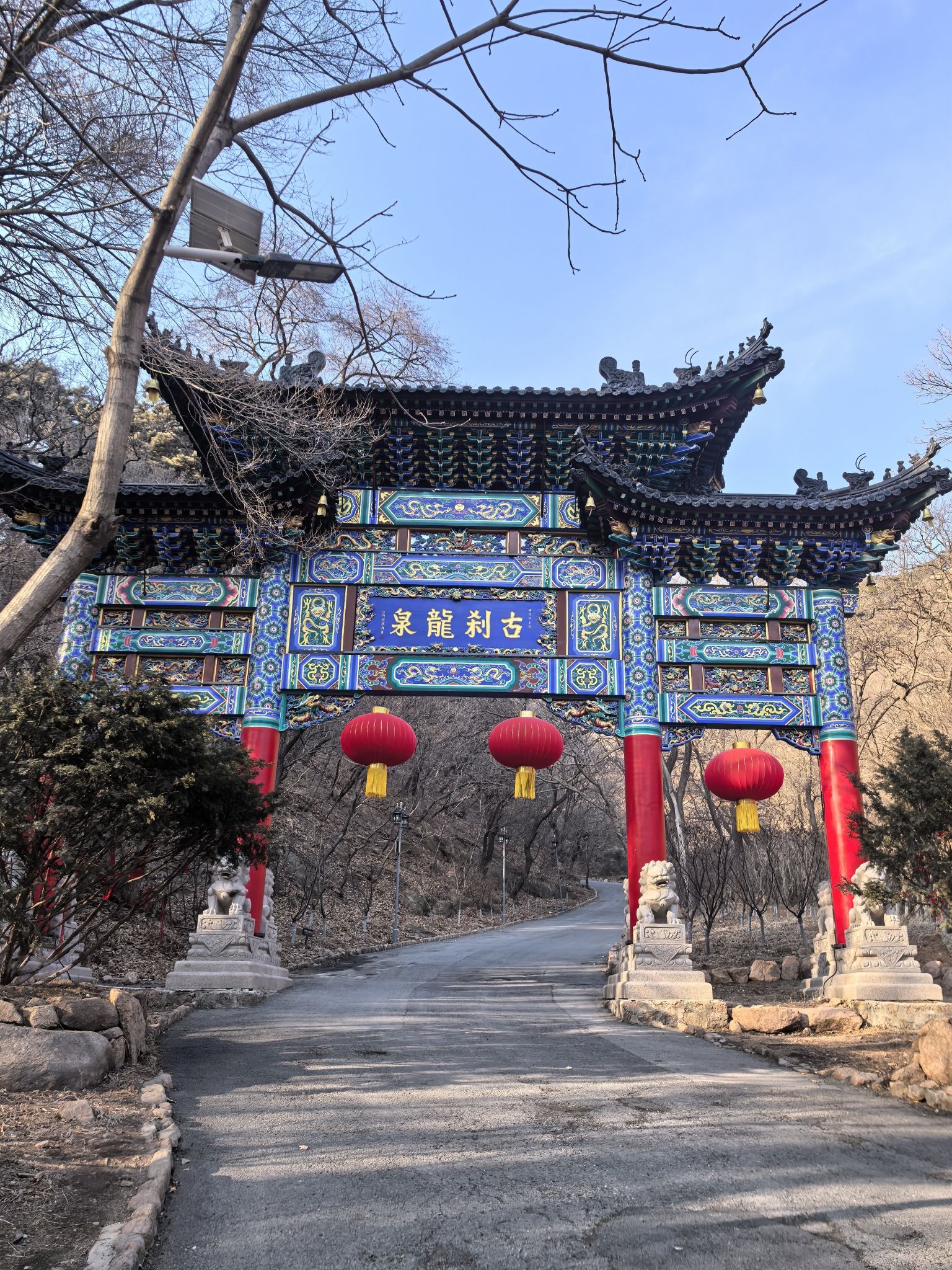
- Mountain Gate Hall: A single-eaved hip roof with glazed tiles and blue bricks. The lintel bears a wooden plaque inscribed “Ancient Longquan Temple,” gifted by Emperor Kangxi of the Qing Dynasty (original housed at the Liaoning Provincial Museum; replica displayed at the temple). Flanking the gate are two Ming Dynasty stone lions carved in 1522.
- Hall of the Four Heavenly Kings: Enshrines Maitreya Buddha, the Four Heavenly Kings, and Vajrapani Bodhisattva. The ceiling beams feature intricate Qing Dynasty Xu Zi polychrome painting patterns, with precisely articulated bracket arms.
- Mahavira Hall (the central structure):
- Five bays wide, three bays deep, with a single-eaved hip roof covered in green glazed tiles. The roof ridge ornaments include chiwen (dragon-like creatures) dating back to the Ming Dynasty (carbon-14 tested to be circa 1430±30 CE).
- Inside, the hall houses the Three World Buddhas—Sakyamuni Buddha, Bhaisajyaguru Buddha, and Amitabha Buddha—each an exquisite Ming Dynasty wooden statue with gold leaf covering, standing 2.8 meters tall. Their flowing robes and solemn expressions exemplify masterful craftsmanship.
- On either side of the front terrace stand two Liao Dynasty octagonal stone dharani pillars (3.2 meters high), inscribed with the Dharani Sutra of the Supreme Honored One’s Crown. The elegant regular script makes these among the earliest extant Buddhist stone inscriptions in Northeast China.
- Guanyin Pavilion: Built atop a high platform, this two-story pavilion features a gable-and-hip roof. The lower level enshrines a standing statue of Guanyin with a thousand hands and eyes, cast in bronze during the Ming Dynasty (total height 4.1 meters). The upper level serves as a scripture repository, housing 17 surviving volumes of the Ming Yongle Northern Tripitaka (designated National Grade I cultural relics).
- Ancestral Hall and Meditation Hall: Located on the east and west wings, these halls display woodblock-printed biographies of Longquan Temple’s successive abbots from the Qing Dynasty, as well as a hand-copied scroll of the Prajna Paramita Sutra from the Republican era (12.6 meters long).
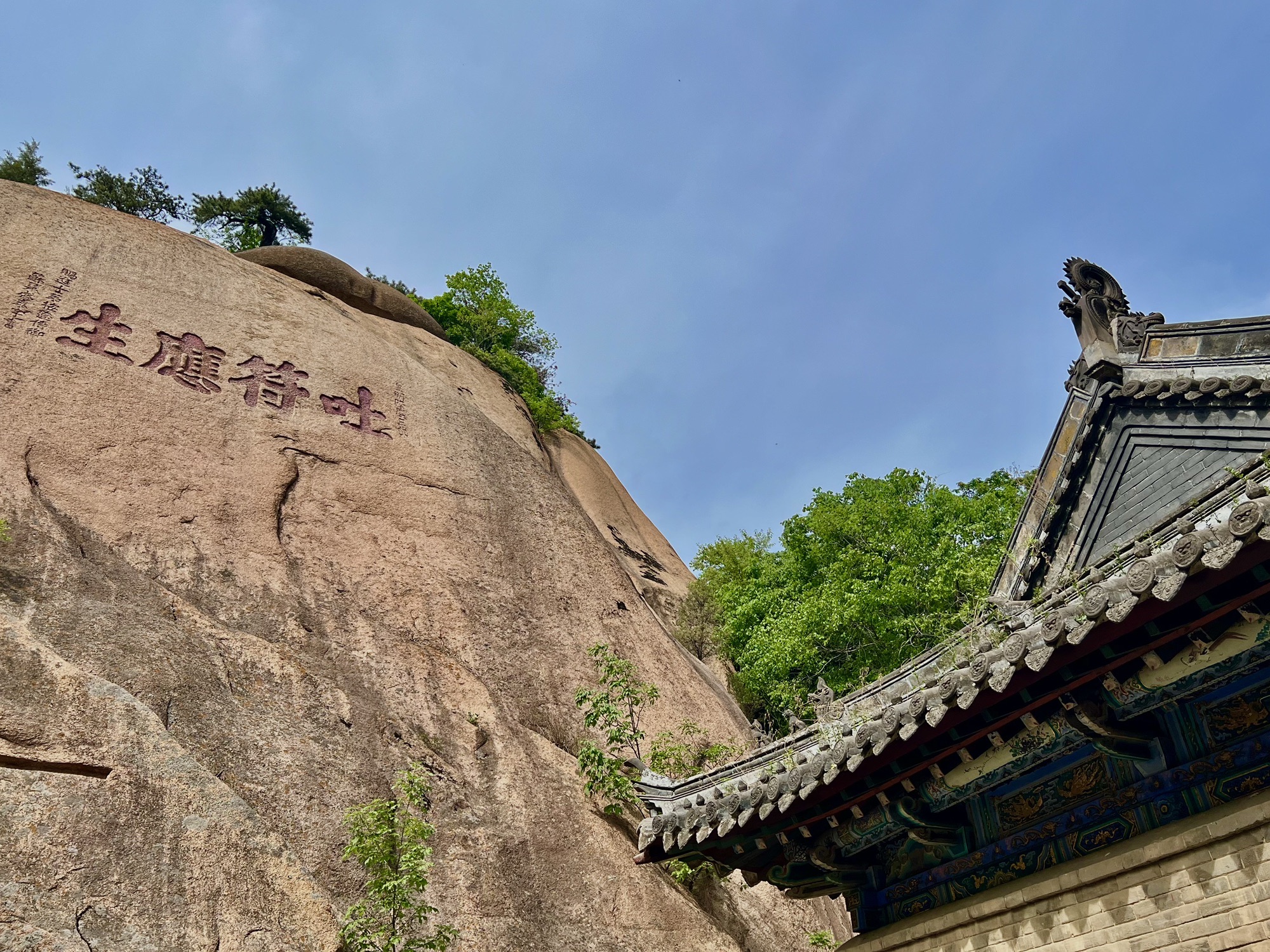
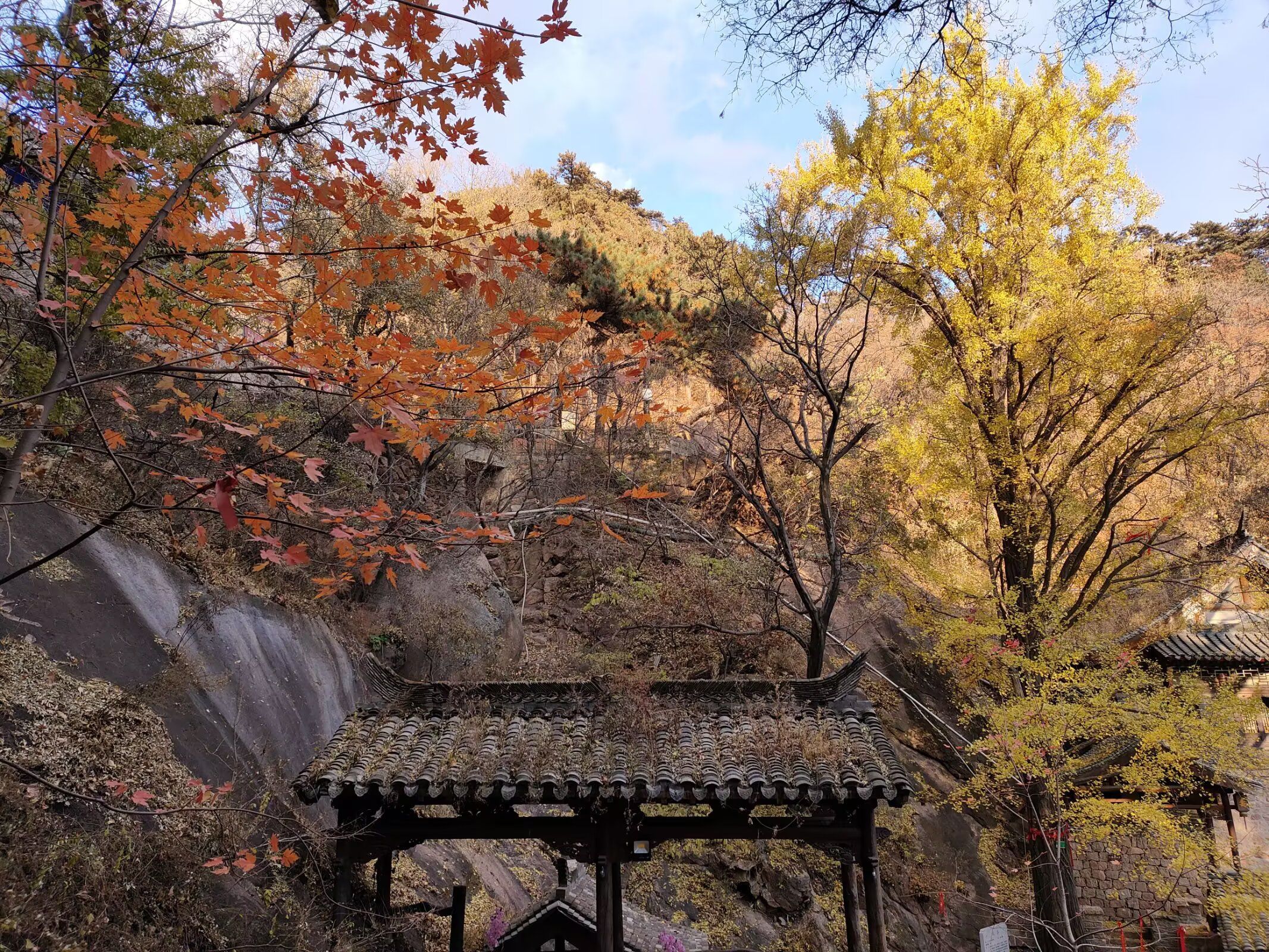
🌿 Environmental Features: Ancient pines tower around the temple, most notably the famed “Two Longquan Pines” (over 650 years old). Behind the temple lies the Longyan Spring, which flows year-round with pure, sweet water. At its edge stands a stone tablet from the 43rd year of Qianlong’s reign (1778), recording the legend that “drawing water never exhausts it, drinking it cures illness.”
🏛️ Cultural Relics and Significance
| Category | Representative Relics/Remnants | Value Explanation | |------------------|----------------------------------------------------------|----------------------------------------------------------------------------------| | Stone Carvings | Two Liao Dynasty octagonal dharani pillars, Qing Qianlong’s Longquan Spring Record stele, Ming Wanli’s Record of the Restoration of Longquan Temple stele | Rare physical evidence of Liao Buddhist stone inscriptions in Northeast China, documenting the localization of Buddhism during the Liao period; inscriptions provide detailed accounts of the temple’s history and the geography and culture of Qianshan. | | Statuary Art | Ming Dynasty Three World Buddhas (wooden core with gold leaf), Thousand-Armed Thousand-Eyed Guanyin (bronze) | Typical example of Buddhist sculpture style in Liao East during the Ming Dynasty, reflecting the fusion of Han and Tibetan artistic traditions; the Guanyin statue is the largest known Ming bronze Guanyin in Northeast China. | | Ancient Texts | Fragments of the Ming Yongle Northern Tripitaka, handwritten copy of Qianshan Longquan Temple Chronicles (Daoguang era) | Confirms Qianshan’s historical status as a center of Buddhist culture in Northeast China; the Chronicles serve as crucial primary source material for studying monastic systems in Qing-era Northeast China. | | Intangible Heritage | Rituals of “Longquan Zen Tea,” “Qianshan Temple Fair” (Buddha’s Birthday Festival on the 8th day of the 4th lunar month) | The 600-year-old Zen tea ceremony has been listed in the Anshan Intangible Cultural Heritage Register; the temple fair is the largest traditional Buddhist folk event in southern Liaoning. |
✅ Academic Value: Longquan Temple is a key site for studying the spread of Buddhism in the Liao and Jin dynasties, construction systems of monasteries in Northeast China during the Ming and Qing periods, and the localization of Han Chinese Buddhism in frontier regions.
✅ Cultural Symbolism: Alongside Wuliangguan Temple and Zuyue Temple, it forms the “Three Ancient Temples of Qianshan,” collectively constituting the “Qianshan Buddhist Cultural Sphere.” Revered as the “First Temple of the Buddhist Kingdom of Liaodong.”
🧭 Travel Information
- 📍 Location: Western side of Qianshan Scenic and Historic Area, at the foot of Qianshan’s main peak (approximately 3.2 km from the main entrance; accessible via scenic area eco-friendly shuttle bus or a 40-minute walk)
- 🎫 Admission: Included in the Qianshan Scenic Area Combined Ticket (Peak season ¥120, Off-season ¥90); eligible visitors may enjoy national policy discounts with valid identification.
- ⏰ Opening Hours:
- Daily 07:30–16:30 (until 16:00 in winter)
- Extended to 17:00 on ritual days (the 1st and 15th of each lunar month, and Buddha’s Birthday)
- 🚌 Transportation Options:
- From Anshan Railway Station / Anshan West Station → Qianshan Scenic Area Express Bus (30 minutes) → Eco-friendly shuttle to “Longquan Temple Stop”
- By car: Navigate to “Qianshan Scenic Area Longquan Temple”; park at the west gate parking lot (limited spaces—recommended to arrive early)
- ℹ️ Tips & Reminders:
- Flash photography is prohibited inside the temple to protect artifacts and statues.
- Daily experience of “Morning Bell and Evening Drum” at 08:00 (advance booking required).
- Recommended visit duration: 1.5–2 hours. For deeper exploration, consider combining this site with the historic temple route: Longquan Temple → Zuyue Temple → Da’an Temple.
🌟 Conclusion: Longquan Temple is more than a sacred sanctuary—it is the root of Qianshan’s cultural lineage and the spiritual anchor of Liaodong. Every brick and tile bears witness to the winds and frost of the Liao and Jin eras; every spring and pine tree carries the mist and rain of the Ming and Qing dynasties. Ascend this hallowed ground, and you will behold the harmonious integration of mountain and temple architecture, while feeling the enduring resonance of six centuries of morning bells and the eternal flow of the Longquan Spring.