**Bilu Hall (Liuqing Temple Bilu Hall)**
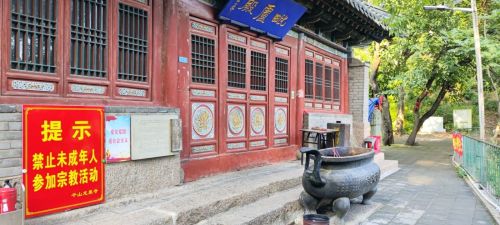
Address
东南17公里龙泉寺内
Description
Bilu Hall (Liuqing Temple Bilu Hall)
“The hall preserves the remnants of Tang style, and the images reflect the hearts of Song and Yuan lanterns”
Located 17 kilometers southeast of Jingxing County, Shijiazhuang City, Hebei Province, within the Liuqing Temple, it is one of the most complete and representative early halls dedicated to the Vairocana Buddha in the North China region.
Historical Background
- Construction Era: According to the "Jingxing County Gazette" and the tablet inscribed in the hall in the 29th year of the Jiajing period of the Ming Dynasty (1550), the main structure of the Bilu Hall was constructed during the Dading period of the Jin Dynasty (1161–1189), serving as the core hall of Liuqing Temple and originally named "Bilu Pavilion," later renamed "Bilu Hall."
- Historical Repairs:
- In the second year of the Zhenzheng period of the Yuan Dynasty (1342), it was extensively repaired, retaining the Jin structure frame and some traces of Yuan Dynasty colored paintings;
- In the 29th year of the Jiajing period of the Ming Dynasty (1550) and the 54th year of the Kangxi period of the Qing Dynasty (1715), it underwent two systematic repairs, including the repainting of statues and wall decorations;
- In 2006, it was announced as the sixth batch of national key cultural relic protection units (as part of the overall protection unit of "Liuqing Temple");
- From 2018 to 2021, the State Administration of Cultural Heritage allocated special funds for the conservation project, completing the reinforcement of wood structures, repair of the tile roof, restoration of the colored paintings, and environmental improvement.
Architectural Features
The Bilu Hall is a single-eave sloping roof building with brick and wood structure, reflecting the typical Northern official architectural style of the transition period between the Jin and Yuan dynasties:
- Layout: 3 bays wide (10.8 meters), 3 bays deep (9.6 meters), with a total height of about 9.2 meters, using the "reduction column" technique, the hall only has two golden columns, greatly expanding the space for worship;
- Bracket Structure: The outer eaves are decorated with four-bay single-ridge brackets, with one bracket per bay, the bracket mouth is flat and slightly upturned, with typical Jin Dynasty characteristics; the column head is gently rounded, and the lintel does not extend out;
- Beam Structure: Open construction above, with four joists and a horizontal beam supported by three columns, with both fork hands and toe pieces, retaining the early raised beam structure;
- Roof and Decoration: Covered with grey cloth tiles, the ridge decorations are Qing Dynasty glazed tiles and mythical beasts; below the eaves, there is a Ming Dynasty ink-written inscription "Repaired in the 29th year of the Jiajing period of the Great Ming" that can be identified.
Cultural Relics
Main Statue: The Three Bodies of Vairocana Buddha (recreated in the Ming Dynasty, based on a Jin and Yuan base)
- The central main statue is the Vairocana Buddha (Great Sun Buddha), with a wisdom fist seal, wearing a five-Buddha crown, 3.2 meters tall, clay with gold leaf, with flowing and realistic clothing lines;
- The attendants on the left and right are the Manjushri Bodhisattva (riding a blue lion) and the Samantabhadra Bodhisattva (riding a white elephant), forming the "Three Sutras of the Flower Adornment" layout;
- The pedestal is the original structure of the Jin Dynasty, with bas-reliefs of "Six Paths of Rebirth" and "Eight Treasures Patterns" at the waist, with ancient and forceful craftsmanship.
Wall Paintings
- The east and west walls have residual traces of the Ming Dynasty repainted "Buddhist Sutras of the Flower Adornment" (about 12 square meters each), although smoked and blurred over centuries, the framework of the "Seven Places and Nine Gatherings" composition, celestial beings, and lines of donors can still be identified;
- Above the back door, there is a Qing Dynasty line drawing of "The Establishment of the Dharma Realm of Vairocana Buddha" (inked lines without coloring), an important material for studying the iconography of the Huayan School.
Inscription Literature
- In front of the hall, there is a ruined tablet of "Liuqing Temple Reconstruction Record" from the 28th year of the Dading period of the Jin Dynasty (1188) (only the tablet title and a dozen characters remain), a key evidence for confirming the construction year of the hall;
- The tablet inscribed in the 29th year of the Jiajing period is well-preserved, detailing the list of donors and the history of the project, with significant social historical value.
Cultural Value
- Religious Value: It is a rare temple in North China named after "Bilu" and dedicated to the Vairocana Buddha, reflecting the depth of the spread of the Huayan School in the Taihang Mountains during the Liao and Jin dynasties;
- Architectural Historical Value: Its reduction column technique, bracket structure, and beam logic provide an irreplaceable specimen for studying the practice of the "Building Methods" in the northern borderlands;
- Art Historical Value: The statue shapes inherit the remnants of the Jin and Tang dynasties and initiate a new style, the wall paintings integrate the Han traditional Buddhist painting tradition and the local craftsmanship system;
- Historical and Geographical Value: Located at the junction of the ancient Jingxing post road, it witnesses the rise and fall of Buddhist temples in the Taihang Mountains during the Song and Jin confrontation and the migration of the Yuan and Ming dynasties.
Tourist Information
| Item | Details | |------|------| | 📍 Address | Liuqing Temple, Longquan Village, Nanzhangcheng Town, Shijiazhuang City, Hebei Province (about 17 kilometers from Jingxing County City, southeast direction) | | 🚌 Transportation | • Self-drive: Exit at "Jingxing" on the Jingkun Expressway, follow S307 east to Nanzhangcheng Town, turn onto the rural road X075 south for about 8 kilometers to reach<br>• Public transportation: Take the "Jingxing-Nanzhangcheng" bus from Jingxing Bus Station to the Longquan Village stop, walk 500 meters | | ⏰ Opening Hours | Daily 8:30–17:00 (winter ends at 16:30); closed on Mondays for maintenance (except for legal holidays) | | 🎫 Ticket Information | Liuqing Temple is open free of charge, the Bilu Hall is a core viewing point, and entry requires registration within the temple; explanation services need to be booked in advance (phone: 0311-8235XXXX) | | ⚠️ Tips | • No flash, tripods, or drones are allowed in the hall<br>• Respect the religious place etiquette, walk to the right around the Buddha, do not point at the head of the Buddha<br>• Surrounding facilities: the ancient Ming and Qing residential groups in Longquan Village can be visited together; the Dragon Pool Spring behind the temple is an ancient Tang Dynasty spring with clear and cool water |
🌿 Cultural Message
The Bilu Hall stands silently in the depths of the Taihang Mountains, not just the existence of a hall, but a time capsule of the Jin and Yuan artisans' souls, the Huayan heart seal, and the intertwining of the mountainous faith. Every column and tile carries the Dharma realm, every verse and trace shows majesty—there is no noise here, only the ancient wood sieve light, illuminating the timeless wisdom light.