Zhenyuan Ancient City · Qinglong Cave Historic Architectural Complex
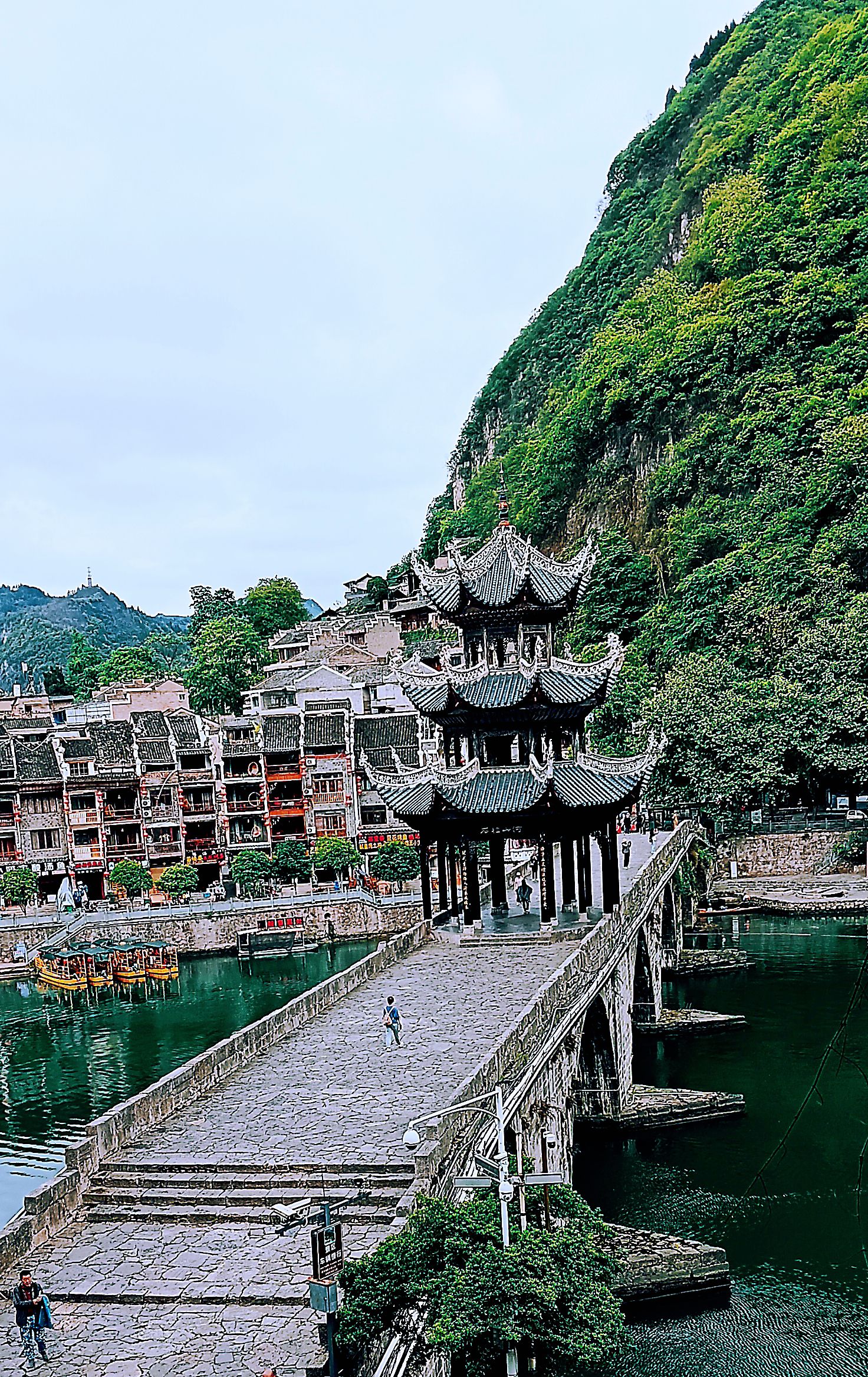
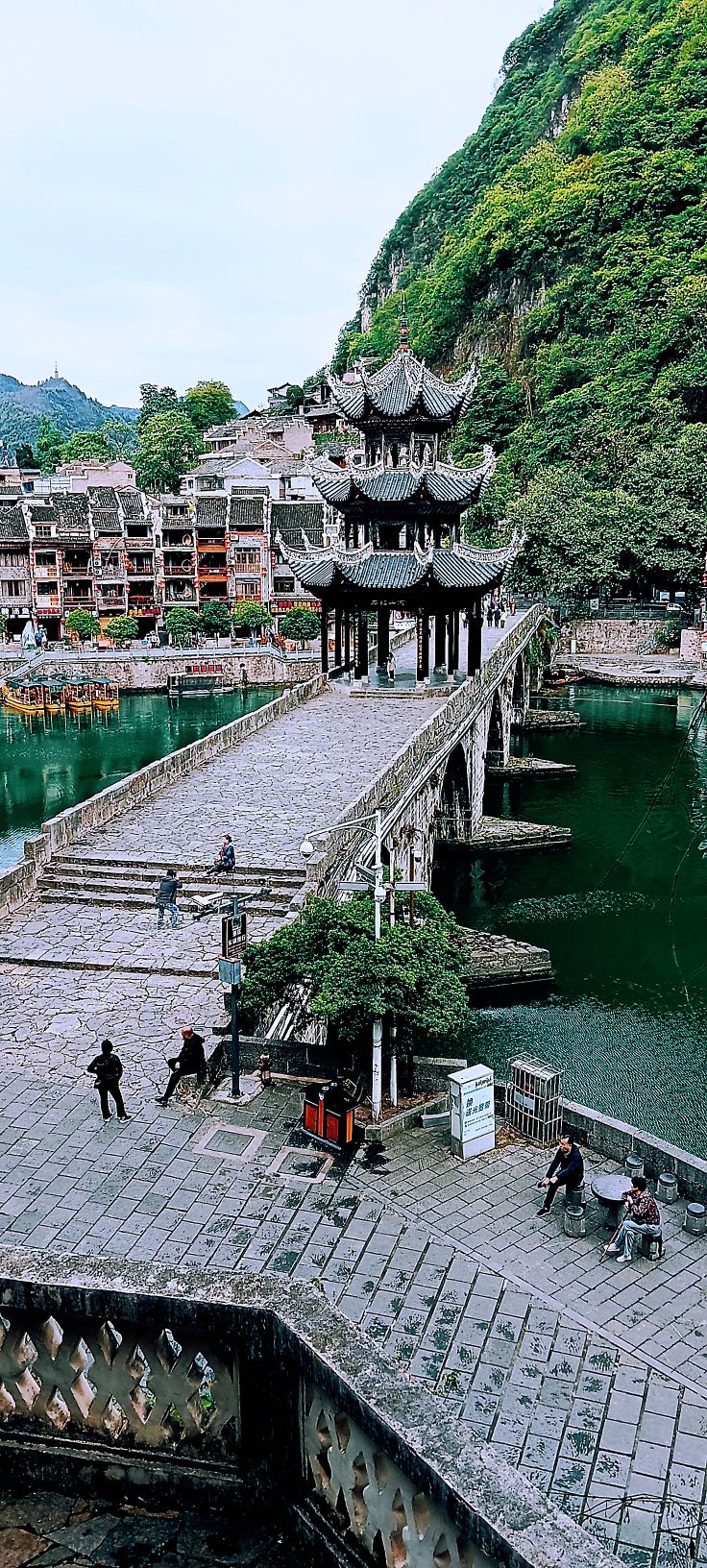
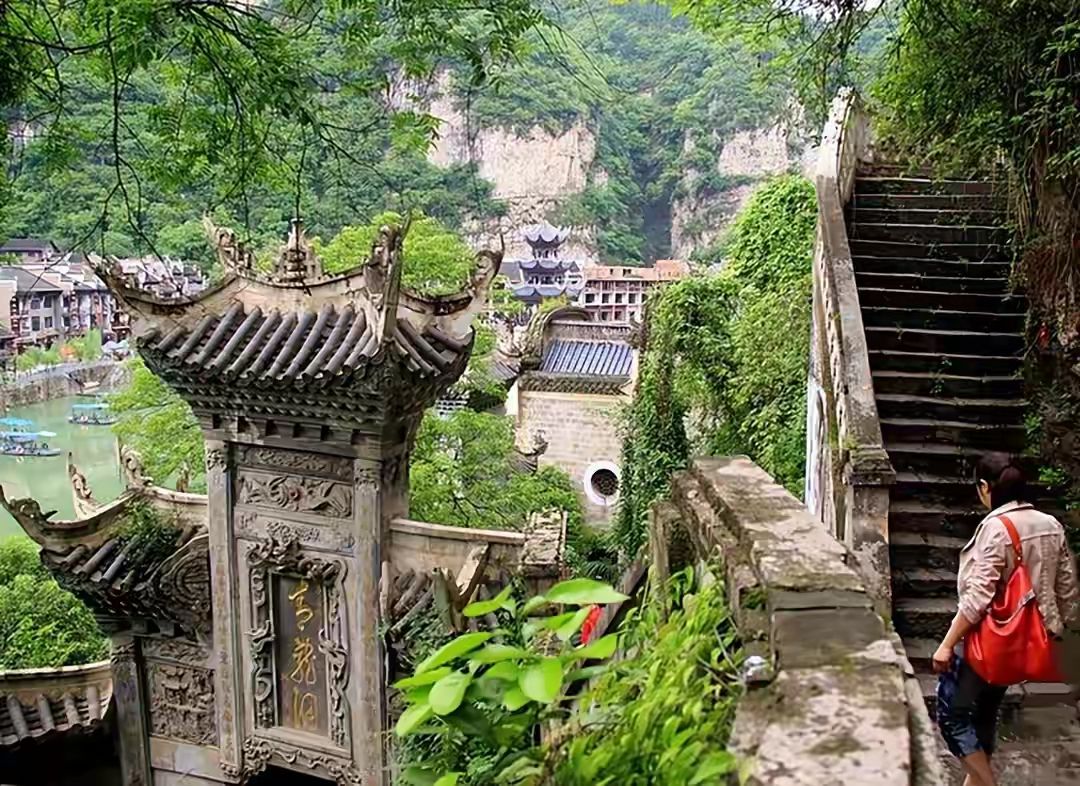
Address
东峡街14号
Description
🏯 Zhenyuan Ancient City · Qinglong Cave Historic Architectural Complex
“The Western Southwest’s Suspended Temple, the Premier Marvel of Eastern Guizhou” — as described in the Qing Dynasty Zhenyuan Prefecture Gazetteer, hailed as “the foremost scenic wonder upon entering Guizhou”
📍 Basic Information
- Address: No. 14 Dongxia Street, Wuyang Town, Zhenyuan County, Qiandongnan Miao and Dong Autonomous Prefecture, Guizhou Province
- Geographic Coordinates: Latitude 27°02′ N, Longitude 108°04′ E, nestled against the sheer cliff face on the eastern bank of the Wuyang River
- Opening Hours: 08:00–17:30 (open year-round; some cliffside pathways may be temporarily restricted during rainy seasons for safety reasons)
- Ticket Price: ¥60 per person (includes access to the three core cave complexes—Qinglong Cave, Zhongyuan Cave, and Ziyan Cave, plus ancillary sites such as Wan Shou Palace and Xianglu Rock; free admission for visitors aged 60 and above, under 14, and active-duty military personnel with valid identification)
- Recommended Visit Duration: 2.5–3.5 hours
📜 Historical Evolution: A Six-Century Model of Confucianism, Buddhism, and Taoism Coexistence
Qinglong Cave is not a natural cave but rather an ancient architectural complex built continuously from the Ming to Qing dynasties, originally established in the 21st year of the Hongwu era (1388). Its peak development occurred during the Qianlong to Guangxu periods. The site reflects deeply the cultural integration history of eastern Guizhou’s frontier region:
- ✅ Ming Foundation through Garrison Settlements: Under the Weisuo military system, border troops carved stone into foundations and erected structures to build the initial Taoist temple at Qinglong Cave, intended to protect soldiers and ensure safe passage
- ✅ Migration-Driven Expansion in Ming-Qing Era: Merchants from Jiangxi, Hunan, Hubei, and Sichuan settled in Zhenyuan, funding expansions of Wan Shou Palace (Jiangxi Guildhall) and Fujian Guildhall, which led to the unique layout of “one mountain, three religions, staggered temples”
- ✅ Qing Consolidation and Integration: In 1783 (48th year of Qianlong), a large-scale renovation unified the Taoist Qinglong Cave, Buddhist Zhongyuan Cave, Confucian Ziyan Cave, and the Fujian-Jiangxi guildhalls within a single vertical cliff face, forming China’s largest, best-preserved, and most ingeniously arranged cliffside architectural complex
📌 Key Historical Evidence:
- The earliest dated stele is the Record of the Restoration of Qinglong Cave from the 27th year of Jiajing (1548), inscribed with “carved into stone for foundation, timber beams for roofs, suspended structures clinging to cliffs like flying or moving”
- The Zhenyuan Prefecture Gazetteer of the Guangxu period explicitly states: “Qinglong, Zhongyuan, and Ziyan Caves—temples of Buddha and immortals—clustered like fish scales, truly the crown of Guizhou province”
- Designated by the State Council in 1988 as a National Key Cultural Relic Protection Unit (No. 3-110), third batch
🏛️ Architectural Artistry: A Vertical “Three-Religions-in-One” Masterpiece on the Cliff
Spanning approximately 21,000 square meters, the complex follows the terrain across three terraces, employing a four-layer structural system—stilt houses, cantilevered corridors, connected walkways, and cliff-face niches to achieve architectural marvels in perilous locations:
| Area | Core Structures | Architectural Features and Significance | |------|------------------|------------------------------------------| | Qinglong Cave Zone | Qinglong Cave, Lüzu Hall, Guanyin Hall | • Ming-style gable roof with deep overhanging eaves, intricate dougong brackets featuring "Eight Immortals Crossing the Sea" carvings<br>• Interior cliffside inscriptions reading “Qinglong Cave,” penned by Governor Wang Bingao of Zhenyuan during the Kangxi era | | Zhongyuan Cave Zone | Zhongyuan Cave, Wangxing Tower, Heavenly Kings Hall | • Qing double-eaved hip-roof Buddhist hall with surviving "Xuanzi color painting" style<br>• Wangxing Tower is the highest point in the complex; climbing offers panoramic views of the Wuyang River’s “S-shaped Taiji pattern” forming the ancient city layout | | Ziyan Cave Zone | Ziyan Academy, Shengren Hall, Wenchang Pavilion | • Rare example of a Qing-era academy built directly on a cliff; lecture hall beams bear the full text of Zhu Xi’s Family Instructions in ink<br>• Wenchang Pavilion’s ceiling features a “Bagua Nine Stars” wooden dome, reflecting Neo-Confucian cosmology | | Guildhall Buildings | Wan Shou Palace (Jiangxi Guildhall), Fujian Guildhall | • Wan Shou Palace’s opera stage is the most exquisite Qing-era theater in eastern Guizhou, with a central relief carving of the Three Stars of Fortune, Prosperity, and Longevity; side rooms preserve donation tablets from merchants dating to the Tongzhi era<br>• Fujian Guildhall’s entrance stone carvings depict the “Maritime Silk Road,” underscoring Zhenyuan’s role as a key hub along the Xiang-Gui-Dian postal route |
🌟 Structural Marvels:
- All buildings are anchored using cypress wood piles (diameter 30–50 cm) deeply embedded into rock fissures, with exterior balconies projecting up to 3 meters, and maximum cantilever reaching 4.2 meters (at the Guanyin Hall of Zhongyuan Cave)
- Entire complex constructed without any modern steel reinforcement—solely relying on mortise-and-tenon joints, ground pegs, and rock wedges for support; it has remained intact through the 1935 Eastern Guizhou earthquake and multiple floods
🏺 Cultural Relics and Remnants: A Living Archive of Heritage
- Cliffside Inscriptions: 27 extant inscriptions from the Ming and Qing dynasties, including the Record of a Visit to Qinglong Cave (Jiajing era), Inscription on the Restoration of Zhongyuan Cave (Qianlong era), and Regulations of Ziyan Academy (Guangxu era)—all highly valuable historical sources
- Religious Sculptures: 14 original statues preserved in situ, including a 1.28-meter-high Ming bronze statue of Lü Dongbin, a Qing wooden seated Guanyin statue (in Zhongyuan Cave), and a Qing clay standing statue of Confucius (in Ziyan Academy)
- Stone Tablets and Documents: 43 steles from the Qing to Republican periods, among them the Donation Tablet of the Wan Shou Palace Merchants, which meticulously lists 28 business names and their financial contributions—key primary records for studying commercial history in southwestern China
- Intangible Cultural Heritage: Annual folk festivals held on the 19th day of the second lunar month (Bodhisattva’s birthday) and the 15th day of the eighth lunar month (Lüzu’s birthday), featuring joint rituals of the three religions—Daoist priests reciting the Tao Te Ching, monks chanting the Heart Sutra, and Confucian scholars reading passages from the Analects, a tradition sustained for over six centuries
🌍 Cultural Significance: A Living Example of China’s Multicultural Unity
- 🔹 Physical Testament to Harmonious Syncretism: Unlike singular faith sites such as Confucius Temple in Qufu, Mount Emei’s Golden Summit, or Wudang Mountain’s monasteries, Qinglong Cave embodies the profound interweaving of Confucian ritual order, Buddhist compassion, and Taoist naturalism—realized through architectural sequence, ritual practices, and educational functions. It stands as a paradigm of religious harmony in Chinese civilization
- 🔹 Cultural Strategy for Frontier Governance: During the Ming Dynasty’s “civilizing reforms,” officials promoted education via the construction of Ziyan Academy, merchants maintained community ties through guildhalls, and religious sites provided spiritual solace—collectively establishing stability in a multiethnic border region
- 🔹 Ancient Practice of Ecological Wisdom: The complex strictly adhered to the principle of “no tree cut, no stone destroyed.” Drainage systems utilized natural rock fissures for water flow, while soil stabilization employed the “cliff cypress + kudzu vine” method—reflecting traditional ecological ethics
🧭 Travel Tips: Guidelines for Respectful Heritage Visits
- 🚶 Recommended Route: Dongxia Street entrance → Qinglong Cave (Taoism) → Zhongyuan Cave (Buddhism) → Ziyan Cave (Confucianism) → Wan Shou Palace (Merchant Culture) → Xianglu Rock Viewing Platform (panoramic view of the entire complex)
- ⚠️ Safety Guidelines:
- Some walkways are only 0.8 meters wide—please walk single file, do not lean on railings, and avoid climbing the cliff faces
- After rain, stone steps become slippery—wear non-slip footwear; visitors over 70 must be accompanied by family members
- 📸 Photography Rules:
- Non-flash photography permitted for exterior architecture and public spaces
- Tripods and supplemental lighting prohibited inside buildings and near artifacts or religious sculptures
- 🌿 Environmental Commitment:
- Smoking, plastic use, and feeding cliff-dwelling birds (such as Red-billed Scimitar-Babblers and White-cheeked Laughingthrushes) are strictly forbidden within the site
- Dispose of waste in designated ecological recycling bins (categories: bamboo weaving, paper, food scraps)
🌈 Cultural Extension Experiences:
- Book the “Qinglong Cave Architectural Survey Workshop” (every Saturday morning, limited to 15 participants—reserve online at least three days in advance)
- Night tour experience “Three Stages on the Cliff” (available only in peak season), an immersive performance using light and shadow to dramatize dialogues between the three religions throughout history
This article is based on the China Cultural Relics Atlas: Guizhou Volume, Zhenyuan County Annals (1995), Conservation Plan for the Qinglong Cave Historic Architectural Complex (2021–2035), and field survey data. Content aligns with information verified by the National Cultural Heritage Administration.