Shengquan Temple
Address
353省道
Description
🏯 Shengquan Temple
📍 Location: Along Provincial Road 353, within Song County, Luoyang City, Henan Province
🌿 Historical Origins
Shengquan Temple was originally established during the Taihe era of Emperor Xiaowen of the Northern Wei Dynasty (477 AD), making it over 1,500 years old and one of the significant ancestral temples of Chan Buddhism in Central China. According to the Song County Chronicles, the temple was initially named "Longquan Chan Academy." It earned its current name, "Shengquan" (Sacred Spring), due to a perennially flowing spring within the temple grounds, whose water is clear and sweet like fine wine. In the Tang Dynasty, the renowned monk Hui’an resided here to preach and propagate the Dharma, later passing his teachings to Huairang of Nanyue Mountain—making this site an important lineage center of the Caodong School of Chan Buddhism.
🏰 Architectural Features
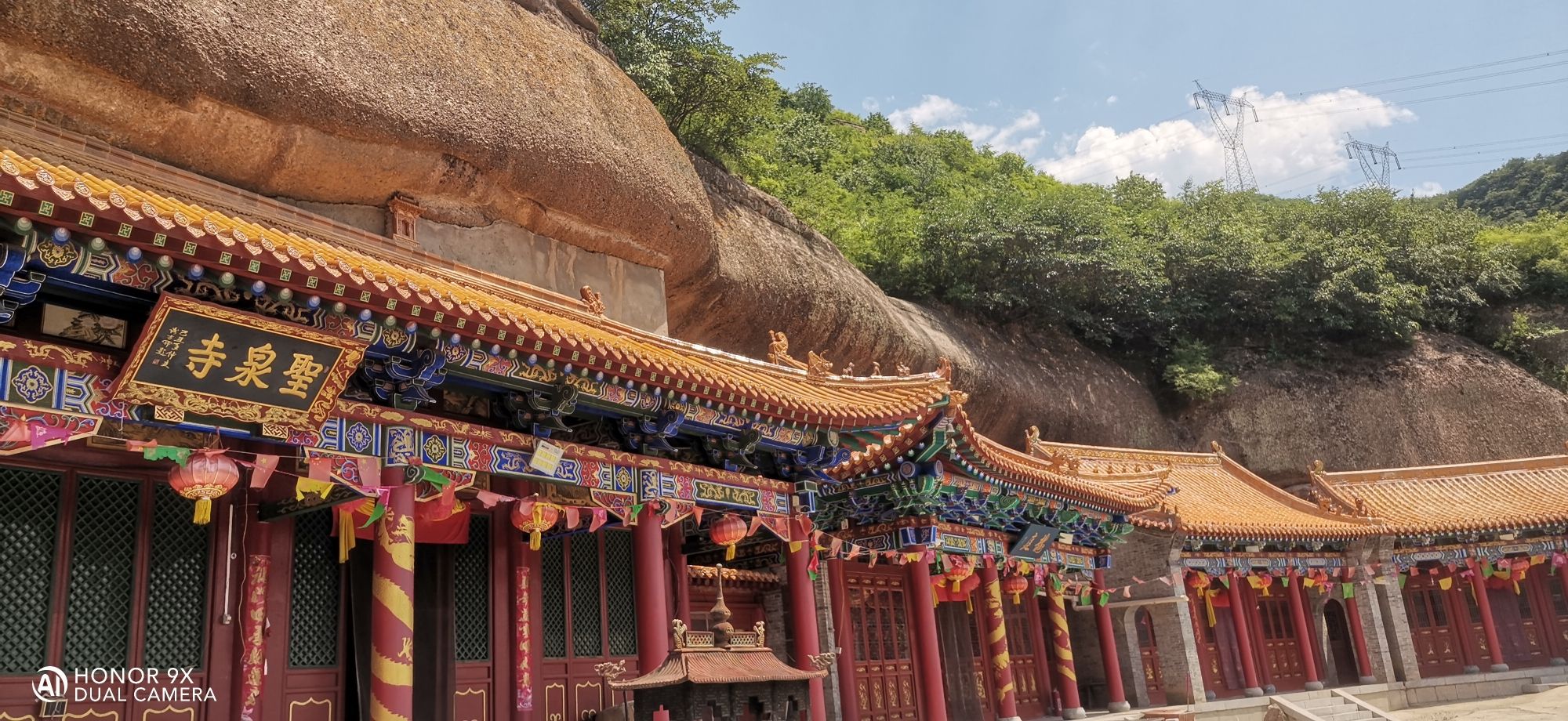
The temple is built into the mountainside, facing south with a north-south axis and symmetrical layout. The main surviving structures include the mountain gate, Hall of the Four Heavenly Kings, Great Buddha Hall, Scripture Pavilion, and bell and drum towers. The primary buildings reflect Qing Dynasty reconstruction styles, featuring wooden beam-frame roofs with upturned eaves, intricate carvings, and ornate decorations, exuding a solemn and ancient elegance. Inside the Great Buddha Hall, the Three World Buddhas are enshrined, and two exquisite Ming Dynasty stone lions stand before the hall, finely carved and remarkably well-preserved.
📜 Cultural Relics
- Shengquan Well Stele: Erected during the Jiajing period of the Ming Dynasty, recording miraculous tales associated with the spring; designated as a provincial-level cultural heritage site.
- Tang Dynasty Bronze Buddha Statue: Discovered at the cliffside behind the temple, standing 68 cm tall, with a dignified form reflecting the grandeur of the prosperous Tang era.
- Collection of Ming and Qing Dynasty Steles: Over ten inscribed stones, including records of donations, repair chronicles, and poetic inscriptions, serving as vital sources for studying local religious and social history.
🌸 Cultural Significance
Shengquan Temple not only stands as a pivotal node in the spread of Chan Buddhism but also embodies deep integration of Confucianism, Buddhism, and Daoism. Every year on the nineteenth day of the second lunar month—the birthday of Guanyin—it hosts a traditional temple fair, drawing large crowds and vibrant folk activities. The event has been listed as a municipal intangible cultural heritage.
🚶 Travel Information
- Opening Hours: 7:00–18:00 daily (extended to 19:00 in summer)
- Admission: Free entry (some halls require prior reservation)
- Transportation: Take a bus from Luoyang to Song County and alight at the “Shengquan Temple” stop, then walk approximately 1.5 kilometers; alternatively, drive directly along Provincial Road 353 to reach the scenic area parking lot.
- Recommended Visit Duration: 1.5 to 2 hours
🌿 Standing by the ancient spring that has flowed for a millennium, listening to the whispering pines and watching the dappled shadows of Buddha statues—Shengquan Temple is more than a temple; it is a timeless echo of civilization.