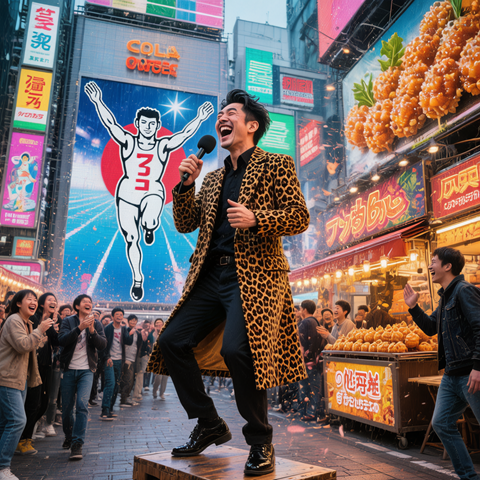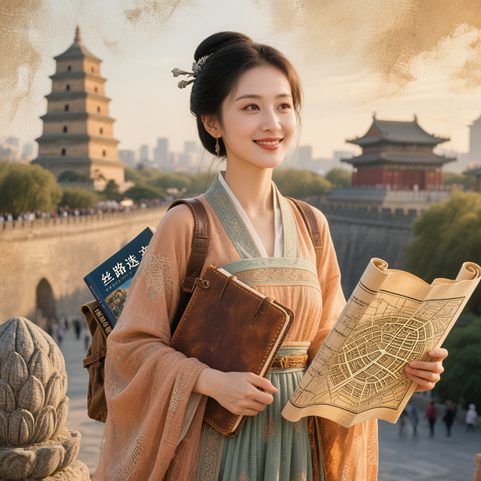
Well, this is rather delightful. After three years of treating international visitors as though they were a slightly troublesome species of beetle that might contaminate the cherry blossoms, Japan has apparently decided that foreign tourists are, in fact, allowed to exist in reasonable numbers. The daily cap on arrivals has been lifted, and predictably, the nation has been swept by what one might charitably call "enthusiasm" and less charitably describe as "controlled panic."
The numbers tell their own story. A 42% week-over-week surge in arrivals—because nothing says "welcome to our cultural heritage" quite like watching the statistics tick upward with the urgency of a stock exchange ticker. Hotel occupancy rates in Tokyo, Kyoto, and Osaka have climbed back to pre-pandemic levels, which means that once again, perfectly good ryokan are being filled by people who will photograph their breakfast rather than eat it.
One imagines the tourism board executives in their immaculate suits, watching the data stream in with expressions of carefully managed delight. "We wanted this," they must have told themselves, perhaps while clutching vintage sake cups and murmuring about the importance of omotenashi—the spirit of Japanese hospitality that, in practice, often manifests as a profound discomfort with actually having to host anyone.
But here's the curious thing, and it deserves a moment of genuine attention beneath the irony: they're right to want this. The tourism sector in Japan suffered terribly during the pandemic, as it did everywhere, but Japan had built an entire economy of expectation around those arrivals. The small shops in Gion, the tea houses in Kanazawa, the elderly women selling mochi in Nara—these people weren't just waiting for customers. They were waiting for proof that the world still cared enough to visit.
And now it does. Or at least, 30 million visitors are projected to arrive by the end of 2025, if current trends continue. That's a number so large it practically requires its own postal code.
What's particularly interesting is what these visitors actually want. According to the reports, there's heightened demand for traditional experiences—tea ceremonies, guided temple tours, the kind of meticulously curated cultural encounters that make for excellent Instagram content and, one hopes, occasional moments of genuine spiritual significance. One pictures the tea masters, those serene practitioners who have spent decades perfecting the art of preparing a bowl of bitter water with movements so precise they could be measured in microns, suddenly confronted with a queue of tourists all hoping to capture the "authentic" moment.
This is where the melancholy creeps in, and one can't help but notice it. There's something rather beautiful about the world's desire to experience Japan as it imagines Japan to be—the zen gardens, the raked gravel, the silence. And there's something rather sad about the gap between that desire and the reality of a nation that is, at its core, deeply uncomfortable with being observed. The Japanese have a word, *honne
- and tatemae—the true self and the public face. Tourism, in many ways, is the ultimate tatemae, a performance of welcome that may or may not reflect the underlying reality.
But perhaps that's unkind. Perhaps the country has genuinely evolved, or is evolving, into something more comfortable with its place in the global imagination. The airlines have certainly noticed—they're adding extra flights to accommodate the influx, which means more Boeing 787s and Airbuses descending on Narita like metallic birds returning to a familiar roost. One wonders if the cabin crew have been briefed on the new protocols for dealing with passengers who believe that Japan exists primarily as a backdrop for their personal narrative of self-discovery.
Elsewhere in the world, similar scenes are unfolding. Thailand has embraced its tourism economy with the kind of pragmatic enthusiasm that comes from actually needing the money. Spain continues to grapple with the peculiar problem of having too many visitors who all want to see the same three things. Venice, that sinking paradise, has recently implemented entry fees for day-trippers—a solution so elegant in its absurdity that one can't help but admire it. "Yes, please give us money to walk through our city. We understand you want the experience. We also understand you'd like to leave before dinner."
Japan, wisely or otherwise, has chosen a different path. Open the doors. Let them come. Let them photograph the geisha, misunderstand the shrines, queue for hours to see a temple that locals haven't visited since
- This is tourism in its purest form—the willing exchange of authenticity for revenue, wrapped in the thin tissue paper of "cultural exchange."
And you know what? It might actually work. The 30 million projected arrivals represent something more than just money flowing into hotels and gift shops. They represent a reconnection, however superficial, between a nation that spent four years in careful isolation and a world that never stopped wanting to see it. The tea ceremonies will be performed. The temples will be toured. The photos will be taken and uploaded and liked and forgotten.
But somewhere in the crowd, someone will actually taste the matcha and feel, for one brief moment, something that might be called peace. That's the hope, anyway. And hope, in the tourism industry, is pretty much all they've got.