It is, one must concede, a peculiarly modern form of mass hysteria. Not for us the dancing plagues of the Middle Ages, or the collective swoon at a revivalist tent. No, our contemporary mania manifests as a sudden, global lurch away from the familiar, a quiet panic expressed in the frantic clicking of booking confirmations. The 2025 figures are in, and they read less like a tourism report and more like a diagnosis: the patient, which is to say all of us, is desperate to be anywhere but here. Brazil leads the charge, a riot of colour and sound beckoning those weary of greyscale lives. Bhutan, Iceland, Egypt follow—a curious trinity of monastic serenity, elemental bleakness, and ancient, dusty grandeur. Even the Caribbean, that most traditional of sun-drenched clichés, reports record-breaking numbers, as if we’ve collectively decided to revisit the old tropes with a new, almost forensic intensity.
One is tempted to call it wanderlust, but that implies a romantic, Goethe-esque yearning. This feels different. It is less a pulling towards something than a pushing away from everything. The news cycle, a perpetual low-grade fever of political farce and ecological dread, has rendered the domestic sphere faintly claustrophobic. The ‘new normal’ is, it turns out, intolerably dull. And so we flee, not with the joyous abandon of the gap-year student, but with the grim determination of a prisoner on a meticulously planned furlough. We seek not just a change of scenery, but a change of self, or at the very least, a self that isn’t being drip-fed anxiety through a digital IV.
Consider the destinations. They are not merely ‘vibrant’, as the press releases chirp; they are, each in their own way, definitive. They offer not escape from reality, but a sharper, more concentrated version of it. Brazil is life, amplified to a deafening, glorious crescendo. To stand in a Rio *favela
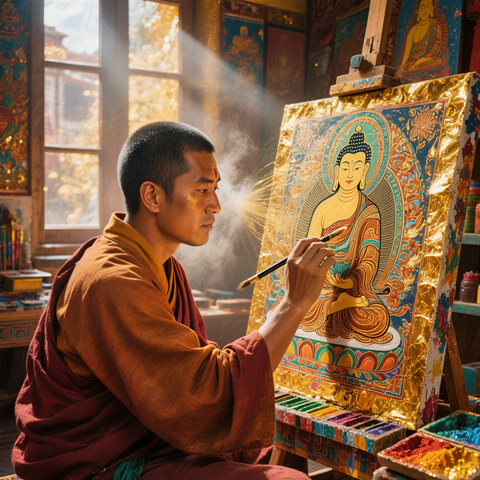
- or lose oneself in the Amazon’s green murmur is to feel the pulse of the planet, raw and unchecked. It is the antithesis of the sanitised, algorithmically-curated urban experience. Bhutan, meanwhile, sells the exquisite pain of absence—the absence of noise, of haste, of the relentless self. Its Gross National Happiness index is a beautifully marketed rebuke to our own metrics of success. One goes there to feel the quiet ache of one’s own insignificance, a curiously luxurious form of melancholy.
Iceland and Egypt present two faces of the same ancient coin. The former offers a landscape so preternaturally stark it feels post-human, a theatre of geology where one’s own concerns are rendered laughably ephemeral against the backdrop of shifting tectonic plates and weeping glaciers. The latter is a mausoleum of human ambition, where the heat and the dust and the implacable gaze of the Sphinx perform a neat trick: they make our own civilisation’s obsessions seem both terribly recent and faintly ridiculous. To see the crowds now swarming the once-remote ruins of Saqqara or the White Desert is to witness a pilgrimage to the sites of our own eventual obsolescence. It’s bracing, if one is in the mood for that sort of thing.
And what of the Caribbean’s record numbers? It is the final, telling piece of the puzzle. This is not the discovery of the new, but the re-conquest of the old. We are flocking to its shores not for novelty, but for the deep, amniotic comfort of a guaranteed cliché—the perfect sunset, the turquoise sea, the rum punch. But even here, the detachment follows. One sips one’s drink and observes the performance of paradise, aware of the fragile ecosystems beneath the waves and the economic precarity behind the smiling staff. The pleasure is real, but it is now forever tinged with the knowledge of its own contingency.
This global shift, this stampede towards the ‘diverse and less traditional’, is therefore a complex cocktail. One part is genuine curiosity, a healthier impulse. Two parts, however, is a profound, unspoken alienation. We are tourists not just in foreign lands, but in our own era. The curated ‘experiences’ we purchase—from a silent meditation retreat in the Himalayas to a carnival bloc in Salvador—are attempts to plug into a more authentic current, to feel something *specific
-
and *localised
-
in a world that feels increasingly generic and globally homogenised.
We return, of course. The flight always lands back at the point of departure, laden with souvenirs and a camera roll full of evidence. The tan fades. The sense of perspective, so hard-won before the majesty of a glacier or the silence of a dzong, proves frustratingly perishable, evaporating by the first commute back to work. Yet we will go again. The numbers will climb next year, and the next. For the modern condition, it seems, requires a constant, rotating set of elsewhere. We are all permanent residents of a psychic airport lounge, forever scanning the departure boards for the next gate out, hoping the next destination might finally feel, however briefly, like a place we could call home.