新白塔 - 新白塔(しんしろとう)
泸州💎💎💎
加载中...
📍 Address: 110 meters east of Yuehong Villa
🕰️ Historical Background
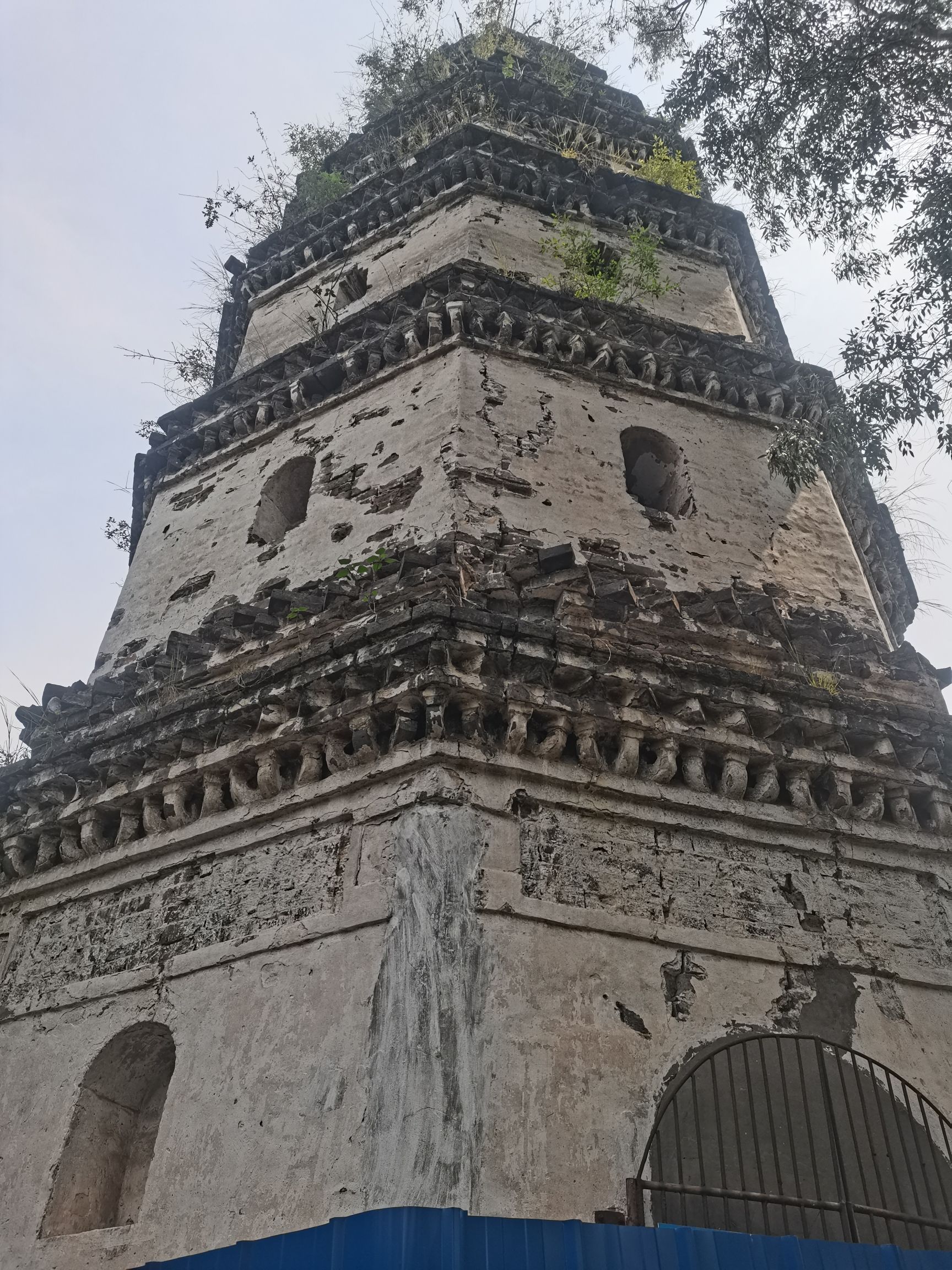
The New White Pagoda was originally constructed during the Wanli period of the Ming Dynasty as a subsidiary tower of a Buddhist temple located on the eastern outskirts of ancient Yuexi Prefecture. Initially named "Ciguang Pagoda," it was damaged during later wars. It was rebuilt during the Guangxu era of the Qing Dynasty and renamed "New White Pagoda," symbolizing renewal and radiant brilliance, becoming an important religious site and landmark in the region. In the mid-20th century, it fell into disrepair, but in 2018, with approval from cultural heritage authorities, it was restored according to its original design. Today, it is designated a provincial-level cultural relic protection unit.
🏛️ Architectural Features
The pagoda is a seven-story, eight-sided structure made of brick and wood, standing approximately 32 meters tall. Its base is built with granite, intricately carved with lotus motifs. Each level features semicircular doorways and window openings, while copper wind chimes hang at the eaves, producing clear, melodious sounds when stirred by the wind. The exterior walls are coated with white lime, giving the pagoda a striking appearance reminiscent of a jade hairpin rising skyward—thus earning its name "White Pagoda." Inside, a spiral stone staircase allows visitors to ascend to the top for panoramic views of both banks of the Yue River.
🏺 Cultural and Historical Significance
Three fragments of Ming Dynasty stone sutra pillars were discovered inside the pagoda, inscribed with the complete text of the Diamond Sutra. The calligraphy is precise and elegant, serving as crucial physical evidence for studying the spread of Buddhism and calligraphic art in late Ming China. Beneath the foundation, remains of a Tang Dynasty subterranean chamber were uncovered, containing terracotta figurines, bronze coins, and shards of celadon porcelain, confirming the site’s continuous role as a central feature of an ancient Buddhist temple complex.
📚 Cultural Meaning
Beyond its religious significance, the New White Pagoda embodies the cultural spirit of the Yue region—valuing literature and moral integrity. Every year on the 15th day of the first lunar month, a traditional lantern festival known as “Lantern Blessing Ceremony” is held locally. Locals climb the pagoda to hang lanterns, praying for favorable weather and bountiful harvests, preserving a centuries-old custom.
🎟️ Visitor Information
✨ Visitor Tips: Smoking and climbing are strictly prohibited inside the pagoda. Please remain quiet while ascending, and show respect for the cultural relics and surrounding environment.