鐘楼鼓樓
泸州💎💎💎💎
加载中...
“The morning bell and evening drum awaken the worldly seekers of fame and fortune;
The chanting of scriptures and Buddhist invocations call back those lost in the sea of suffering.”
——Inscribed couplet preserved from the ancient bell tower
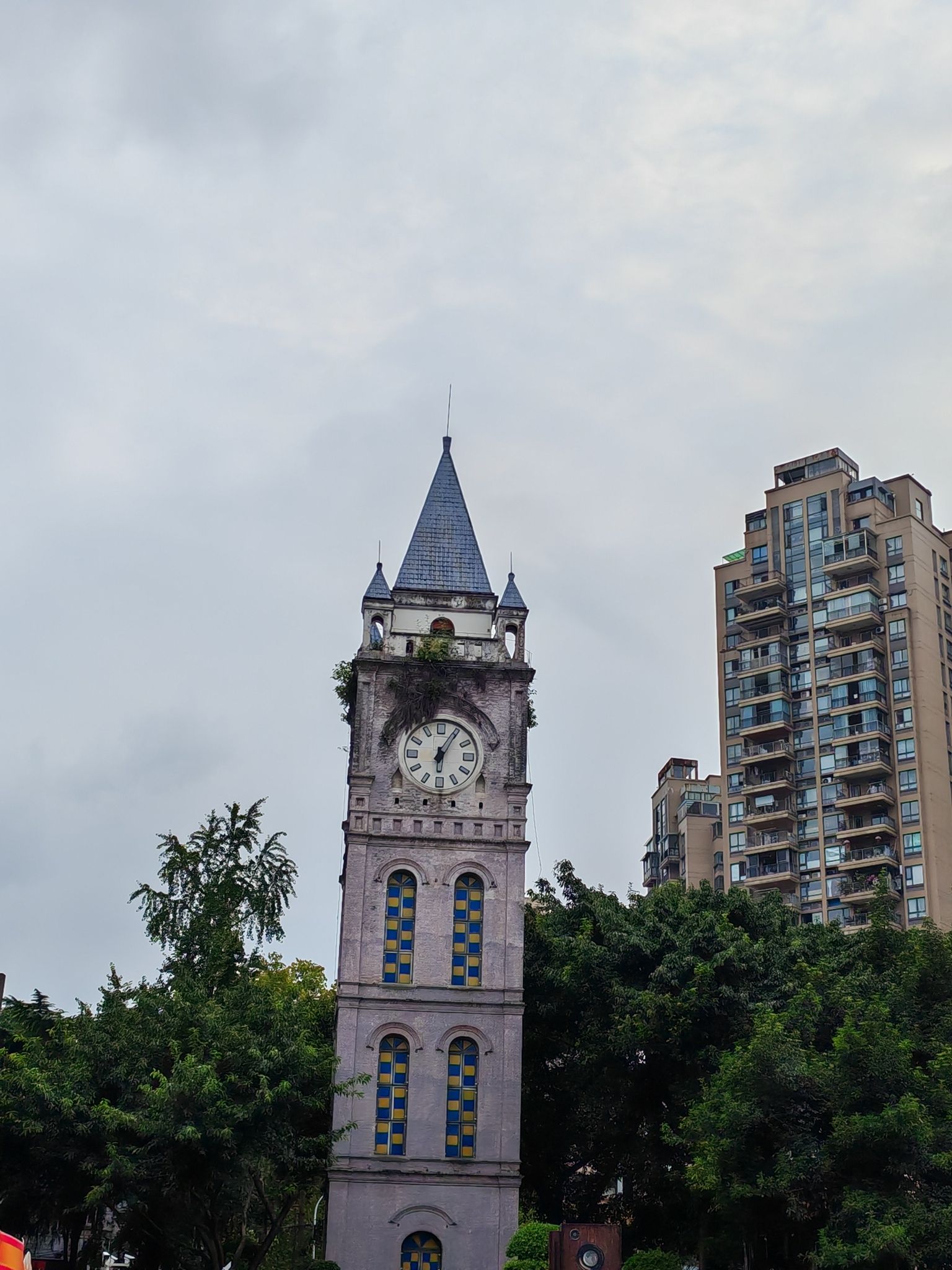
Located at No. 13 Huanhuang Road, Beicheng Subdistrict, Linhai City, Zhejiang Province, the Bell and Drum Tower stands as one of the core historical landmarks of Linhai Ancient City. Originally constructed during the Hongwu period of the Ming Dynasty (1368–1398), it formed a vital part of the city’s defensive system and timekeeping network. According to the Taizhou Prefecture Annals, when the prefectural city walls were rebuilt in the early Ming dynasty, “a bell tower was erected in the northern corner of the city, housing a large bell to mark dawn and dusk; a drum tower was built to its east, equipped with watch drums to regulate day and night.” These two towers were originally built side by side as a paired structure. However, due to fires and warfare in the Qing dynasty, the original buildings were damaged. The current structure dates from the reconstruction in the 23rd year of Kangxi’s reign (1684) and a major renovation in the 15th year of Guangxu’s reign (1889). It was designated a Provincial Cultural Relics Protection Unit in 2005.
It should be emphasized that this Bell and Drum Tower is not to be confused with the similarly named structures in Beijing or Xi’an. Instead, it serves as the highest point and spiritual focal point along the northern axis within Linhai’s historic spatial layout of “one central axis, three districts,” bearing witness to over six centuries of continuous cultural development and urban transformation in the former Taizhou Prefecture.
Form and Layout:
Structural Craftsmanship:
Replica of the Ming Dynasty Iron Bell (Votive Bell):
The original bell was cast in the 42nd year of Wanli’s reign (1614), weighing over a thousand jin. It bore the inscription “Donated by devout citizens of Linhai County, Taizhou Prefecture.” It was melted down in 1958. The bell currently hung here is a faithful reproduction cast in 2007 based on the original design. Its deep, resonant tone echoes the traditional practice of “seven morning chimes, eighteen evening drum beats” (reinstated during festivals).
Qing Dynasty Stele Inscription on the Restoration of the Bell and Drum Tower:
Mounted on the eastern inner wall of the tower, this green stone stele stands 1.82 meters tall, carved in regular script with engraved characters. It details the reasons for the Kangxi-era restoration, lists contributors, and elucidates the ritual significance of “the bell to awaken awareness, the drum to inspire action”—an invaluable physical record for studying local governance and timekeeping systems during the Ming and Qing dynasties.
Inscribed Markings from the Republican Era:
Multiple inscriptions left by military personnel stationed in the tower during the War of Resistance against Japan remain visible on beams and rafters, including phrases such as “Defend our homeland, determined to win,” attesting to the site’s continued military function in modern times.
Material Embodiment of Time Civilization:
As the ancient “city clock,” the Bell and Drum Tower embodies China’s traditional philosophy of harmony between heaven and humanity in timekeeping—morning bells herald the start of day, evening drums signal the end of market hours—maintaining the daily rhythm and collective memory of the city’s residents.
Key Node of Coastal Defense Culture:
During the Ming dynasty, Taizhou served as a frontline defense zone against Japanese pirates. The tower fulfilled multiple roles: surveillance, communication, and alerting. Together with the city walls built by General Qi Jiguang—including the Jingyue Gate and Xingshan Gate—it formed the spiritual heart of the maritime defense system in eastern Zhejiang.
Spatial Symbol of Confucian-Buddhist-Taoist Synthesis:
Historically, the tower housed statues of Guanyin Bodhisattva (guardian of the underworld) and Wenchang Emperor (patron of scholarly success). It also served as a venue for local scholars’ lectures and seasonal celebrations, reflecting the governance wisdom of Jiangnan ancient cities—where rites and music harmonize, and both human and divine forces co-govern.
| Item | Details |
|---|---|
| Opening Hours | 🕐 Daily 08:30–17:00 (closed Mondays, except public holidays) |
| Admission | ✅ Free entry (valid ID required for registration) |
| Transportation | 🚌 Take Linhai buses K1, K2, or 101 to “North Gate Stop,” then walk about 200 meters; <br/>🚗 Navigate to “Linhai Bell and Drum Tower” (No. 13 Huanhuang Road); nearby parking available at the North Entrance of the Ancient City |
| Visitor Tips | • Flash photography and touching relics or inscriptions prohibited<br/>• Ascending the tower requires caution—wooden stairs are steep; elderly visitors and children advised to seek assistance from staff<br/>• Free public guided tour on the first Saturday of each month at 9:30 a.m. (must reserve on-site) |
| Nearby Attractions | 🌉 Walk 5 minutes: Taizhou Prefectural City Wall (Northern Section), Ziyang Street Historic District, Longxing Temple<br/>📚 Recommended extended route: “Bell and Drum Tower → Lanzheng Gate → Baiyun Pavilion → Longxing Temple → Ziyang Street” |
📌 Visitor Reminder: This structure is an immovable cultural relic. Please respect and abide by the Cultural Relics Protection Law of the People’s Republic of China. Honor history, observe quietly, and appreciate with reverence.
Content compiled based on the "Linhai City Chronicles," the "Protection Plan for Taizhou Prefectural City Wall (2021–2035)," publicly available archives from Zhejiang Provincial Bureau of Cultural Relics, and field survey data from 2023. Data current as of June 2024.