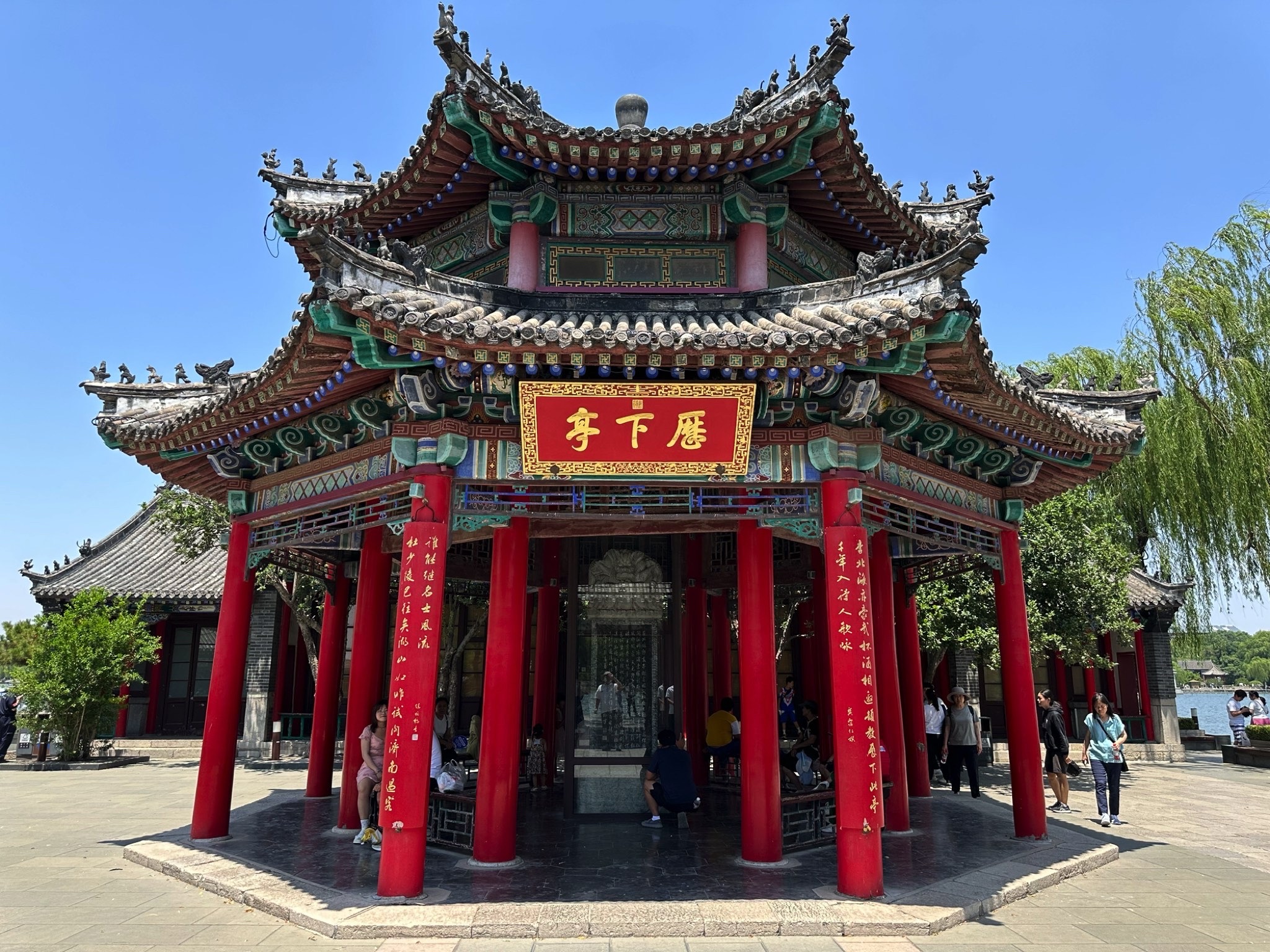
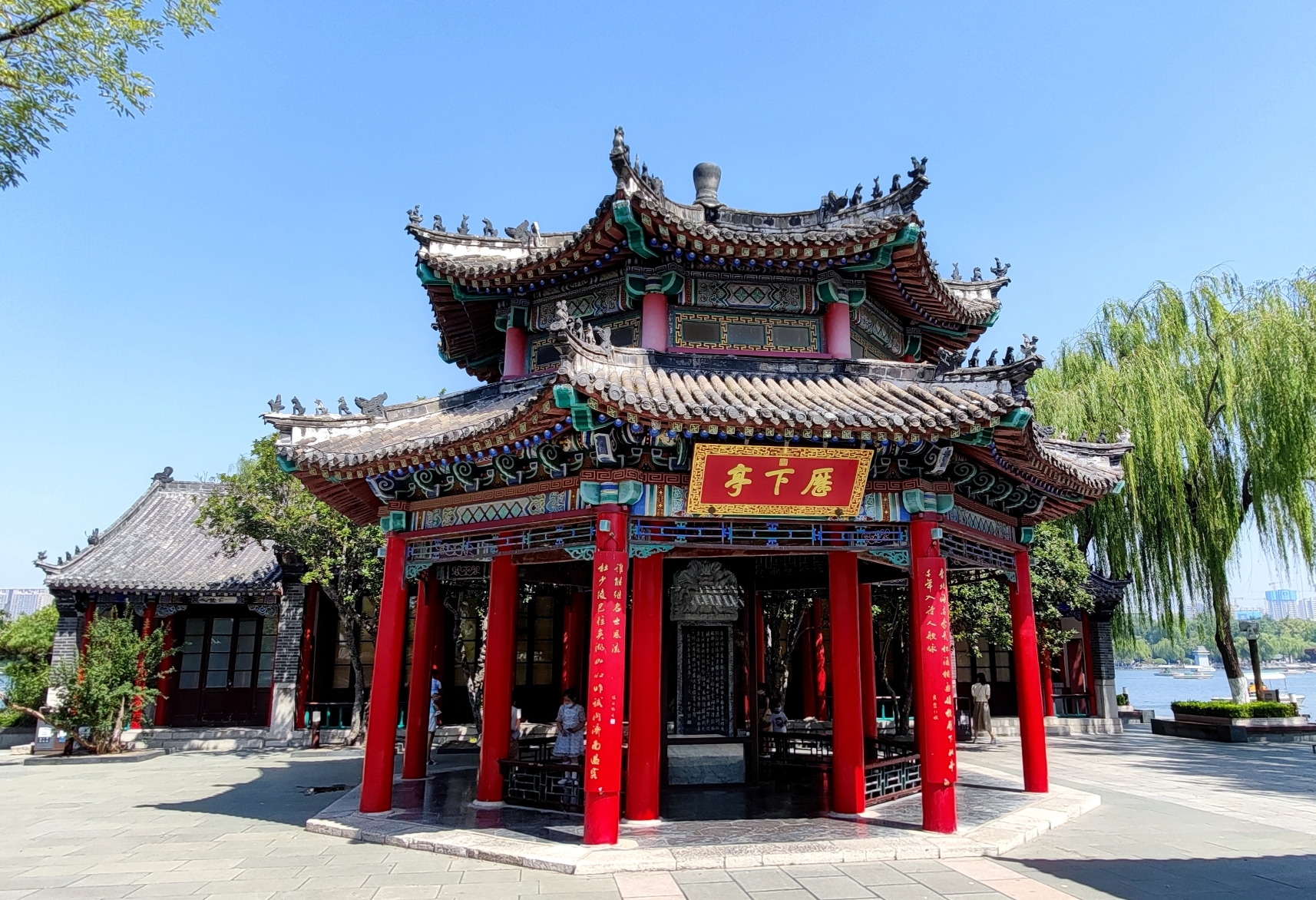
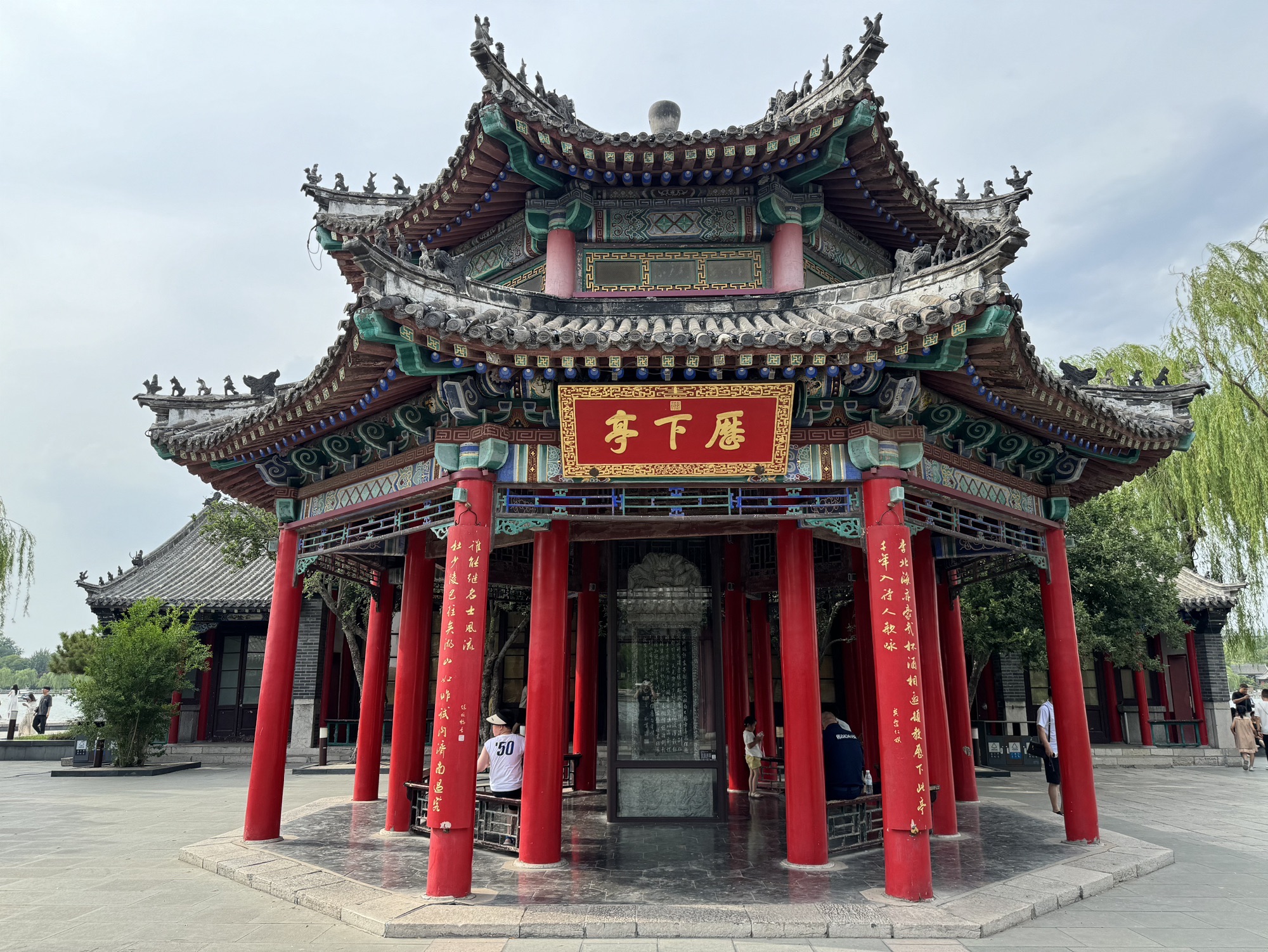
歷下亭(りっかてい)
ライウ💎💎💎💎
加载中...
“This pavilion in the land beyond the sea is ancient; Jinan has long been famed for its distinguished scholars.”
—— Du Fu, Attending Li Beihai’s Banquet at Lixia Pavilion
Lixia Pavilion was originally constructed during the Northern Wei Dynasty (circa 5th century) under the name "Guest Pavilion," serving as a reception site for officials welcoming guests. Its name "Lixia" derives from Jinan’s ancient designation “Lixia Yi” (recorded in Records of the Grand Historian: The Genealogy of Duke Tai Gong of Qi as “Qi has Lixia”), meaning “below Mount Lishan.”
✅ Tang Dynasty Flourishing: In the fourth year of Tianbao (745 CE), Li Yong, Governor of Beihai, hosted a banquet here with the young Du Fu, who composed the poem Attending Li Beihai’s Banquet at Lixia Pavilion on the spot. This instantly elevated the pavilion’s fame nationwide, securing its status as the “cultural eye of Qilu.”
⚔️ Repeated Destruction and Reconstruction:
📜 Historical Witness: Emperor Qianlong once stayed here during his southern tour and inscribed poems; in the late Qing Dynasty, reformist figures such as Kang Youwei and Liang Qichao delivered lectures and debated political reforms here.
📌 Important Note: The existing structures are a Qing-style wooden architectural complex, designated a Shandong Provincial Cultural Heritage Site in 1988, and included as a core node in the 2023 “Jinan Ancient City Historic District Protection Plan.”
Lixia Pavilion stands on the central island of Daming Lake (also known as “Lixia Island”), covering about 1,200 square meters. It follows the classic northern Chinese garden concept of “one pond, three mountains,” centered around the pavilion and surrounded by corridors, verandas, steles, and bridges, forming a spacious and elegant scholarly space.
Lixia Pavilion Core:
Upper Couplet: The pavilion beyond the sea is ancient
Lower Couplet: Jinan boasts many distinguished scholars
(Written by late Qing calligrapher He Shaoyi; the original stone carving is preserved on the eastern wall inside the pavilion)
Ancillary Structures:
| Category | Representative Relics/Content | Significance |
|---|---|---|
| Stelae & Carvings | Seven inscribed stones including the Qing Kangxi-era Stele on the Restoration of Lixia Pavilion, Daoguang-era Continuation Restoration Stele, and Republican-era Poetry Inscriptions on Lixia Pavilion | Document the history of successive renovations; showcase calligraphy blending the robust styles of Yan Zhenqing and Liu Zongyuan with the refined elegance of court script |
| Couplets & Plaques | He Shaoyi’s calligraphy of Du Fu’s couplet (original stone copy), Guo Moruo’s plaque “Lixia Pavilion” (1961), Zhao Puchu’s “Famous Pavilion Beyond the Sea” inscription | Integrate literary, calligraphic, and historical values in one artistic expression |
| Literary Archives | Detailed records of Lixia Pavilion’s evolution in Qi Cheng, Licheng County Annals, and Daming Lake Chronicles; over a hundred poems from the Complete Tang Poems include Du Fu’s banquet verse and subsequent imitations | Form a complete “literary lineage of Lixia Pavilion,” essential for studying the literary culture of Shandong since the Tang and Song dynasties |
| Intangible Heritage | Traditional “Lixia Pavilion Poetry Gathering” (held annually around Grain Rain Festival, preserving customs of poetry recitation, tea tasting, lotus viewing, and musical performances) | Listed as a representative project of Jinan’s Intangible Cultural Heritage in 2021 |
Cultural Identity as Jinan’s Literary Soul:
Lixia Pavilion is the only northern pavilion to gain national cultural recognition through Du Fu’s poetry, ranking alongside the “Drunkard’s Pavilion” in Jiangnan and the “Pavilion in the Lake Center” as one of China’s “Three Great Poetic Pavilions.” Yet uniquely, it embodies the northward transmission of Central Plains scholar-official spirit.
Living Embodiment of Urban Memory:
From the Tang Dynasty to the present, Lixia Pavilion has remained a symbol of Jinan’s cultural identity—from the Song Dynasty’s administrative center under Zeng Gong, to the birthplace of the “Lixia Poetic School” led by Li Panlong in the Ming Dynasty, and now a hub for Jinan’s “Reading Capital” public literacy campaign—consistently maintaining the continuity of “poetic education, ritual music, and aesthetic cultivation.”
Model of Ecological and Humanistic Integration:
Built upon Daming Lake’s ecological foundation of “four sides of lotus, three sides of willow,” Lixia Pavilion exemplifies traditional Chinese philosophy of “harmony between humanity and nature.” In 2022, it was selected as a national case study for cultural heritage in water scenic areas.
🌷 Visitor Tip: The central island is an ecologically sensitive zone—please do not feed birds or pick lotus flowers. Flash photography is prohibited inside the pavilion to protect stone relics.
This article is compiled based on data from the Jinan City Gazetteer: Cultural Relics Volume, Annotations to the Daming Lake Chronicle (Jinan Press, 2020), the 2023 Shandong Provincial Cultural Relics Census Report, and official materials from the Lixia Pavilion Management Office. Data updated as of June 2024.