Former Site of the Sino-Soviet Civil Aviation Pilot Training and Instruction Corps ️️
Address
青年公寓附近
Description
Former Site of the Sino-Soviet Civil Aviation Pilot Training and Instruction Corps 🏛️✈️
A precious testament to Sino-Soviet aviation collaboration beneath the historical sky
— A vital cradle in the early professional development of China’s civil aviation
📜 Historical Evolution: The Foundational Ground of New China’s Civil Aviation Education
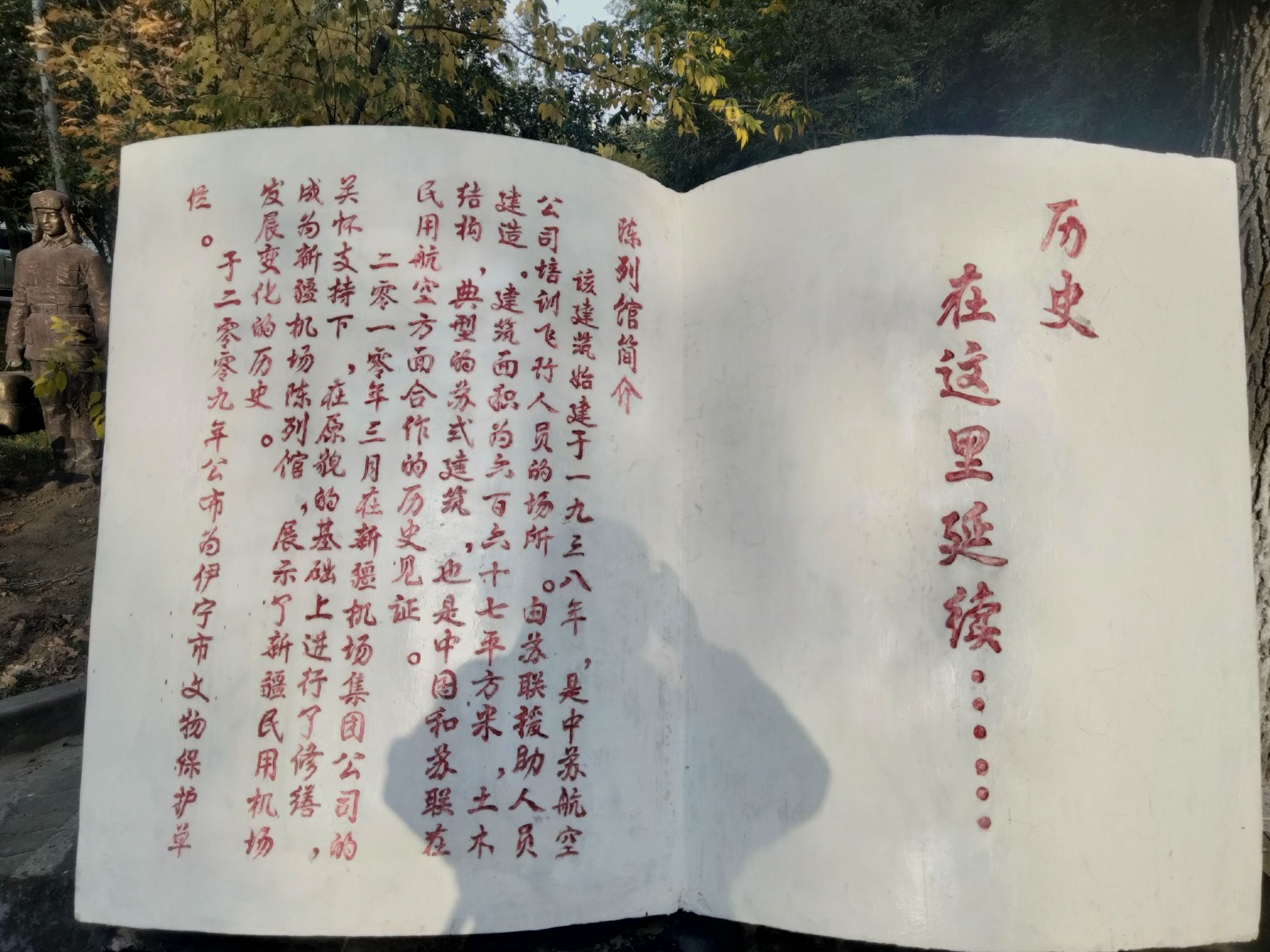
- Established in 1950: Based on the February 1950 Sino-Soviet Agreement on Establishing a Joint Civil Aviation Company, the Sino-Soviet Civil Aviation Joint Stock Company was officially founded. That same year, to ensure operational continuity and technological self-reliance, both sides established the “Sino-Soviet Civil Aviation Pilot Training and Instruction Corps” in the western suburbs of Beijing (now the Zhongguancun area of Haidian District), directly under the leadership of the joint company.
- Operational Period (1950–1954): This corps became the first nationally organized, systematic training institution in New China dedicated to cultivating civil aviation pilots and maintenance personnel. Soviet experts—including over 30 senior flight instructors, aviation meteorologists, and mechanical engineers—were dispatched to China. Meanwhile, China selected more than 60 officers transferred from the People's Liberation Army Air Force and graduates from science and engineering programs at universities for rigorous training.
- Transfer and Transformation in 1954: With the termination of operations of the Sino-Soviet Civil Aviation Company in October 1954, all teaching facilities, educational materials, archives, and part of the faculty were handed over to the newly established Civil Aviation Administration of China. This formed the core foundation for the subsequent establishment of the China Civil Aviation College (the predecessor of today’s Civil Aviation University of China).
- Historical Significance: This institution marked a pivotal transition in China’s civil aviation development—from wartime military support to systematic civilian aviation construction—signaling the shift from experiential training to scientific, standardized, and internationally aligned professional education.
🏗️ Architectural Remains: A Modest yet Monumental Ensemble of Soviet-Style Industrial Culture
The surviving main structures are located at No. 2 Zhongguancun South Street, Haidian District, Beijing (formerly the northwest outskirts of Haidian Town), adjacent to the eastern green belt of the Youth Apartment Community. The buildings exemplify typical Soviet functionalist architecture from the early 1950s:
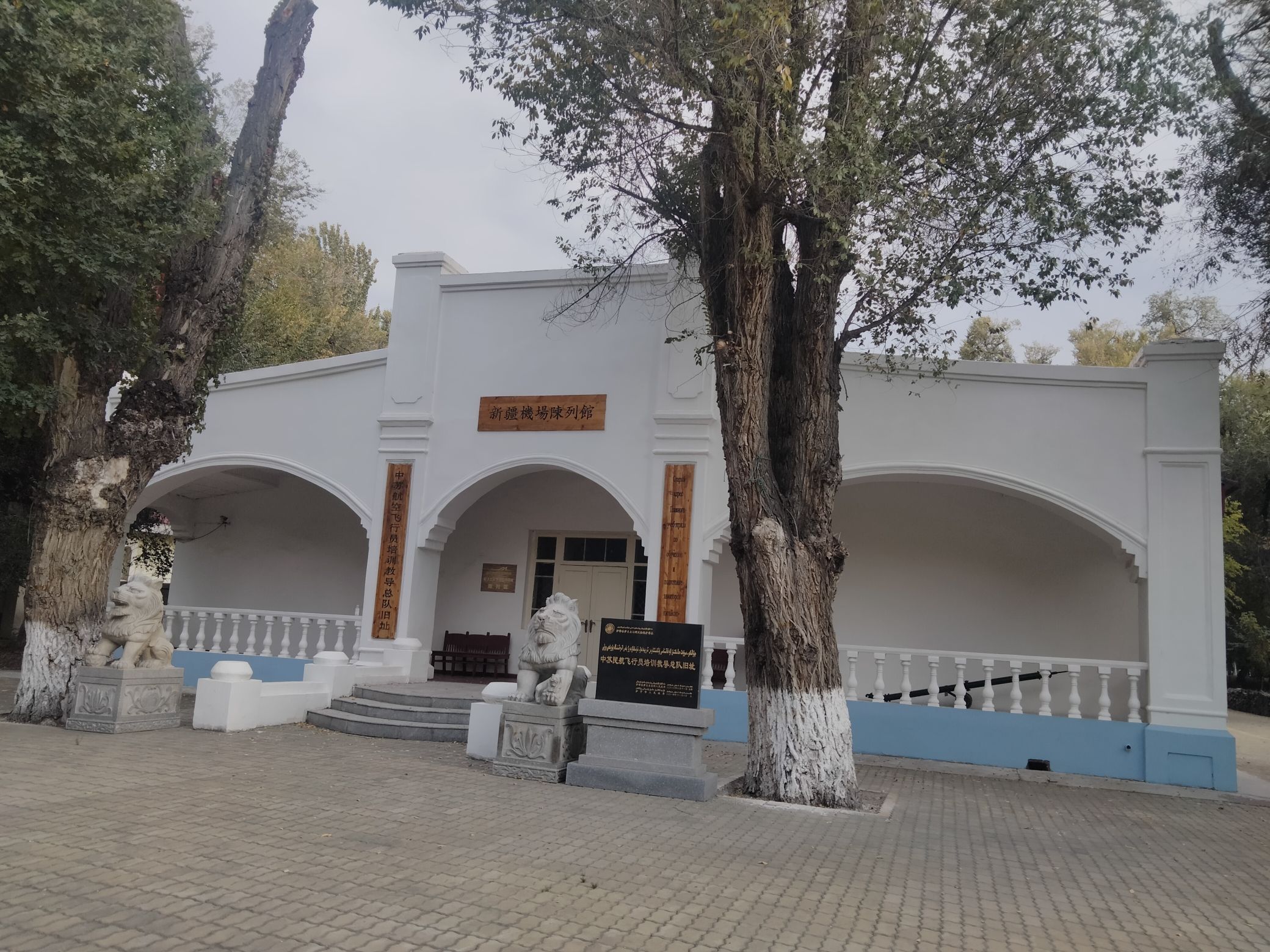
- ✅ Main Teaching Building (still standing): A single-story brick-concrete structure with a sloped roof covered in red ceramic tiles. The façade features a simple, symmetrical design with deep gray steel window frames and original wooden double-hung windows still intact. Inside, remnants of wall murals depicting aircraft instrument recognition diagrams from the era remain visible (partially reinforced by cultural heritage authorities).
- ✅ Site of the Flight Simulation Training Room (marked on ground): Now a grassy rest area, featuring a granite plaque inscribed “1951–1954 Flight Simulation Training Ground Site,” embedded with a copper inlaid directional rudder sculpture.
- ✅ Former Residence of Instructors (repurposed): Three two-story gray-brick buildings now serve as management offices for the Youth Apartment complex. Original horizontal cement-plastered panel divisions and Russian-language numbered plaques are preserved—protected under glass enclosures.
- ❌ Aircraft Apron and Hangars: Due to urban planning developments in the late 1950s, the original airfield land has been fully incorporated into the Chinese Academy of Sciences campus and university grounds. No above-ground remains exist, though archival records such as the 1953 topographic map from the Beijing Survey Bureau preserve its location.
⚠️ Note: This site is not yet listed in any official cultural heritage protection registry, but it was registered in 2021 by the Haidian District Bureau of Culture and Tourism as a “Haidian District Inventory-Registered Cultural Relic” and included in the trial version of the Zhangjiakou Area Modern Industrial and Scientific-Educational Heritage Protection List.
🪙 Cultural Relics and Historical Materials: Aviation Memories Frozen in Time
- Collected Artifacts (currently housed at the China Civil Aviation Museum):
- Pilots' Manual for Initial Training (Russian edition, printed in 1952), bearing the red seal of the “Sino-Soviet Civil Aviation Instruction Corps Library”;
- An aluminum aviation compass gifted by Soviet instructor Nikolai Petrov to trainees in 1953, engraved with bilingual Chinese-Russian signatures;
- A graduation group photo of the instruction corps students (June 1954, taken in front of the main building), showing a Chinese banner reading “Unity · Rigor · Precision Flying · Serving the Nation” (available as a high-resolution scan).
- Oral History Archives: The China Civil Aviation University’s museum holds video interviews with eight living former trainees (average age 92), detailing experiences in night formation flying training, rapid acquisition of Russian aviation terminology, and deep personal bonds forged across language barriers with Soviet instructors.
🌟 Cultural Value: An Irreplaceable Multidimensional Historical Landmark
| Dimension | Interpretation | |--------|-----------| | National Aviation History Value | A tangible embodiment of China’s civil aviation industry beginning from scratch, filling a critical gap in the history of 1950s civil aviation education systems. | | Sino-Soviet Relations History Value | A rare example of deep technical cooperation beyond military domains during the early Cold War, reflecting pragmatic diplomacy and knowledge sharing. | | History of Science and Education Value | Pioneered the “military-to-civilian transition + intensive foreign language training + practical training from the outset” model, providing a prototype for China’s higher aviation education system. | | Urban Memory Value | One of the spatial starting points in the narrative of Zhongguancun’s transformation from rural farmland to a scientific hub, witnessing the early establishment of knowledge-based infrastructure. |
🧭 Tourism Information: A Cultural Visit Guide Amid Quiet Vigilance
- 📍 Location: No. 2 Zhongguancun South Street, Haidian District, Beijing (approximately 150 meters east of the main entrance to Youth Apartment, near the southwest corner of Bawang Campus of Zhongguancun No. 2 Primary School)
- 🚌 Transportation Options:
- Subway: Exit A of Zhichun Road Station on Line 10 or Line 15; walk about 12 minutes (passing through Zhongguancun Entrepreneurship Avenue);
- Bus: Take Yuntong 108 or Special Route 6 to Haidian Bridge North Stop, then walk west along Zhongguancun South Street for 3 minutes.
- 🎫 Opening Status:
- Free admission, no ticket required; this is an open-air heritage site accessible for viewing exterior architecture and commemorative markers;
- Interior buildings are not open to the public (currently used for office and community service purposes); please respect property management regulations;
- Recommended visiting hours: Weekdays 9:00–16:00 (to avoid midday breaks and morning/evening rush hour crowds).
- 📌 Tips:
- Do not climb walls, touch historical plaques, or enter areas marked “Non-Open Zone”;
- Scan the QR code on-site to access a 5-minute audio guide produced by the Civil Aviation University of China (featuring original historical recordings);
- Nearby recommended visits: The Chinese Academy of Sciences Museum (8-minute walk), Zhongguancun Village History Museum (10-minute walk)—forming a thematic study route on the origins of the Science City.
🌐 Recommended Further Reading
- Monograph: Handshake Beneath the Blue Sky: Sino-Soviet Civil Aviation Company (1950–1954) (by Li Chenguang, China Civil Aviation Press, 2019)
- Archive: Compilation of Correspondence from the Beijing Office of the Sino-Soviet Civil Aviation Company (1950–1954), Beijing Municipal Archives, File No. J173
- Documentary: Episode 3 “First Cry” of Between Takeoff and Landing (CCTV Documentary Channel, aired 2022)
History is not distant—it lies deep within the streets we walk every day. Pause for a moment, look up at the same sky—those wings that once carried China’s civil aviation dreams have never truly flown away. 🕊️