Temple of the God of Wealth
Laiwu💎💎💎
加载中...
📍 Address: E Liu Line, Huangpi District, Wuhan City, Hubei Province (near Mulan Mountain Scenic Area)
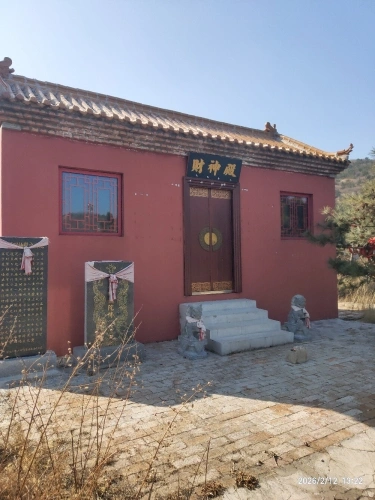
The Temple of the God of Wealth was originally constructed during the Jiajing era of the Ming Dynasty as a folk shrine dedicated to the God of Wealth, initially known as "Fuyou Hall." It was rebuilt during the Guangxu period of the Qing Dynasty. Due to its flourishing religious activities, it was granted the name "Temple of the God of Wealth" and became one of the prominent centers of folk faith in the middle reaches of the Yangtze River. According to the Huangpi County Chronicles, this temple once served as a gathering place for merchants and a site for prayers seeking prosperity and fortune, representing an important testament to the commercial culture of northern Hubei during the Ming and Qing dynasties.
The temple faces south and is built into the mountainside, covering approximately 1,200 square meters. It features traditional Chinese timber-framed construction with a hip roof, tiled in blue-gray tiles, adorned with upturned eaves and elegant roof corners, creating a grand and imposing presence. The main structure consists of three courtyards—front hall, main hall, and rear pavilion—arranged along a central axis with symmetrical layout, reflecting typical southern Chinese temple design. Interior beams and rafters are decorated with intricate murals depicting themes such as "The Eight Immortals Crossing the Sea" and "Prosperity and Wealth," showcasing exquisite craftsmanship and timeless color schemes, possessing significant artistic value.
The temple houses several notable cultural relics, including:
Beyond serving as a vital vessel for Daoist folk beliefs, the Temple of the God of Wealth embodies the historical transition from agrarian society to commercial civilization in China. Its traditional rituals continue to be observed today. During the annual Lunar New Year’s fifth day—known as "Welcoming the God of Wealth"—the temple draws tens of thousands of devotees seeking blessings, giving rise to a regional intangible cultural heritage: the "Huangpi God of Wealth Festival."
📌 Note: The site is currently designated as a protected cultural heritage unit in Wuhan City (No. WH-WB-047), with its conservation zone incorporated into the overall planning of Mulan Mountain Scenic Area.