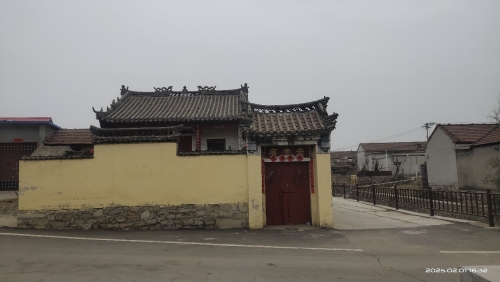
🏯 Guan Di Temple (No. 7 Huasheng Road)
Loyalty and Righteousness Through the Ages, the Martial Sage Shines Brightly
Located at No. 7 Huasheng Road, this Guan Di Temple is one of the most historically intact and best-preserved Qing-dynasty official-built temples dedicated to Guan Yu in central Shanghai, combining religious worship, historical commemoration, and outstanding examples of Jiangnan architectural art.
📜 Historical Development
- Original Construction: Built in the 29th year of Emperor Qianlong’s reign (1764 CE), initiated by Zhang Fengsun, the Prefect of Songjiang Prefecture. Originally named "Xie Tian Dadi Temple," it was an imperial-sanctioned temple listed in the Great Qing Code for seasonal sacrifices during spring and autumn.
- Renovations and Preservation:
- Expanded rear hall and east-west side halls in the 15th year of Daoguang (1835);
- Rebuilt main gate and stage in the 10th year of Guangxu (1884); inscribed stele remains;
- In 1958, transferred to the Shanghai Cultural Relics Management Committee for protection, thus spared demolition;
- Designated as a Municipal Protected Cultural Site in 2002 (Document No. 32 of Shanghai Municipal Government, 2002);
- Comprehensive restoration completed between 2018 and 2020, strictly following the China Principles for the Conservation of Historic Sites, with traditional craftsmanship used to restore polychrome paintings, brick carvings, and wooden structures.
⚠️ Note: This temple is neither a spontaneously built folk site nor a modern commercial imitation project. Its architectural structure, stone tablets, and altar fixtures are all original Qing-era or late-Qing remnants, supported by clear archaeological and documentary evidence.
🏛️ Architectural Layout and Features
The entire complex covers approximately 1,860 square meters, facing south with a typical Jiangnan official-style “three-hall, two-court” layout:
| Hall Sequence | Main Structures | Key Highlights |
|---|
| First Hall | Main Gate (with Two-Part Screen Wall) | Brick-carved screen wall features the characters “Loyalty, Righteousness, Benevolence, Courage”; relief carvings on both sides depict “The Oath of the Peach Garden” and “Guan Yu’s Solo Ride to War,” original works from the Guangxu era; gabled roof covered with gray tiles, eaves adorned with seven-tier dougong brackets |
| Second Hall | Stage & East-West Corridors | Square ceiling with coffered design; top features ink-painted “Two Dragons Encircling Longevity” motif from Qianlong period; corridors house two inscribed stones: one recording the founding of the temple in Qianlong Year 29, and another documenting the Guangxu-era renovation |
| Third Hall | Main Hall (Chongning Hall) | Five bays wide, six rafters deep, with a cantilevered timber frame; central columns made of nanmu wood, each 0.58 meters in diameter; column bases are Ming-era plain inverted lotus style (possibly repurposed from earlier structures); interior displays a replica of the Kangxi Emperor’s inscription “Righteousness Illuminates Heaven and Earth” (original housed at Shanghai History Museum) |
| Rear Section | Spring and Autumn Pavilion (Two-Story Structure) | Added during the Daoguang era, housing scriptures of the Spring and Autumn Annals and a statue of Guan Yu reading at night; ground floor uses brick-and-stone vaulted construction; second floor features a corridor—this is the only surviving example of a Qing-dynasty Spring and Autumn Pavilion among Guan Di Temples in Shanghai |
- ✨ Core Craftsmanship Value:
- Roof ridges feature colorful glazed ceramic chiwen from mid-Qing dynasty (1.32 meters tall), with rich glaze tones and clearly defined dragon scales;
- Beam and rafter surfaces retain Heshi polychrome painting fragments, confirmed through pigment analysis to use mineral-based green-blue pigments and gold leaf;
- Floor laid with Ming-style “golden bricks” (produced in Lumu kiln, Suzhou); known for their resonant sound when tapped and pore-free cross-sections upon breaking.
🏺 Cultural Relics and Interior Displays
- Bronze Statue of Guan Yu (Qing Qianlong Period): 2.16 meters tall, weighing over 800 kilograms, fully gilded with intricate armor patterns and flame-like beard and mustache—largest extant Qing-dynasty bronze statue of Guan Yu in Shanghai. Base inscribed: “Made in the Jiashen Year of Qianlong by Wang Yongzuo, a devout believer from Wujun.”
- Blue-and-White Porcelain Incense Burner (Daoguang Period): 48 cm high; body inscribed with the complete text of The True Scripture of Lord Guan Sheng, written in neat regular script. Donated by devotees during the Republic era, but the vessel’s form, clay body, and glaze are authentic masterpieces from Daoguang-period civilian kilns.
- Woodblock Illustrated Edition of Romance of the Three Kingdoms (Guangxu Period): Preserved in the Spring and Autumn Pavilion, containing 64 illustrations, originally carved by Suyou Bookroom in Suzhou—only three such sets remain nationwide.
- Historical Ritual Regalia: Includes Qing-dynasty copper bells, cloud gongs, and banners (two pairs of embroidered banners from the Qing era, featuring the seal “Marquis of Han Shou Ting” in seal script).
🌟 Cultural Significance and Status
- Living Testament to Religious History: A tangible record of the Qing-era phenomenon of Confucianism, Buddhism, and Daoism collectively venerating Guan Yu—historically, the temple once housed a Wenchang Pavilion (now gone) and a Guanyin niche (foundation still visible), reflecting the localized integration of “righteousness” across the three traditions.
- Cultural Memory of the City: As the central starting point of the “Three Processions Festival” (the annual procession held on the 13th day of the fifth lunar month in honor of Guan Yu’s birthday), it has long served as a cultural anchor for Shanghai’s merchant guilds—particularly Jin merchants and Huizhou merchants—fostering shared identity and professional ethics since the 18th century.
- Academic Research Hub:
- The Collection of Inscriptions from Jiangnan Temples and Shrines by the Shanghai Academy of Social Sciences includes 11 inscribed steles from this temple;
- The Architecture Department of Tongji University lists it as a living example of Qing-era Su-Song official building techniques.
🧭 Practical Visitor Information
- 📍 Address: No. 7 Huasheng Road, Huangpu District, Shanghai (near Zhonghua Road, adjacent to the Historic Urban Landscape Zone of Old City)
- ⏰ Opening Hours:
- Daily 8:30–16:30 (closed Mondays, except public holidays)
- 🎫 Admission:
- Free entry (requires valid ID for reservation; daily capacity limited to 800 visitors)
- Reservation platform: “Shui Shen Ban” APP → “Cultural Tourism Booking” section → search “Huasheng Road Guan Di Temple”
- 🚌 Transportation:
- Metro: Exit 3 of Yu Garden Station on Line 10, walk approx. 500 meters;
- Bus: Take routes 64, 304, or 932 to “Zhonghua Road Guangqi Road” stop, then head east 200 meters.
- 📌 Tips:
- Flash photography and tripods are prohibited inside to protect artifacts;
- Free audio guide available via QR code scan (offering Chinese, English, Japanese, and Korean versions);
- Monthly first Saturday morning at 9:00 AM hosts “Ancient Architecture Study Workshops”—advance booking required, 3 days in advance.
🌿 Observe the flying eaves bearing the weight of time, read the inscribed tablets revealing the soul of loyalty. This place is more than a sanctuary of incense—it is a tangible anchor of Shanghai’s urban spirit.