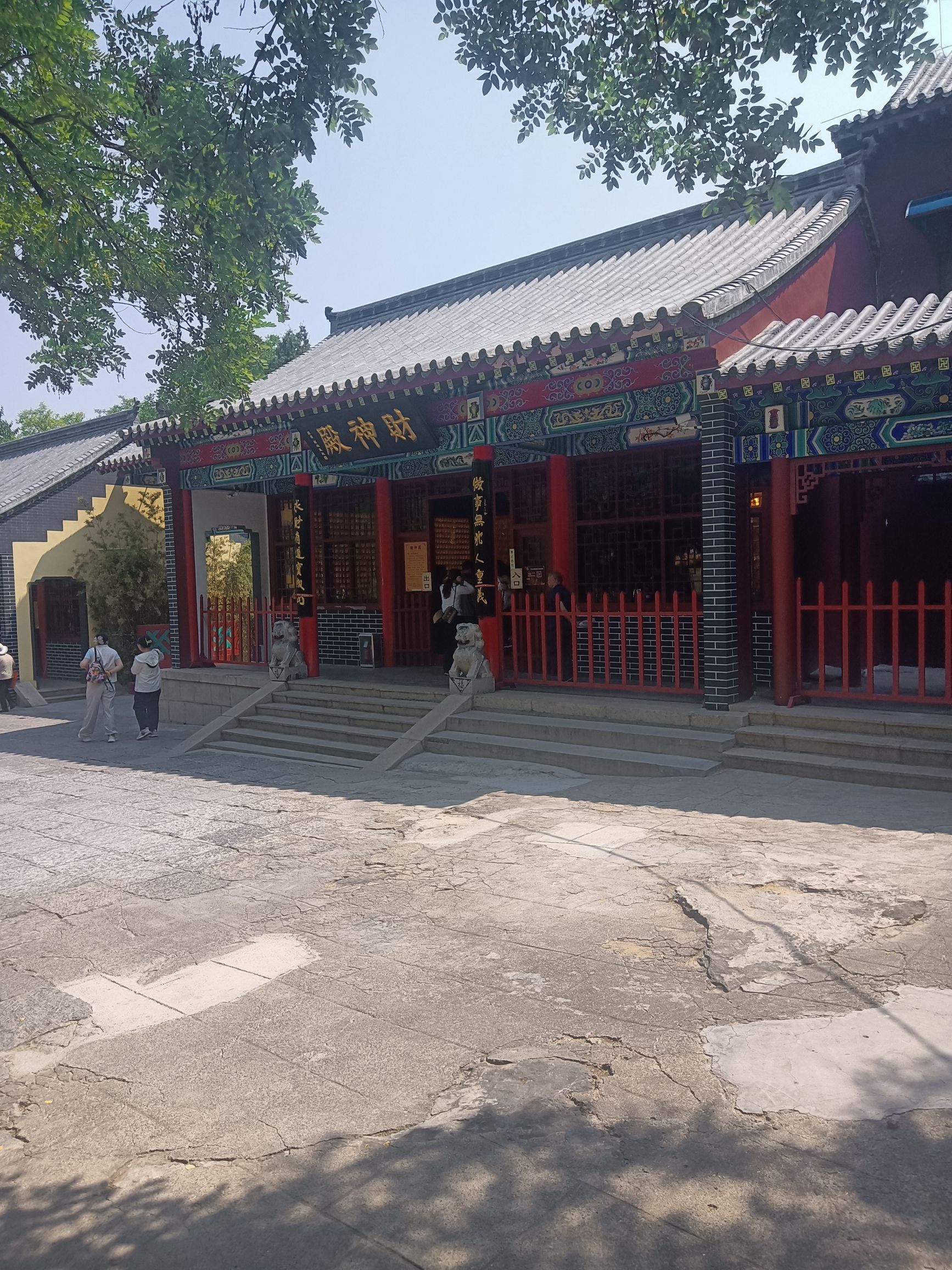
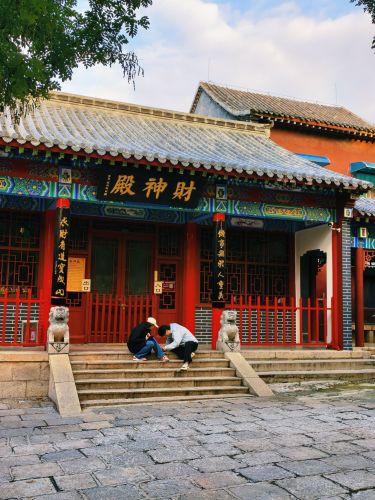
Qianfo Mountain Scenic Area · Guanyin Hall 🏯
“The mountain’s hues remain ever green, the spring’s song eternally clear. Amidst a thousand Buddha shadows, chants of sutras echo; within Xingguo Chan Temple, Guanyin is revealed.”
——From the Licheng County Gazetteer, Qing Dynasty
📍 Basic Information
- Affiliated Scenic Area: Qianfo Mountain Scenic and Historic Area (National Key Scenic Area, National AAAA-Level Tourist Attraction)
- Exact Location: No. 18 Jingshi 1st Road, Lixia District, Jinan City, Shandong Province, within the eastern side of Xingguo Chan Temple
- Opening Hours: Daily 6:00–17:30 (coordinated with Xingguo Chan Temple’s opening schedule)
- Ticket Policy: Combined ticket for Qianfo Mountain Scenic Area (includes access to Xingguo Chan Temple); entry requires real-name registration via ID card. No additional incense fees inside the temple—visitors are encouraged to practice respectful and civilized incense offerings.
📜 Historical Development
Although not the oldest structure in Qianfo Mountain, the Guanyin Hall has a clearly documented history:
- Original Construction: The current hall was rebuilt in 1984 on the original site, based on the foundation of the Guanyin Pavilion constructed during the Tongzhi era of the Qing Dynasty (1862–1874). The original pavilion collapsed in the early Republican period, leaving only stone steles and foundation stones behind.
- Reconstruction Basis: The design strictly followed records from the Jinan Fu Zhi and Licheng County Gazetteer, as well as photographs from the 1930s, and referenced typical Qing-era temple architecture found in central Shandong. The project was led by the Shandong Provincial Institute for the Protection of Ancient Architecture.
- Religious Continuity: Since the Qing Dynasty, it has served as a key subsidiary hall within Xingguo Chan Temple, preserving the Han Chinese Buddhist Pure Land tradition of Guanyin veneration. It forms part of a complete sequence of ritual spaces alongside the Great Buddha Hall and Maitreya Hall.
🏛️ Architectural Features
The Guanyin Hall exemplifies typical Qing-dynasty official-style single-eaved gabled roof brick-and-wood construction, reflecting local craftsmanship wisdom in Jinan:
- Floor Plan: Three bays wide (10.8 meters), two bays deep (7.2 meters), with a curved-roof porch at the front enhancing transitional space and ceremonial atmosphere.
- Structural Craftsmanship:
- Eave columns carved from local bluish-gray stone, with lotus-patterned drum-shaped bases echoing Ming Dynasty styles;
- Roof beams painted with ink-line colorwork in the “Yawei Mo” style—no gold leaf used, emphasizing line rhythm and embodying the restrained aesthetic of northern Chan temples;
- Roof covered with gray tile tiles, featuring glazed ceramic chiwen finials on the ridge and three figures of immortals and beasts along the eaves—consistent with standard Qing-era subsidiary hall regulations.
- Environmental Integration: A ginkgo tree (over 120 years old) stands before the hall, harmonizing visually with the nearby cliffside Buddha carvings, forming a four-layered humanistic landscape of “mountain—temple—hall—tree.”
🖼️ Cultural Relics and Statues
The hall’s centerpiece is a bronze statue of Guanyin Bodhisattva from the Ming Dynasty (Grade III National Cultural Relic), relocated here in 1985 from an ancient temple site in downtown Jinan:
- Statue Characteristics:
- Height: 1.68 meters; standing barefoot on a lotus pedestal, left hand holding a vase of purity, right hand making the Abhaya mudra (gesture of fearlessness); serene expression, flowing robes resembling water—showcasing the characteristic “Wu Dai Dang Feng” (flowing robes in the wind) style of mid-Ming artistry;
- Backlight made of intricately pierced flame-pattern bronze plate, edged with inscriptions reading: “Donated by faithful believers Wang Shouren and others of Jinan Prefecture in the 27th year of Wanli (1599).”
- Associated Relics:
- Stone rubbings of the Qing Dynasty’s Thirty-Two Manifestations of Guanyin Bodhisattva displayed on east and west walls (original stele lost; reproduced based on the Jinan Jinshi Zhi from the Daoguang era);
- Two iron lamps cast during the Guangxu reign (late Qing), placed on the altar with inscription: “Made by Xingguo Chan Temple’s permanent residents in the 18th year of Guangxu.”
🌟 Cultural Significance
- Religious Value: As one of the few surviving Qing-style halls in Jinan dedicated exclusively to Guanyin, it embodies the popular belief in “Every household worships Amitabha, every home honors Guanyin” across central Shandong, serving as vital evidence for studying the secularization of Buddhism in Shandong.
- Artistic Value: The bronze statue and stone carvings together form a tripartite expression system of “metal and stone—sculpture—image,” reflecting the artistic creativity of Jinan as a major Buddhist center in the Qi-Lu region during the Ming and Qing dynasties.
- Historical Value: The site layers three distinct historical strata—Qing-era Guanyin Pavilion, Republican-era ruins, and modern reconstruction—making it a microcosmic chronicle of Qianfo Mountain, documenting the preservation and revival of religious architecture in modern times.
🧭 Visitor Tips
- Best Visiting Times:
- Early morning (6:30–8:30): Fewer visitors, soft lighting ideal for close observation of the statue’s details;
- During the lunar calendar’s 19th day of the second month (Guanyin’s birthday), sixth month (Enlightenment Day), and ninth month (Ordination Day), the temple hosts special blessing ceremonies—perfect for experiencing traditional rituals.
- Recommended Itineraries:
- ✅ Main Axis of Xingguo Chan Temple: Gate → Maitreya Hall → Great Buddha Hall → Guanyin Hall → Bodhidharma Cliff Carving → Qiyan Jiudian Arch
- ✅ Qianfo Mountain Cultural Loop: Guanyin Hall → Tang Dynasty “Thousand Buddha Cliff” Carvings (5-minute walk) → Yu Shun Shrine → Lishan Courtyard
- Important Notes:
- Flash photography is prohibited inside the hall when viewing relics;
- Observe religious etiquette: circumambulate clockwise around the Buddha, avoid pointing at the statue’s head;
- Qianfo Mountain is an ecologically sensitive area—please do not feed wild animals or pick ancient trees.
🌿 Calmly seated at the foot of a thousand Buddhas, the Guanyin Hall does not seek prominence among grand halls, yet opens its door with compassion and steps into antiquity—whispering through mountain winds and pine waves the enduring spiritual resonance of this ancient city.