Folk Village Ancient Mill ️
Laiwu💎💎💎
加载中...
Located beside National Highway 104, the Ancient Mill of the Folk Village is a well-preserved site of a traditional Qing Dynasty hydraulic mill, originally constructed in 1875 during the Guangxu era, making it over a century old. Originally built through collective funding by local villagers as a public handicraft facility, it once served as the central hub for grain processing in the community and bears witness to the historical transition from agrarian civilization to modernity.
Built along a natural stream, the ancient mill harnessed water power to drive stone grinding wheels, historically serving grain processing needs across a ten-mile radius. It fell into disuse during the Republican era due to war and gradually declined after the 1960s. In 2010, its historical significance was confirmed during a cultural heritage survey, leading to its designation as a county-level cultural relic protection unit. A restoration and conservation project was completed in 2018, returning the site to its original appearance and establishing a folk culture exhibition area.
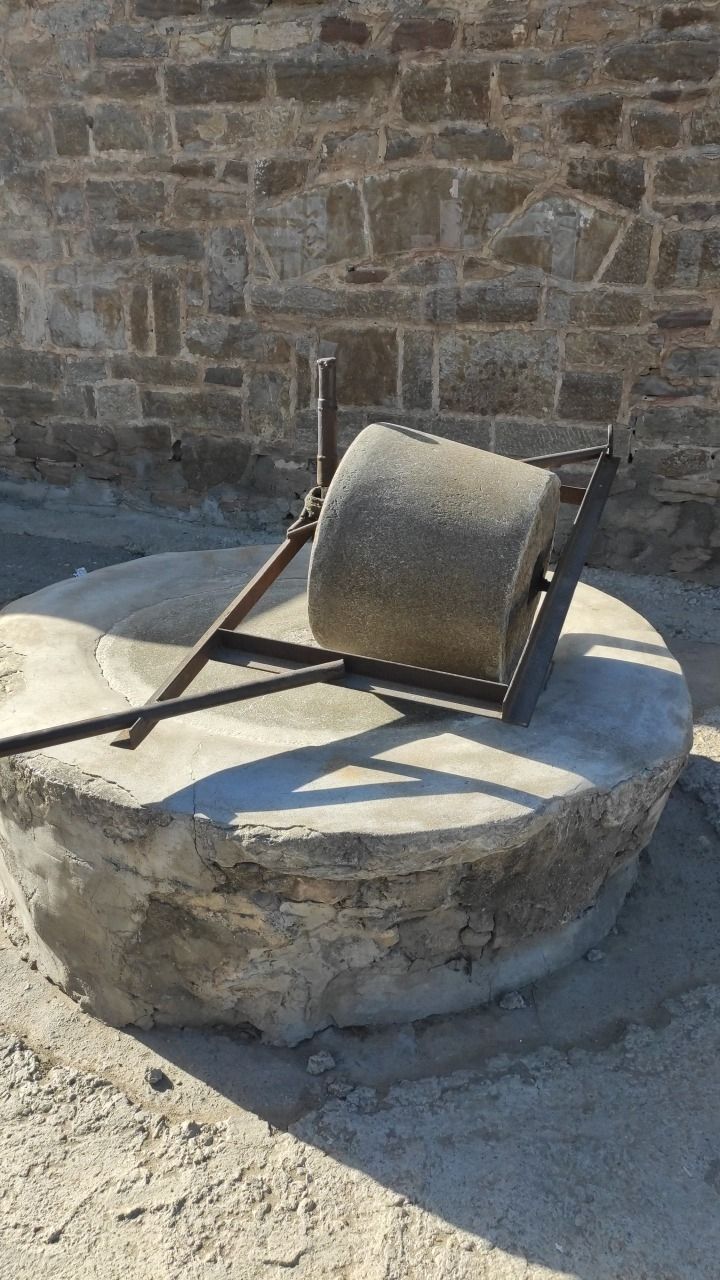
The main structure features a brick-wood framework with blue tile roofing, arranged in a "single entrance, three bays" layout. Inside the main hall, two sets of water-powered stone mills (each approximately 1.2 meters in diameter) are installed. The millstones are carved from single blocks of granite, featuring clearly defined grooves and still functional for demonstration purposes. The water channel, stretching 32 meters long, is constructed from river stones and retains its original water-diversion system. The exterior façade bears a carved inscription in regular script: “Tool for the People’s Benefit,” with bold, vigorous characters reflecting late Qing calligraphic style.
The site preserves several important artifacts, including:
This site offers a complete representation of traditional Chinese hydraulic machinery systems and serves as a vital physical example for studying rural handicraft economies and hydraulic engineering techniques in northern China. It also embodies enduring rural values such as frugality, diligence, and mutual support.
📌 Tip: We recommend visiting in conjunction with the nearby Folk Museum to gain a deeper understanding of rural life in North China.