🌊 Daming Lake Scenic Area · Yangu Temple
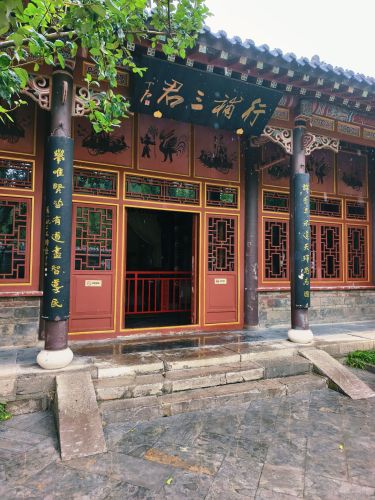
The temple of the water deity nestled within the poetic phrase “Half the city’s scenery is mountain, half is lake,” serving as a vital historical testament to Jinan’s ancient water culture.
📍 Basic Information
- Name: Yangu Temple (part of the Daming Lake Scenic and Historic Area)
- Address: No. 271 Daming Lake Road, Lixia District, Jinan City, Shandong Province — located on the northeast shore of Daming Lake, adjacent to Chao Ran Tower and Beiji Pavilion
- Opening Hours: Integrated with Daming Lake Park’s schedule (5:00–22:00 in peak season; 6:00–21:00 in off-season); Yangu Temple is open free of charge along the park’s walking routes
- Admission: Daming Lake Park is free to enter (excluding individual paid attractions such as Chao Ran Tower); no separate ticket required for Yangu Temple
📜 Historical Evolution: From Imperial Mandate in the Ming Dynasty to Modern Restoration
Yangu Temple was originally constructed during the Hongwu period of the Ming Dynasty (1368–1398), making it the only surviving ancient temple in Jinan dedicated exclusively to Yangu.
- Yangu, whose real name was Yan Shuzi, was a native of Linjiang, Jiangxi Province during the Yuan Dynasty. According to legend, he served as a local official known for his diligence and compassion toward the people. After his death, he was venerated as a water deity and protector of river transport. In the early Ming Dynasty, he received imperial recognition and was bestowed the title "Grand General of the Divine Thunder Palace, Yangu", officially incorporated into national sacrificial rites.
- As a key junction where the Xiaoqing River and the ancient Ji River converged—both vital tributaries of the Grand Canal—Jinan has long placed great importance on water safety and stability. During the Yongle reign of the Ming Dynasty, the Shandong Provincial Administration Commission selected a auspicious site on the northeast shore of Daming Lake to build Yangu Temple, praying for “calm lake waters, safe navigation, and abundant springs.”
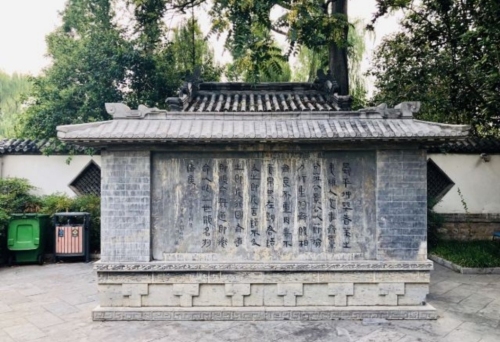
- The temple underwent multiple repairs during the Kangxi and Qianlong eras of the Qing Dynasty. An inscription from the 23rd year of Daoguang (1843), titled Record of the Rebuilding of Yangu Temple, notes: “The lake reflects the temple’s image, incense smoke never ceases—merchants pray here, and their prayers are often answered.”
- By the Republican era, the temple gradually fell into disrepair and was used as a storage facility for cultural relics after the 1950s.
- In 2017, Jinan launched a comprehensive conservation project for historic buildings within Daming Lake Park. Based on Qing-era architectural styles and archaeological findings, the temple underwent a full-scale dismantling and reconstruction. It officially resumed its ritual functions and public access in 2020.
🏯 Architectural Layout and Features
Yangu Temple exemplifies typical northern Chinese official-style temple architecture from the Qing Dynasty, oriented southward with three courtyards covering approximately 680 square meters:
| Location | Main Structure | Key Features |
|---|
| First Courtyard | Gate Hall (hip roof, gray tile roof) | Inscribed stone plaque above the gate reads “Yangu Temple” in carved regular script—originally from the Republic era; two side screen walls feature brick carvings of “carp leaping over the dragon gate” motif |
| Second Courtyard | Main Hall (gabled roof, three bays wide) | Houses a seated statue of Yangu (2.1 meters tall, made of camphor wood with painted details). He wears a seven-rimmed crown, a dragon robe, and holds a jade tablet. His expression combines solemn authority with compassionate dignity. The roof beams retain Qing-era ink inscriptions reading “Rebuilt in the 23rd Year of Guangxu” |
| Third Courtyard | Rear Hall (hip roof) and East/West Wing Halls | The rear hall once served as a private residence hall; now hosts an exhibition titled Yangu Belief and the History of Water Transport in Shandong. Four Ming Dynasty stone bases (plain inverted lotus-shaped, 0.82 meters in diameter) are preserved in the east wing. A bronze bell cast in the 42nd year of Qianlong (1777) is kept in the west wing, inscribed with “Presented by devout followers of Licheng County, Jinan Prefecture” |
| Courtyard | Two ancient cypress trees and two steles | The eastern cypress tree, over 320 years old (confirmed by dendrochronology), is believed to have been replanted during the Kangxi era. To the west stands the Record of the Rebuilding of Yangu Temple (Daoguang 23rd year) and the List of Donors to the Temple Restoration (Guangxu 15th year) |
✨ Architectural Significance: The entire complex preserves the mid-to-late Qing construction techniques typical of central Shandong temples. Its bracket systems, decorative paintings (using the xuanzi color scheme with gradual tonal transitions), and brick carving motifs hold significant regional representative value. Designated in 2013 as the fourth batch of Jinan Municipal Cultural Heritage Protection Units.
🏛️ Cultural Relics and Cultural Significance
-
Key Artifacts:
- Ming Dynasty Stone Bases: Provide evidence of the temple’s earliest possible construction date, serving as rare physical proof of Ming-era surface architecture within urban Jinan;
- Qing Dynasty Bronze Bell: One of the few surviving government-cast Taoist ritual instruments from the Qing Dynasty in Shandong. Its clear, resonant tone earned it a Grade III Cultural Relic designation by the Shandong Provincial Cultural Relics Appraisal Center in 2022;
- Daoguang Era Stele: Documents land holdings, donor merchants (including representatives of Shanxi and Shandong merchant guilds like the Meng family of Zhangqiu and the Yang family of Zhoucun), offering primary historical material for studying commercial networks and folk religious interactions in Qing-era Jinan.
-
Cultural Value:
- Represents the tangible embodiment of Jinan’s integrated philosophy of “springs—lake—river” water management, reflecting ancient ecological wisdom rooted in reverence for nature and ancestral traditions;
- Serves as a crucial node along the northern end of the Grand Canal Cultural Belt, substantiating Jinan’s pivotal role in the Ming-Qing transportation system;
- Together with nearby Beiji Pavilion (Zhenwu Temple) and Huibō Tower (Flood Control Tower), forms the “One Lake, Three Temples” sequence of water deity worship, highlighting Jinan’s identity as a city born from water and defined by its relationship with water.
🎋 Modern Functions and Revitalization
- Academic Research: The Jinan Archaeological Institute established the “Yangu Temple Water Culture Research Station,” continuously conducting work on stele rubbings and collecting oral histories related to religious beliefs;
- Cultural Experience: Each year on the 15th day of the third lunar month (Yangu’s birthday), the “Daming Lake Blessing Ceremony” is held, reviving traditional rituals and incorporating intangible cultural heritage elements such as spring tea ceremonies and exhibitions of Shandong embroidery depicting the water deity;
- Educational Programs: Collaborates with the School of History and Culture at Shandong University to create a teaching practice base, hosting “Jinan Water Heritage Study Camps” that offer immersive courses for youth, including ancient building surveying and epigraphic interpretation.
🚶♂️ Visitor Tips
- Best Time to Visit: Early morning (7:00–9:00)—fewer visitors, soft lighting ideal for observing architectural details; after light rain (when mist rises over the lake, creating ethereal reflections of the temple in the water)
- Recommended Connections:
- 3-minute walk → Beiji Pavilion (center of Ming-era Zhenwu worship)
- 5-minute walk → Chao Ran Tower (climb for panoramic views of Yangu Temple’s dark tiles and flying eaves)
- 8-minute walk → Zeng Di (stroll along the dike for a classic framed view of Yangu Temple and the lake pavilion)
- Tips:
- Flash photography prohibited inside the temple to respect its sacred atmosphere;
- Free Yangu Temple Cultural Guide Brochure available (includes translated stele inscriptions and a brief history of water deity belief);
- Free guided tours every Wednesday at 9:30 AM, provided by the Jinan Ancient City Culture Volunteer Association.
🌟 Final Thought:
Walking up the weathered stone steps of Yangu Temple, touching the smooth grain of Qing-era beams, hearing the lingering echo of the bronze bell carry across three centuries of water sounds—this is more than just a temple. It is a thousand-year love letter written by Jinan’s people to their springs and lakes.