Yu Huang Temple
Address
胆子乡姑塘新村
Description
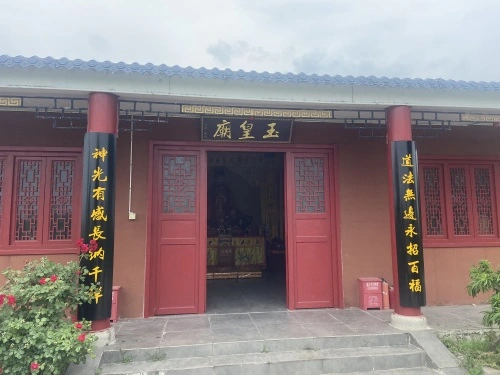
Yu Huang Temple
📍 Location: Goutang New Village, Danzi Town, Yanshan County, Shangrao City, Jiangxi Province
🏯 Historical Background
The Yu Huang Temple was originally constructed during the Dazhong Xiangfu period of the Northern Song Dynasty (1008–1017), boasting a history of over a thousand years. It is one of the relatively well-preserved Taoist temples in the northeastern region of Jiangxi Province. The temple underwent several renovations during the Ming and Qing dynasties, with the largest reconstruction occurring during the Guangxu era of the Qing Dynasty, shaping the existing main structure. The temple was originally a center of folk beliefs, worshiping the Jade Emperor, and served as a place for praying, sacrifices, and local gatherings, witnessing the evolution of local agricultural civilization and folk beliefs.
🏛️ Architectural Features
The temple is situated to the north of the mountain, facing south, covering an area of approximately 2,300 square meters, and is arranged in a three-compartment courtyard layout: the front hall serves as the main entrance and contains the bell and drum towers, the middle hall is the main hall known as the "Yu Huang Pavilion," and the rear hall houses the sleeping quarters and auxiliary buildings. The architecture employs a raised beam wooden frame structure, covered with green tiles, with upturned eaves and corners, intricately carved beams and painted decorations. The main hall measures five bays in width and three in depth, with beautifully carved corbels under the eaves, and surviving remnants of the Song Dynasty's style in the colored paintings. The temple is lined with stone tablets, among which the "Record of the Reconstruction of Yu Huang Temple" tablet (established in the 23rd year of the Guangxu era of the Qing Dynasty) provides a detailed account of the temple's history, holding significant historical value.
🖼️ Cultural Relics and Art
The temple currently houses the following cultural relics:
- A Qing Dynasty bronze statue of the Jade Emperor (1.8 meters tall, gilded all over)
- Remnants of Ming Dynasty murals (depicting the "Heavenly Tour")
- An iron bell from the Qianlong era, with clear inscriptions
- Over a dozen wooden shrines and incense burners, exquisitely crafted, representing local folk art
🌿 Cultural Value
The Yu Huang Temple is an important physical relic for studying the spread of Taoism, folk beliefs, and clan social structures in the northeastern region of Jiangxi Province. Its architectural style, sacrificial rituals, and festive activities (such as the "Yu Huang Birthday" on the 9th day of the first lunar month) continue to this day, reflecting the living heritage of traditional Chinese rituals and customs. In 2018, it was listed as a Cultural Relic Protection Unit in Yanshan County, one of the regional historical and cultural symbols.
🚶 Tourism Information
- Opening Hours: 8:00–17:30 daily (closed on holidays)
- Admission: Free admission (donations welcome, suggested on a voluntary basis)
- Transportation: Take a rural bus from Yanshan County to Danzi Town, then walk about 1.5 kilometers to reach the temple
- Suggested Visiting Duration: 1.5 hours
- Notes: Please maintain silence, do not touch the cultural relics; no open flames are allowed in the temple
✨ Tip: During the Yu Huang Birthday, a large temple fair is held locally, featuring Nuo opera, dragon dances, and sacrificial ceremonies, offering a highly entertaining spectacle.