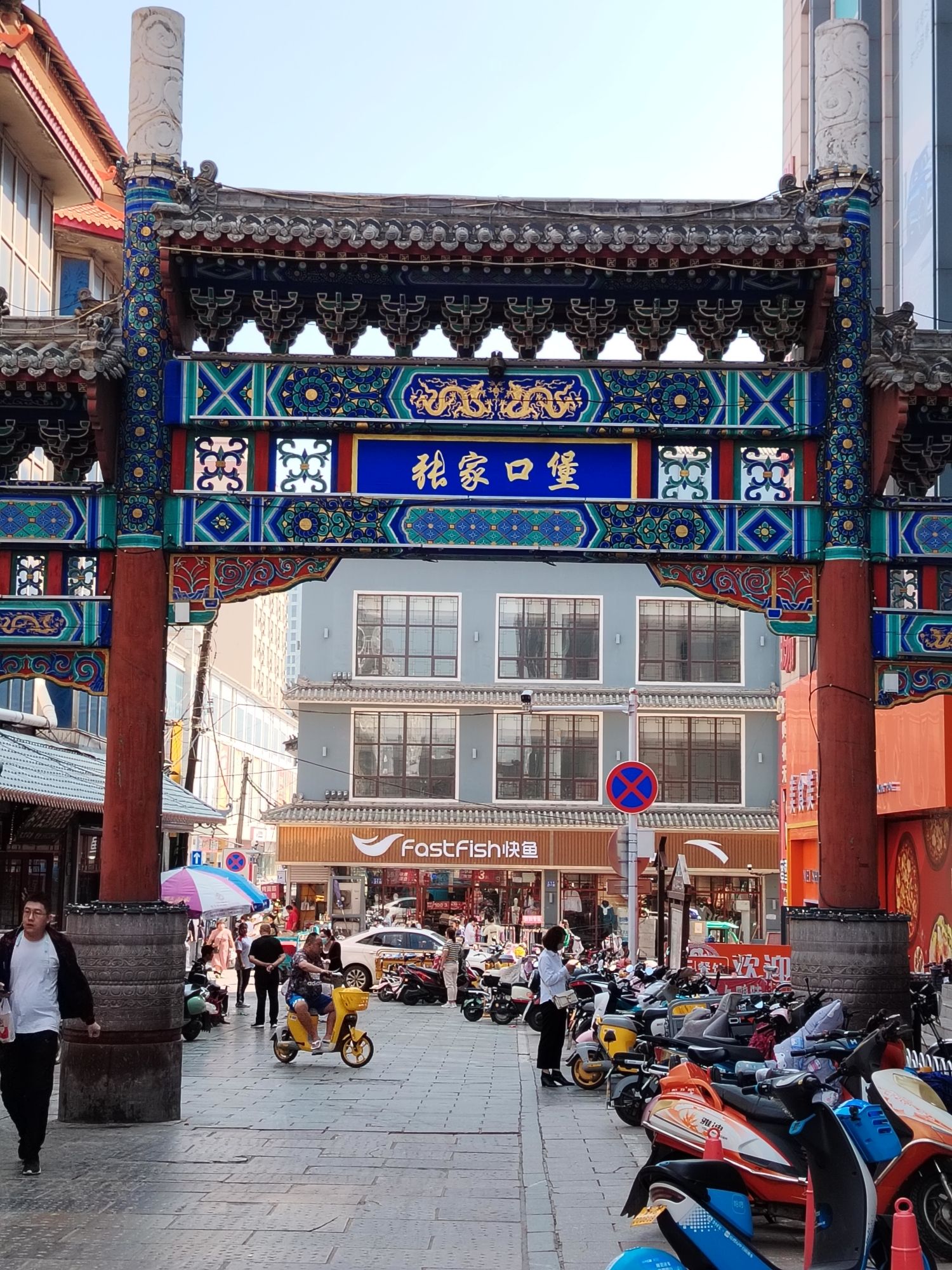
Drum Tower North Street, Zhangjiakou Fortress
Address
东门大街与马道底街交叉口处
Description
🏯 Drum Tower North Street, Zhangjiakou Fortress
“First came Zhangjiakou Fortress, then came Zhangjiakou City”—this folk saying from the northern frontier underscores the foundational role of Zhangjiakou Fortress as the cradle of the modern city. Drum Tower North Street lies at the very heart of this Ming Dynasty military stronghold, representing the most intact and culturally rich axial historic district within the fortress, where layers of history converge.
📜 Historical Evolution
- Founded in the 4th year of Xuande (1429): Constructed under the supervision of Deputy Commander Zhang Wen, originally named "Zhangjia Fortress," it served as a key garrison for the Xuanfu Garrison Commandery’s western defense line, guarding the strategic gateway—the starting point of the "Zhangku Road"—connecting Beijing’s west to the Mongolian Plateau.
- Transformation after Longqing 5th Year (1571): Following the signing of the Longqing Peace Agreement between Ming and Mongol forces, Zhangjiakou Fortress gradually evolved from a purely military fortress into a major frontier trading hub. Drum Tower North Street became the bustling center of commerce, where merchants gathered and camel caravans converged.
- Continued prosperity through Qing Dynasty to Republican Era: The street developed a vibrant commercial ecosystem featuring guild halls dominated by Shanxi and Beijing merchants, alongside numerous banks, tea houses, and leather trade firms. It earned the reputation of being the “Qingming Riverside Scene of the Northern Frontier.”
- Designated as Hebei Provincial Historic District in 2008; in 2013, the entire Zhangjiakou Fortress was officially listed as a National Key Cultural Relics Protection Unit (7th batch) by the State Council, with Drum Tower North Street included as part of this protected site.
🏗️ Architecture and Spatial Layout
Drum Tower North Street lies along the central axis of Zhangjiakou Fortress, stretching approximately 320 meters from Dongmen Avenue (the former southern gate, "Yongzhen Gate") to Madao Di Street (the former northern gate, "Cheng’en Gate"). The street is about 4–6 meters wide, paved with ancient blue bricks, and runs strictly north-south.
-
Key Landmarks:
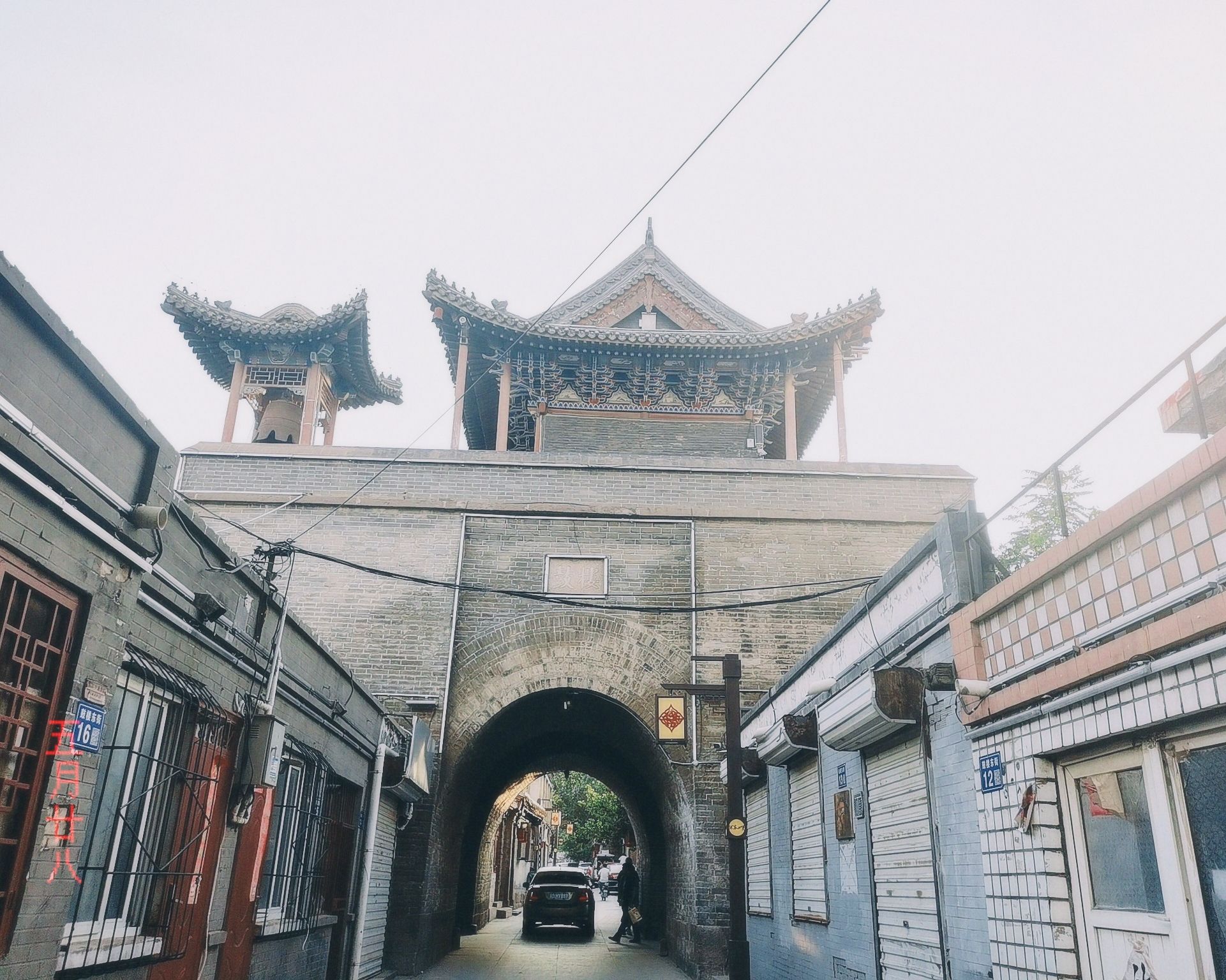
- Zhenshuo Pavilion (Drum Tower): Standing at the southern intersection with Dongmen Avenue, built in the 22nd year of Chenghua (1486), it features a double-eaved hip-and-gable roof, five bays wide and three deep—making it the highest point in the fortress and the central hub for timekeeping and alert signaling. A conservation restoration was completed in 2019, preserving two Qing Dynasty repair inscriptions.
- Wenchang Pavilion Ruins: Located on the western side of the northern section, originally a three-story wooden pavilion constructed during the Qianlong era. Destroyed by war in the 1940s, its foundation remains, marked by an informational plaque indicating its historical position and architectural form.
- Cluster of Ming and Qing Dynasty Residential Courtyards: Twelve typical siheyuan-style dwellings remain along the street, including No. 3 Lüzu Temple Lane (a mid-Qing Shanxi merchant residence) and No. 45 Drum Tower North Street (residence of a Republican-era leather trader). Most feature a “shop-front, living quarters behind” or “store below, home above” layout, with well-preserved brick carvings on eaves, carved screens, and ornamental gates.
-
Street Fabric Characteristics:
- Strictly follows the Ming-era fortress design of a “cross-axis + grid pattern,” with Drum Tower North Street and Drum Tower South Street forming the primary north-south axis;
- Mixed paving of flagstones and square bricks; walls typically consist of locally quarried rubble bases topped with blue-brick superstructures, some incorporating original Ming-era bricks bearing inscriptions such as “Made in Xuanfu Garrison, Year × of Wanli”;
- Noticeable elevation changes reflect the strategic adaptation to the terrain, offering visitors a tangible sense of the hierarchical spatial order inherent in Ming military settlements.
🏺 Cultural Relics and Remains
| Category | Representative Remains | Significance | |----------------------|------------------------------------------------------------------------------------------------------------|--------------| | Immovable Heritage | Zhenshuo Pavilion (core structure of National Protected Site), No. 3 Lüzu Temple Lane, No. 45 Drum Tower North Street, No. 1 Madao Di Street (former late Qing merchant association hall) | Core components of the National Key Cultural Relics Protection Unit “Zhangjiakou Fortress,” providing physical evidence of integrated military, political, and commercial development along the Great Wall frontier | | Inscriptions & Steles | Record of Rebuilding Zhenshuo Pavilion (Qing Qianlong 29th year), fragmentary Stone Inscription on Rebuilding Zhangjiakou Fortress Walls (Ming Wanli 48th year) | Offer firsthand historical records detailing the founding of the fortress, Qing restoration practices, and border trade administration | | Intangible Heritage | Revived ritual of drum ceremony at Zhangjiakou Fortress, traditional camel bell melody of the Zhangku Road, old tunes of local Kou Bangzi opera | Preserve memories of frontier trade culture; officially listed in Zhangjiakou City’s Intangible Cultural Heritage Register in 2022 |
🌟 Cultural Significance
- Living Example of Military Defense System: As a forward outpost of the Ming Dynasty’s “Nine Border Garrisons,” Drum Tower North Street preserves a complete spatial sequence reflecting the layered defensive logic: walled enclosure—main street—administrative offices—residential quarters—military parade ground.
- Critical Node on the Grassland Silk Road: The northern terminus of the “Ten-Thousand-Li Tea Route,” witnessing cross-border trade and cultural exchange between China, Russia, and Mongolia from the 16th to early 20th centuries. Notable merchant houses like Dachengkui and Tianyide once operated branches here.
- Archetypal Model of Northern Chinese Residential Architecture: Blending Jinbei brick carving craftsmanship, Beijing official architectural styles, and pragmatic frontier design, forming a distinctive regional building tradition known as “Fortress-style Housing.”
- Microcosm of Modern Urban Development: From Ming military fortress to Qing commercial port, Republican-era border market, to today’s heritage district, this area embodies the core narrative of Zhangjiakou’s evolving urban identity.
🧭 Tourism Information
- 📍 Location: Intersection of Dongmen Avenue and Madao Di Street, Qiaoxi District, Zhangjiakou City, Hebei Province (south entrance to Drum Tower North Street)
- 🎫 Admission: Free entry (the entire Zhangjiakou Fortress operates on a reservation system; reservations can be made one day in advance via the WeChat official account “Zhangjiakou Fortress Scenic Area”)
- 🕒 Opening Hours: Open year-round; the street is accessible throughout the day; Zhenshuo Pavilion open: 09:00–17:00 (last entry at 16:30)
- 🚌 Transportation:
- Bus: Take routes 4, 9, or 13 to “Zhangjiakou Fortress Station,” walk 100 meters to reach the site;
- Car: Navigate to “Zhangjiakou Fortress Visitor Center”; nearby underground parking available (motor vehicles prohibited within the fortress area).
- ℹ️ Tips:
- The area remains a residential neighborhood—please respect residents’ privacy and refrain from entering private courtyards not open to the public;
- Flash photography is prohibited inside Zhenshuo Pavilion; free audio guide devices are available (deposit of 200 RMB required);
- Recommended visit duration: 1.5–2 hours; we recommend pairing your visit with nearby attractions—the Zhangjiakou Fortress Exhibition Hall (formerly the Xiebiao Office) and the Guan Yu Temple to complete a full historical journey.
🌄 Morning light glimmers off the upturned eaves of the drum tower, wild grass sprouting through cracks in the blue bricks, and faintly legible carvings of “Husbandry and Scholarship Passed Down Through Generations” above doorways—silent witnesses to six centuries of frontier sentries and echoing camel bells. This is not a frozen relic, but a living artery of history, still pulsing with memory.