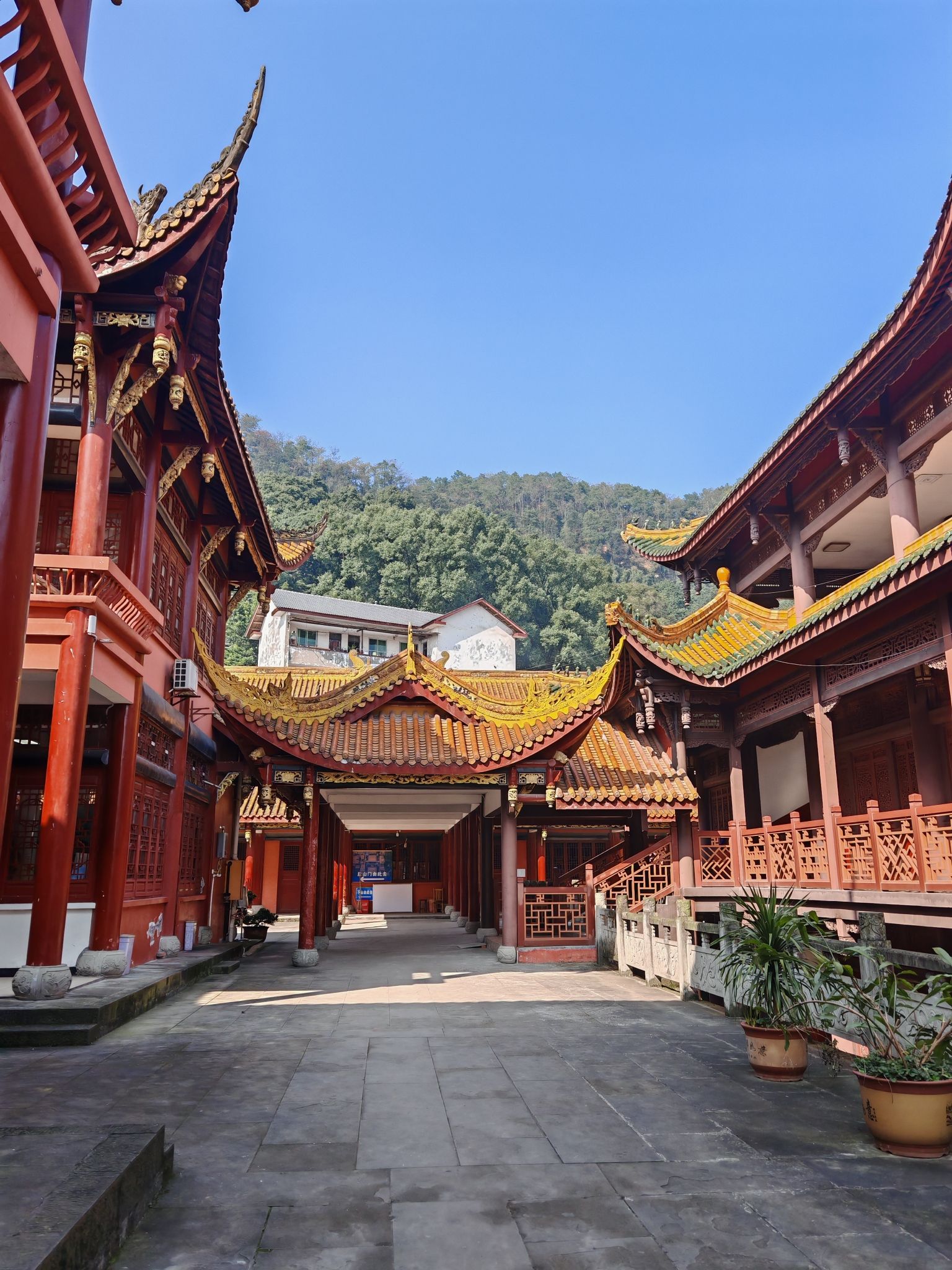
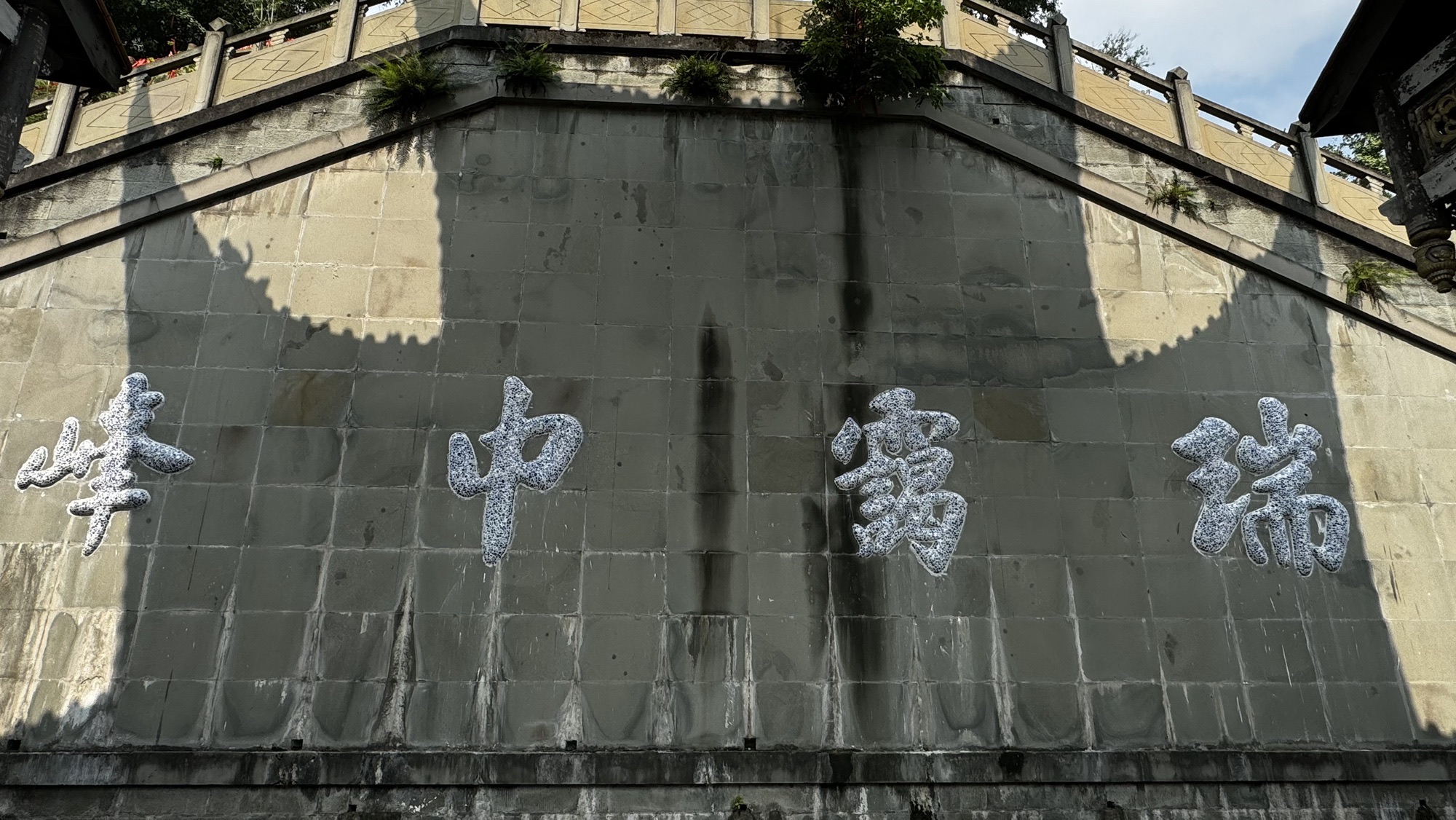
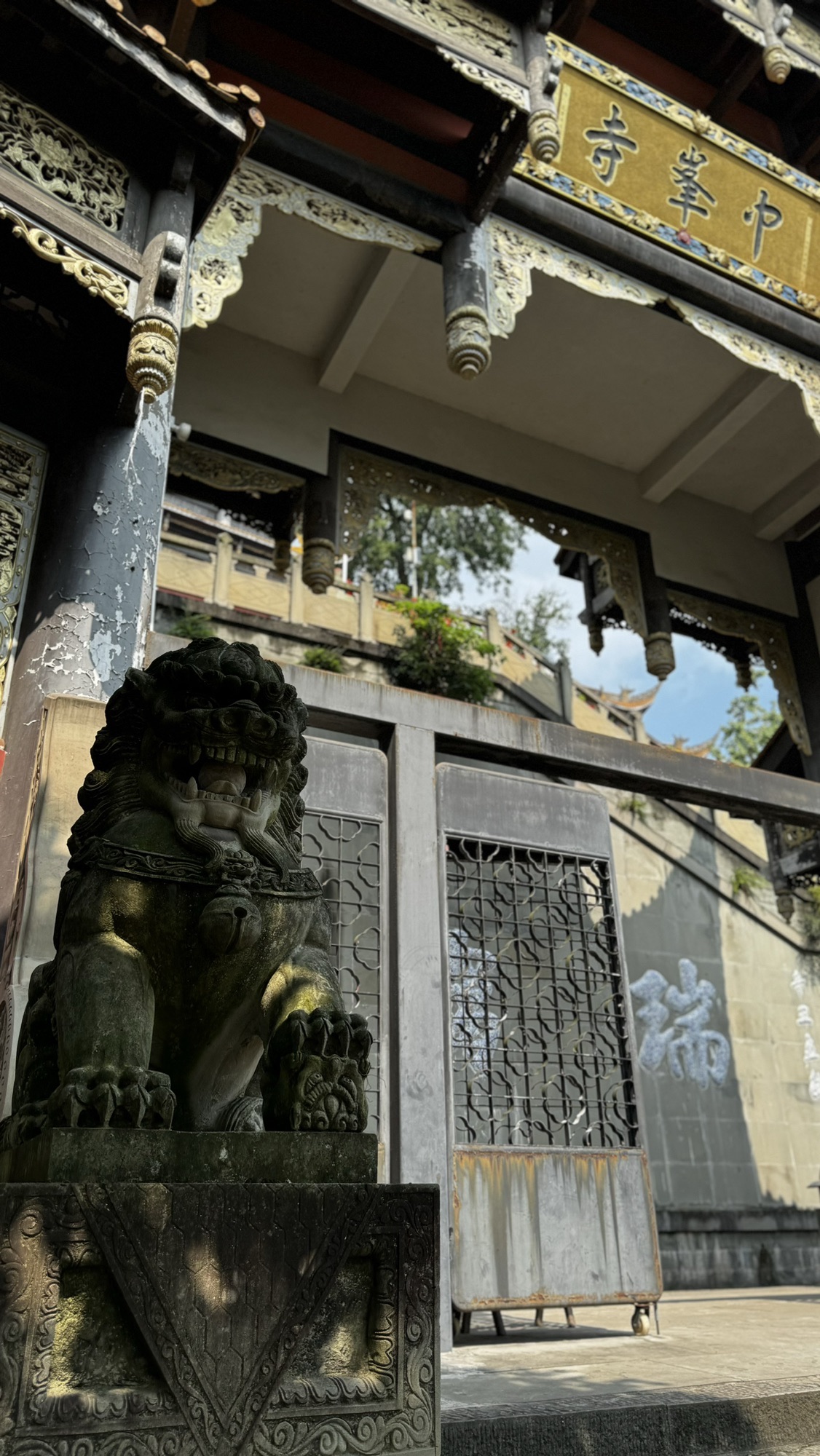
🏯 Fangshan – Zhongfeng Temple
“A single peak rises from the earth, ten thousand ravines rush toward distant clouds. Ancient temple hidden in secluded depths, its bell chimes scatter through evening shadows.”
—— Qing Dynasty, Wang Shizhen, Climbing Fangshan to Visit Zhongfeng Temple
📍 Location and Overview
- Address: Fangshan, Yunfeng Road, Shuangliu District, Chengdu City, Sichuan Province (approximately 25 km from downtown Chengdu)
- Elevation: Main peak at about 516 meters above sea level, representing a typical isolated hill formation along the southwestern edge of the Chengdu Plain
- Mountain Range: Western extension of the Longquan Mountains; geologically composed of Cretaceous red sandstone hills, shaped like an inverted cauldron—hence the ancient name “Fangshan” (Square Mountain)
- Site Designation: Provincial-level cultural heritage site (designated in 2007), integrating religious culture, historical relics, natural ecology, and rock carvings; now a key destination for spiritual pilgrimage and educational field trips near Chengdu
⏳ Historical Evolution: A Thousand-Year-Old Zen Grove, Three Times Rebuilt and Ruined
Zhongfeng Temple was originally established during the Liang Dynasty’s Tianjian era (502–519 CE), initially named “Zhongfeng Yuan,” one of the earliest Buddhist temples in Sichuan. Its historical development is well-documented:
- ✅ Tang Dynasty Flourishing: According to the Sichuan General Chronicles – Records of Temples and Monasteries, the temple was rebuilt by the eminent monk Huijue during the Zhen Guan period (627–649 CE), becoming a significant center of the Jingzhong Sect. Du Fu, while residing in Chengdu, visited and composed verses here (see fragmentary poem Looking Toward Zhongfeng Temple from Fangshan in the Supplement to Complete Tang Poetry)
- ✅ Song Dynasty Renaming and Expansion: In the third year of Emperor Zhi Ping’s reign (1066 CE), the temple was officially granted the imperial title “Zhongfeng Chan Temple” by decree. It reached its peak size, forming a layout of “one main hall, three pavilions, and two corridors”
- ✅ Ming Dynasty Reconstruction: After destruction in war during the twelfth year of Chenghua’s reign (1476 CE), the temple was restored under the supervision of Prince Zhu Shenzao of Sichuan. The original beam inscriptions in the Great Buddha Hall still bear the inked record “Renewed in the Bing Shen Year of Chenghua”
- ❌ Qing Dynasty Decline: Destroyed again during the tenth year of Xianfeng’s reign (1860 CE) due to warfare; only the gatehouse, bell tower foundation, and several steles remained
- ✅ Modern Conservation and Revival:
- Listed as a protected site in Shuangliu County in 1981
- Archaeological survey initiated in 2003 confirmed Song Dynasty foundations, drainage systems, and Ming-era stone bases
- From 2015 to 2019, under the principles of the China Conservation Guidelines for Historic Sites, minimal intervention restoration was carried out—reconstructing the gatehouse, Heavenly Kings’ Hall, and Great Buddha Hall (preserving Ming dynasty platforms and some column bases), restoring the original spatial sequence
📜 Key Historical Evidence: The temple houses the Record of the Restoration of Zhongfeng Temple (1476 CE, Ming Chenghua), the Poems on the Eight Scenic Views of Fangshan (1763 CE, Qing Qianlong), and a fragmentary copy of the Southern Song-era land deed titled Permanent Land Grant of Zhongfeng Temple (held at Chengdu Museum)—all primary sources for studying Buddhist economic and social history in western Sichuan.
🏛️ Architectural Remains and Cultural Treasures
Main Structures (arranged along the central axis from south to north)
| Structure | Period/Features | Cultural Value |
|---|
| Main Gate | Reconstructed in 2017 following Ming Dynasty style, gabled roof with gray tile tiles; the lintel features the original Qing Qianlong-era stone plaque inscribed “Ancient Zhongfeng Temple” (imperial gift) | One of the few surviving examples in Sichuan of a Qing imperial temple plaque |
| Heavenly Kings’ Hall | Ming Dynasty platform with Qing Dynasty wooden structure; the four guardian statues are replicas from 2018 based on the Canon of Iconographic Proportions; base retains Ming-era lotus-patterned stone footings | Stone base inscribed with six characters in regular script: “Built in the Bing Shen Year of Da Ming Chenghua”—providing definitive evidence of original construction date |
| Great Buddha Hall | Core Heritage Site: Foundation built in the Southern Song Dynasty using rammed earth encased in brick (confirmed by archaeological excavation); five bays wide, three bays deep; timber frame preserves the Ming-era “seven-rafter roof with front and rear eaves supported by four columns” system; ridgepole bears ink inscription: “Rebuilt on the auspicious day of mid-autumn in the Bing Shen Year of Da Ming Chenghua” | Nationally rare example of a Song-Ming layered temple foundation, illustrating the chronological accumulation of architectural practices in western Sichuan |
| Site of Guanyin Pavilion | Located on the eastern cliffside; remains include Qing Dynasty stone foundation and one carved rock relief of Guanyin (1.2 m high, seated Water Moon Guanyin, heavily weathered) | Ancient ginkgo tree in front of the pavilion over 320 years old (certified in 2021 during city-wide ancient tree inventory) |
Notable Artifacts and Rock Carvings
- 🪨 Rock Relief Sculpture Group: On the eastern slope of Fangshan lies the “Thousand Buddha Cliff,” featuring 17 shallow-relief Buddhist niches dating from the Tang to early Song dynasties. The largest niche measures 0.8 meters in height, depicting one Buddha flanked by two disciples, exhibiting the characteristic “slender bones and clear countenance” style of late Tang and early Song (listed in Chengdu’s register of immovable cultural relics in 2020)
- 📜 Steles and Inscriptions:
- Record of the Restoration of Zhongfeng Temple (1476 CE, Ming Chenghua): Detailed account of royal donations, names of artisans, and boundaries of temple-owned land
- Eight Scenic Views of Fangshan Poems (1763 CE, Qing Qianlong): Includes poetic depictions such as “Morning Bell at Zhongfeng Temple” and “Snowy Peak at Cloud Ridge,” confirming that Fangshan had long been a favored gathering place for literati
- 🪵 Ancient Trees: Two ancient nanmu trees (Phoebe zhennan) from the Ming Dynasty remain in the temple grounds (trunk diameter 1.8 m, estimated age ~620 years), designated national Grade I ancient trees; also one each of a Qing Dynasty arhat pine and a yew tree
🌟 Cultural Significance and Academic Importance
- Religious History Value: Zhongfeng Temple is among the earliest Buddhist temples in Sichuan documented in local gazetteers, providing tangible evidence of Buddhism’s early transmission from the middle Yangtze region through Ba-Yu into the Chengdu Plain—offering a geographical anchor point for studying southern Buddhist expansion northward
- Architectural History Value: The Great Buddha Hall’s foundation and timber framework form a dual chronological marker—“Song base, Ming superstructure”—serving as a model for clarifying the technical lineage of official architecture in western Sichuan during the Ming period
- Artistic History Value: The Thousand Buddha Cliff sculptures blend the rustic character of Bashu artistry with the formal discipline of Central China, representing a living example of folk Buddhist art from the Tang-Song transition
- Ecological and Humanistic Value: As a green corridor within the Chengdu Plain, Fangshan and Zhongfeng Temple together form a complex ecosystem of “mountain—temple—forest—farmland,” embodying traditional fengshui philosophy and sustainable building wisdom
🧭 Practical Travel Information
- Opening Hours:
- Daily 8:00–17:30 (last entry at 17:00)
- Extended to 19:00 on Lunar New Year’s first and fifteenth days, and on Buddha’s Birthday (the eighth day of the fourth lunar month and the eighth day of the twelfth lunar month), when evening drum ceremonies are held
- Admission Policy:
- Free admission (requires valid ID for reservation; daily capacity limited to 800 visitors)
- Reservation channels: “Culture & Tourism Tianfu” APP or WeChat Official Account “Fangshan Zhongfeng Temple” (book 1–7 days in advance)
- Transportation Guide:
- 🚌 Bus: Take Line S12 from the Qilong Station on Chengdu Metro Line 5, alight at “Yunfeng Road Fangshan Stop,” then walk 800 meters up the mountain trail
- 🚗 Self-Drive: Navigate to “Fangshan Zhongfeng Temple Parking Lot” (200 spaces available; recommend eco-friendly travel during holidays)
- Special Experiences:
- ☕ Zen Tea Harmony: The “Songtao Lodge” inside the temple offers an authentic Song-style tea ceremony experience (reservation required)
- 📖 Manuscript Copying: The “Zhongfeng Lecture Hall” in the east wing of the Heavenly Kings’ Hall provides paper-based copying services of selected passages from the Zhongfeng Guanglu
- 📸 Best Viewing Spots:
- “Yunfeng Pavilion” — panoramic view of morning mist over the Chengdu Plain and the city skyline
- “Ting Song Slope” — autumn ginkgo avenue, where sunlight filters through golden leaves like scattered gold foil
🌿 Visitor Tips:
- Flash photography is prohibited inside the temple to protect artifacts and reliefs
- Please observe religious etiquette—do not climb on ancient structures or touch rock carvings
- The mountain paths consist largely of natural stone steps; wear non-slip footwear, and exercise caution during rainy seasons
This article draws on comprehensive research from the Shuangliu County Gazetteer (Jiaqing and Republican editions), Chengdu Cultural Relics Gazetteer (2005), the Sichuan Provincial Institute of Archaeology’s Archaeological Survey Report on the Fangshan Zhongfeng Temple Site (2004), Chengdu Municipal Bureau of Parks and Green Spaces’ Ancient Tree Inventory Data (2021), and on-site field surveys. All dates, dimensions, and inscriptions have been verified in situ.