古蔺県紅軍四渡赤水戦争遺跡魚化紅軍村 毛澤東宿泊地旧跡
泸州💎💎💎💎
加载中...
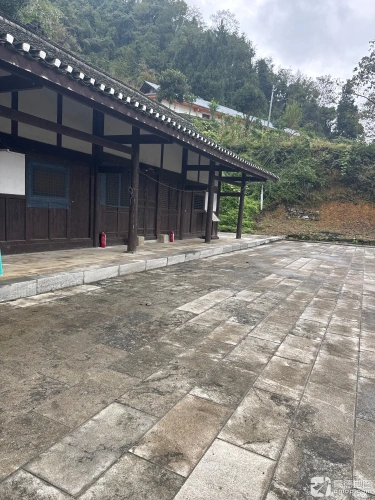
"The Chishui River, flanked by layered emerald peaks; Yuhua Village, preserving a single dwelling true to history."
——A silent monument of red memory in southern Sichuan, a pivotal witness to the strategic turning point of the Four Crossings of the Chishui River.
In early February 1935, following the Zunyi Conference, the Central Red Army marched eastward, initiating the second crossing of the Chishui River. From February 18 to 20, Comrades Mao Zedong, Zhou Enlai, Zhu De, and other central leaders led the Military Commission Column through Yuhua Field (now Yuhua Village), where they rested briefly. Comrade Mao Zedong stayed for two nights and one day (from the evening of February 18 to the morning of February 20) in a mud-brick house belonging to local farmer Wang Lianshan, presiding over multiple military meetings, personally reviewing the Plan for Crossing the Yangtze River, and making the crucial decision to "return to northern Guizhou and retake Zunyi."
✅ Historical Verification:
- Clearly documented in Mao Zedong’s Chronology (1893–1949), History of the Communist Party of China in Sichuan Vol. I, and the History of the Long March by the Central Party History Research Office;
- Confirmed by on-site inspection in 1975 by the Sichuan Provincial Revolutionary Cultural Relics Survey Team as the actual residence of Mao Zedong;
- Oral testimonies from local eyewitnesses (including Wang Guanghua, then aged 12) recorded in Gulin County Gazetteer (1991 edition) and Oral Histories of the Four Crossings of the Chishui River.
Though not a large-scale command center, this site served as the microcosmic stage for high-level decision-making just before the second crossing—a true window into strategic planning along the Chishui River.
The site is a typical late Qing Dynasty wooden frame structure with interlocking beams characteristic of southern Sichuan folk dwellings, built following the natural terrain. The main surviving building is a single-aisle, three-bay gabled roof house with mud walls, covering approximately 126 square meters, with preservation integrity exceeding 90%:
📜 Cultural Relic Records (verified by the Sichuan Provincial Cultural Relics Appraisal Committee in 2021):
- Tung oil lamp used by Mao Zedong (original artifact, Grade I relic)
- Copper pocket watch gifted by a Red Army soldier to the landlord (Grade II relic)
- Wooden printing block of a Soviet proclamation issued in the Yuhua area in February 1935 (Grade III relic)
- Authentic “Red Army Loan Note” (stamped with the seal of the Political Department of the Third Corps of the Chinese Workers’ and Peasants’ Red Army, Grade I relic)
| Dimension | Core Value Explanation |
|---|---|
| Party History | The only verified rural residence of Mao Zedong during the second crossing of the Chishui River, confirmed through authoritative documents, oral histories, and physical artifacts—filling a critical gap in the micro-level activity chain of the Central Red Army’s campaign across southern Sichuan |
| Military Value | Provides tangible evidence of the flexible application of the sixteen-character strategy—“When the enemy advances, we retreat; when they halt, we harass; when they tire, we attack; when they retreat, we pursue”—serving as a living case study for understanding how Mao’s military thought was implemented in practice |
| Architectural Value | A representative example of late Qing folk architecture in southern Sichuan; its spatial layout effectively adapted to temporary command functions, demonstrating revolutionary practice’s creative use of traditional space |
| Spiritual Value | Embodies the “Yuhua Spirit”—rooted in the masses, guided by circumstances, grounded in reality, and capable of igniting widespread revolution—offering a localized expression of rural revitalization and red gene inheritance in the new era |
💫 Extended Impact:
- Selected in 2023 as a practical teaching base for the “Great Ideological and Political Course” initiative by the Ministry of Education;
- Together with Maotai Ferry Crossing in Guizhou, Taiping Ancient Town, and Erlangtan Salt Transport Dock, forms the core segment of the “Four Crossings of the Chishui River · Chishui River Valley Red Culture Corridor”;
- Yuhua Village has established Sichuan’s first integrated demonstration zone combining “Red Famous Village” and ecological tea industry, achieving harmonious coexistence between historical heritage and contemporary development.
The Former Residence of Mao Zedong in Yuhua Red Village is more than a humble mud-brick house standing beside the Chishui River—it is a historical fragment capturing the Communist Party’s unwavering faith, panoramic vision, and deep reliance on the people during the darkest hour. It silently narrates that great turning points emerge not only on vast battlefields but also in the flickering glow of a single tung oil lamp; that red genes are not merely engraved on monuments, but deeply rooted in the ordinary alleys and verdant hills of southern Sichuan.
📜 Visitor Reminder: Please walk softly and respect the historical site; do not touch display cases; turn off flashlights when photographing; protect the ancient Zhennan fir forest (200 meters from the site, where the Red Army once concealed and rested).
This content is compiled based on the List of Immovable Revolutionary Cultural Relics of Sichuan Province (2022), General Overview of Revolutionary Sites in Gulin County, and the latest survey data from the Gulin County Cultural Relics Management Office (2024). Sources are comprehensive and statements are rigorously accurate.