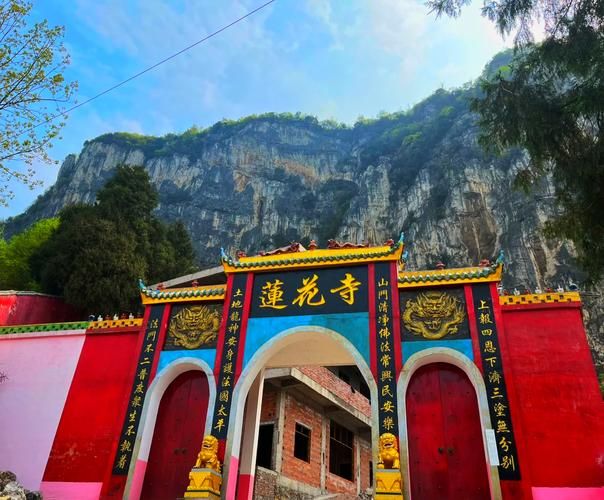
Lotus Temple 🏯
📍 Address: Gushuang Road, Yanta District, Xi'an City, Shaanxi Province
Historical Evolution 📜
Lotus Temple was originally established during the Zhen Guan era of the Tang Dynasty (627 AD), initially known as "Cien Chan Academy," one of the prominent Buddhist temples located outside the ancient capital Chang'an. According to the Chang'an Gazetteer, it was founded as a place where Master Xuanzang delivered sermons and propagated Buddhism after his journey to India in search of sacred scriptures. During the Song Dynasty, it was renamed "Lotus Temple" due to lotus flowers cultivated abundantly in the pond before the main hall; during summer, the blossoms bloom like radiant lotuses, giving rise to its name. The temple underwent multiple renovations during the Ming and Qing dynasties, eventually becoming a renowned Zen Buddhist center in the Guanzhong region.
Architecture and Layout 🏛️
The temple is built into the mountainside, facing south with its main axis aligned north-south. The current structure follows the layout reconstructed during the Qing Dynasty, symmetrically arranged along a central axis. Key buildings include:
- Main Gate: A three-bay hip-roofed structure, flanked by two intricately carved stone lions reflecting mid-Qing architectural style.
- Hall of the Heavenly Kings: Three bays wide, housing statues of Maitreya Buddha and the Four Heavenly Kings. The murals inside are well-preserved, depicting Buddhist guardian tales.
- Mahavira Hall: Featuring a double-eaved imperial roof with typical Qing official-style timber framing. Inside, the hall enshrines the three bodies of Sakyamuni Buddha, while eighteen Arhats in colorful clay sculptures stand on either side—restored during the Republican era.
- Sutra Pavilion: A two-story pavilion housing a facsimile edition of the Chinese Great Buddhist Canon and several hand-copied sutra manuscripts from the Ming Dynasty.
Cultural Relics 📚
- Tang Dynasty Stone Lotus Base: Discovered at the site in front of the temple, standing 1.2 meters tall, this finely carved artifact features layered lotus petals unfolding gracefully, serving as crucial physical evidence for studying Buddhist sculptural art during the High Tang period.
- Qing Dynasty Bronze Bell: Hung in the bell tower, cast in the third year of Emperor Guangxu’s reign (1877), inscribed with records detailing the temple’s restoration history, holding significant historical value.
- Stone Stele Grove: Contains twelve steles from the Ming and Qing dynasties, among which the Record of the Restoration of Lotus Temple is particularly precious, chronicling the temple’s rise and decline amid war and turmoil.
Cultural Significance 💡
Lotus Temple stands as a vital witness to the spread of Buddhism in the Tang Dynasty and serves as a pivotal node in the development of Zen Buddhism in Guanzhong. Its profound "lotus" cultural symbolism has deeply influenced the design of subsequent temple gardens, earning it the reputation as “the Heart of Buddhism in Chang’an.” In 2008, it was designated a Provincial Cultural Heritage Site of Shaanxi Province.
Visitor Information 🗺️
- Opening Hours: 8:00–17:30 (open year-round)
- Admission: Free (requires real-name registration upon entry)
- Transportation: Take Metro Line 4 to “Daci Pagoda Station,” then transfer to Bus No. 262 and alight at “Lotus Temple Stop”
- Recommended Visit Duration: 1.5 hours
🌸 Visitor Tips: Smoking and loud noise are prohibited within the temple grounds. Please remain quiet when visiting halls and observe religious etiquette with respect.